















1. Overview of Dan Nam Giao of the Ho Dynasty
1.1. Geographical location and the role of Dan Nam Giao of the Ho Dynasty
Dan Nam Giao of the Ho Dynasty (also known as Dan Te Nam Giao) is one of the important relics located within the World Heritage complex of Ho Citadel, in Vinh Loc commune, Thanh Hoa province. It is located about 150 km southwest of Hanoi capital via National Highway 1A and about 40 km from Thanh Hoa center via National Highway 45. With its prime location, near the ancient Tay Do region, Dan Nam Giao of the Ho Dynasty is associated with a sacred space, a place where the cultural essence and ideology of the Ho Dynasty converged in the early 14th century.
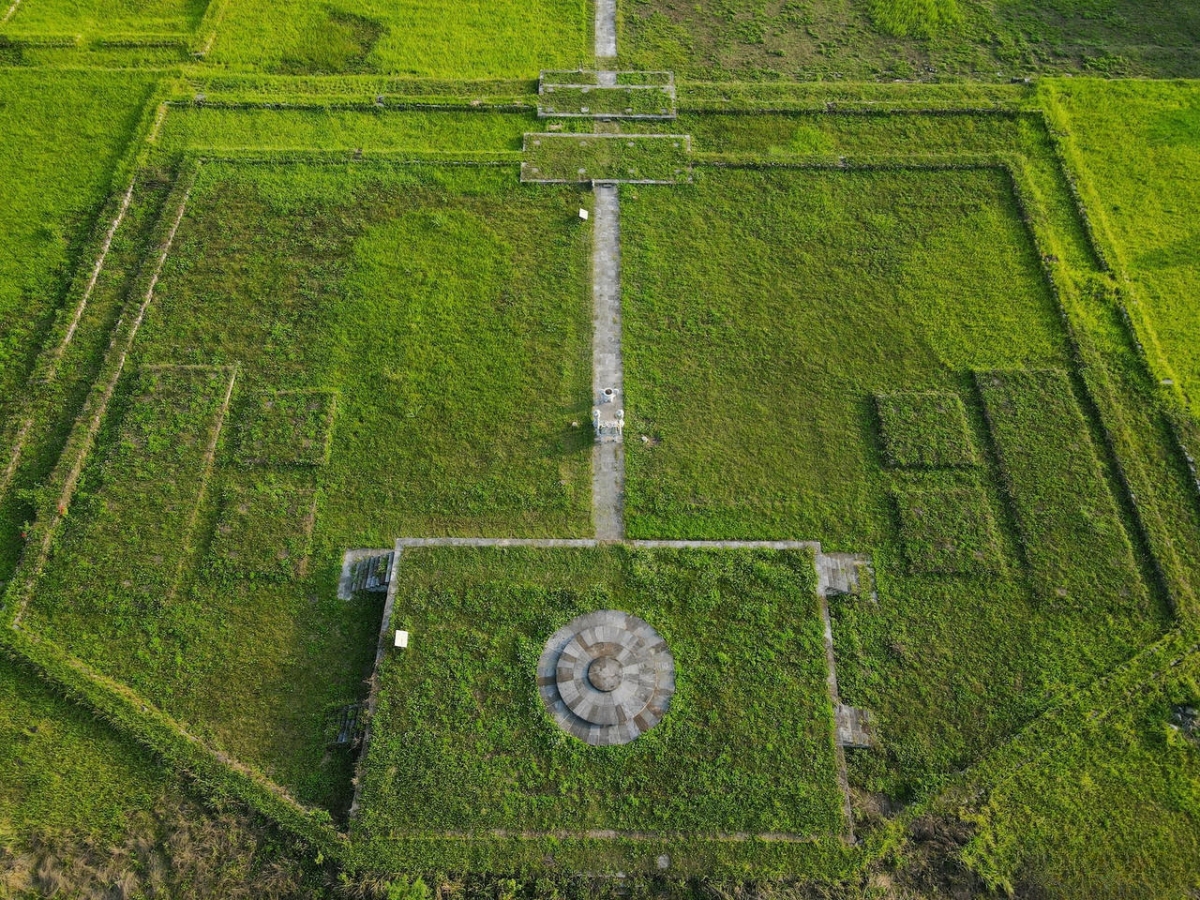
The Ho Dynasty's Nam Giao Altar is an important relic located within the Ho Citadel World Heritage complex. (Source: Dai Doan Ket Newspaper)
Formerly, this was where the Ho Dynasty court held ceremonies to worship Heaven with the aim of praying for national peace and prosperity, favorable weather, bountiful harvests, and universal peace. In addition, on occasions of general amnesty or important national events, the Nam Giao ceremony was also solemnly held here, demonstrating the ideology of "mandate of Heaven" and the aspiration for harmony between humans and heaven and earth of the Ho Dynasty. Year
1.2. Nam Giao Altar Through Historical Periods
The Ho Dynasty's Nam Giao Altar is associated with the birth of the Ho Dynasty, one of the short-lived dynasties but left many marks in our country's history. In 1397, Ho Quy Ly built a new capital in the land of An Ton, now belonging to Tay Do commune, Thanh Hoa province. One year later, he decided to move the capital from Thang Long here and renamed it Tay Do. During the planning and completion of the new capital, besides building palaces and constructing the La thanh, the Ho Dynasty court built the Ho Dynasty's Nam Giao Altar as a place to perform ceremonies to worship Heaven, demonstrating the ideology of "mandate of Heaven" and the aspiration for harmony between humans and heaven and earth.
Over hundreds of years, along with the changes of history and the impact of time, climate, and humans, the Ho Dynasty's Nam Giao Altar gradually became ruins, buried and forgotten underground for many centuries. Not until the 1980s was this area discovered and included in the list of historical sites. By 1990, the historical and cultural relic complex including the Tran Khat Chan temple, Giang pagoda, Gio pagoda, and the Nam Giao altar was recognized as a provincial-level relic, opening up new research directions for archaeology.
The mysteries of the Ho Dynasty's Nam Giao Altar were gradually revealed more clearly through archaeological excavations starting from 2004. In October 2007, this relic site was officially recognized as a national archaeological site. This event marked an important turning point in the journey of preserving and promoting the heritage value of the Ho Citadel, contributing to further clarifying the unique aspects of beliefs, architecture, and cultural ideology of the Ho Quy Ly dynasty in the history of the Vietnamese nation.
2. Exploring the Structure of the Ho Dynasty's Nam Giao Altar
2.1. Overview of the Ho Dynasty's Nam Giao Altar Architecture
The Ho Dynasty's Nam Giao Altar has an area of about 4.3 hectares, built in the traditional architectural style "leaning against the mountain, facing south" – back leaning against Mount Don Son, facing south, symbolizing prosperity and harmony with nature. The entire altar was built with 5 tiered platforms following the terrain, gradually rising from the foot of Mount Don Son upwards. Each platform has its own scale, function, and meaning, creating a cohesive whole that is also rich in symbolism in the sacrificial architecture of the Ho Dynasty.
2.2. Detailed Structure of the Platforms
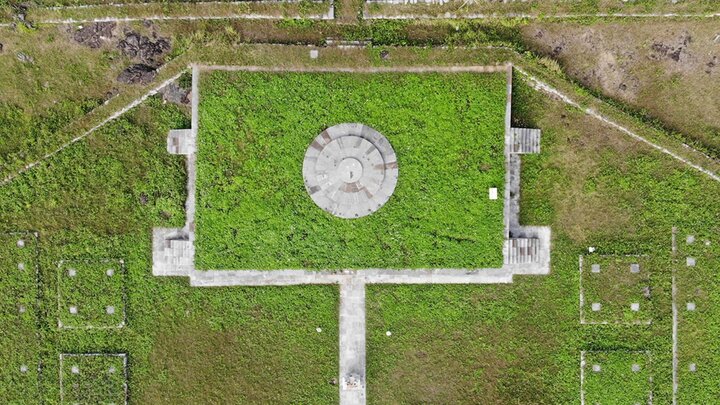
The first platform is located at the highest point, with an area of 356.5 m², bordered by rectangular limestone slabs, the north side is adjacent to Mount Don Son. On this platform is placed the Vien Dan – a circular structure symbolizing Heaven, the place where the main sacrificial ceremony of the Ho Dynasty king was performed. Surrounding the first platform is the second platform, with an area of 10,024 m², considered the most important area as it houses most of the structures related to the ceremony such as pathways, two Tam Quan gates, a brick-paved courtyard, altar walls, and platforms for worshipping deities.
Next is the third platform, with an area of 4,438 m², with traces of a brick-paved courtyard and an architectural complex to the east (function unclear). The fourth platform has an area of 4,572 m², notable for an architectural complex to the west and the relic of the King's Well, also known as Ngu Duyen Well or Ngu Duc Well. The well is located in the southeast corner of the fourth platform, has a square base of 13m x 13m, the well's interior is circular with a diameter of 6.5m, the well's walls are built of limestone, nearly 5m deep. The well is considered the place where water was drawn for purification rituals before worshipping Heaven, demonstrating the purity and solemnity of the Nam Giao ceremony.
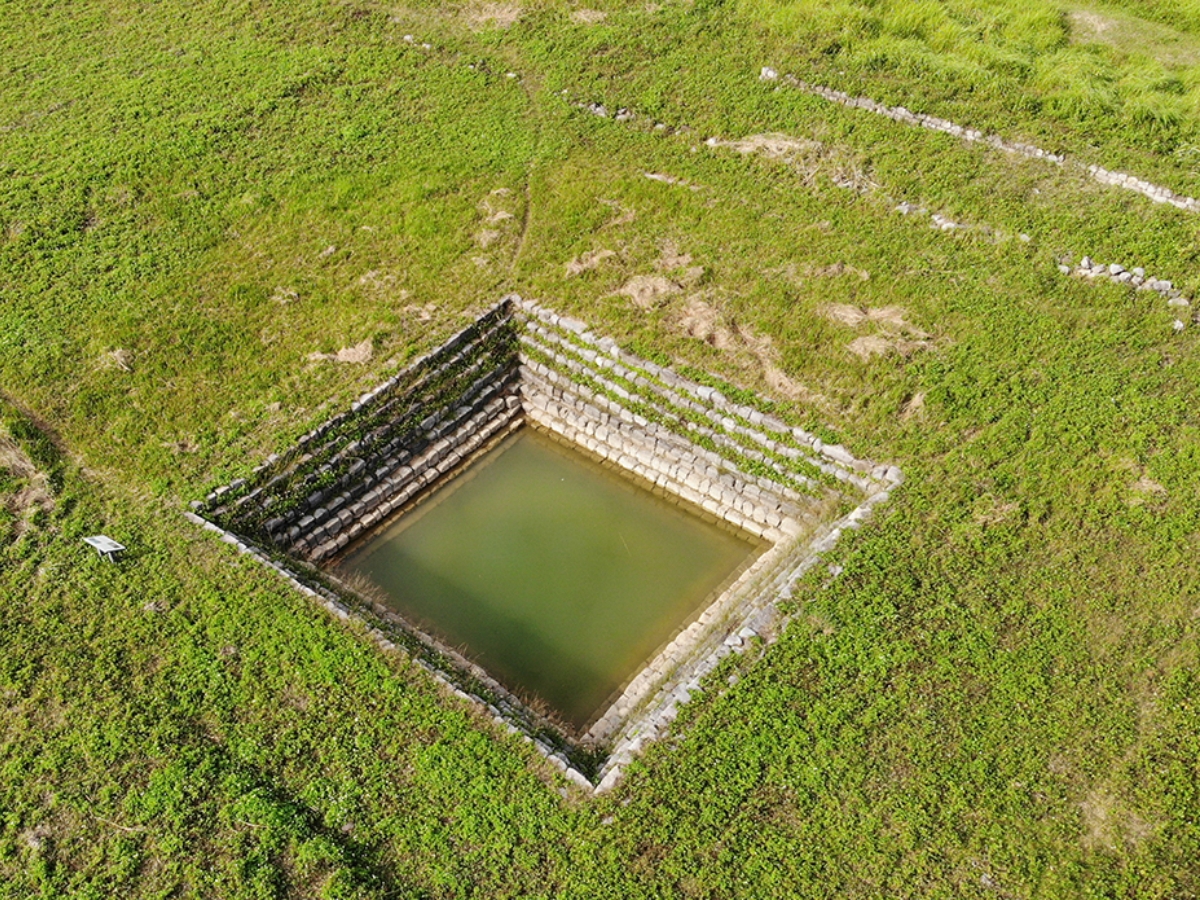
The King's Well (Gieng Vua) was used to collect water for purification before worshipping heaven. (Source: Collected)
Finally, there is the fifth altar base, with an area of 23,610 m², which is still being excavated and studied by archaeologists. The entire structure of the Ho Dynasty's Dan Nam Giao Altar not only reflects sophisticated construction techniques but also embodies the yin-yang philosophy, expressing the worldview and deep beliefs of the Vietnamese people in the medieval period.
3. Cultural and Ritual Significance of the Ho Dynasty's Dan Nam Giao Altar
3.1. The Nam Giao Sacrificial Ceremony under the Ho Dynasty
In Vietnamese history, the Nam Giao sacrificial ceremony has always been considered the most important ritual under the monarchy, embodying the concept of the 'Mandate of Heaven,' meaning the king is the one granted the right by Heaven to rule the people. This is a ceremony to worship Heaven and Earth, not only for praying for national peace and prosperity, favorable weather, and good harvests but also to affirm the legitimacy and authority of the dynasty. According to court ritual regulations, only the emperor – the representative of Heaven on Earth – had the right to conduct the Nam Giao sacrificial ceremony.
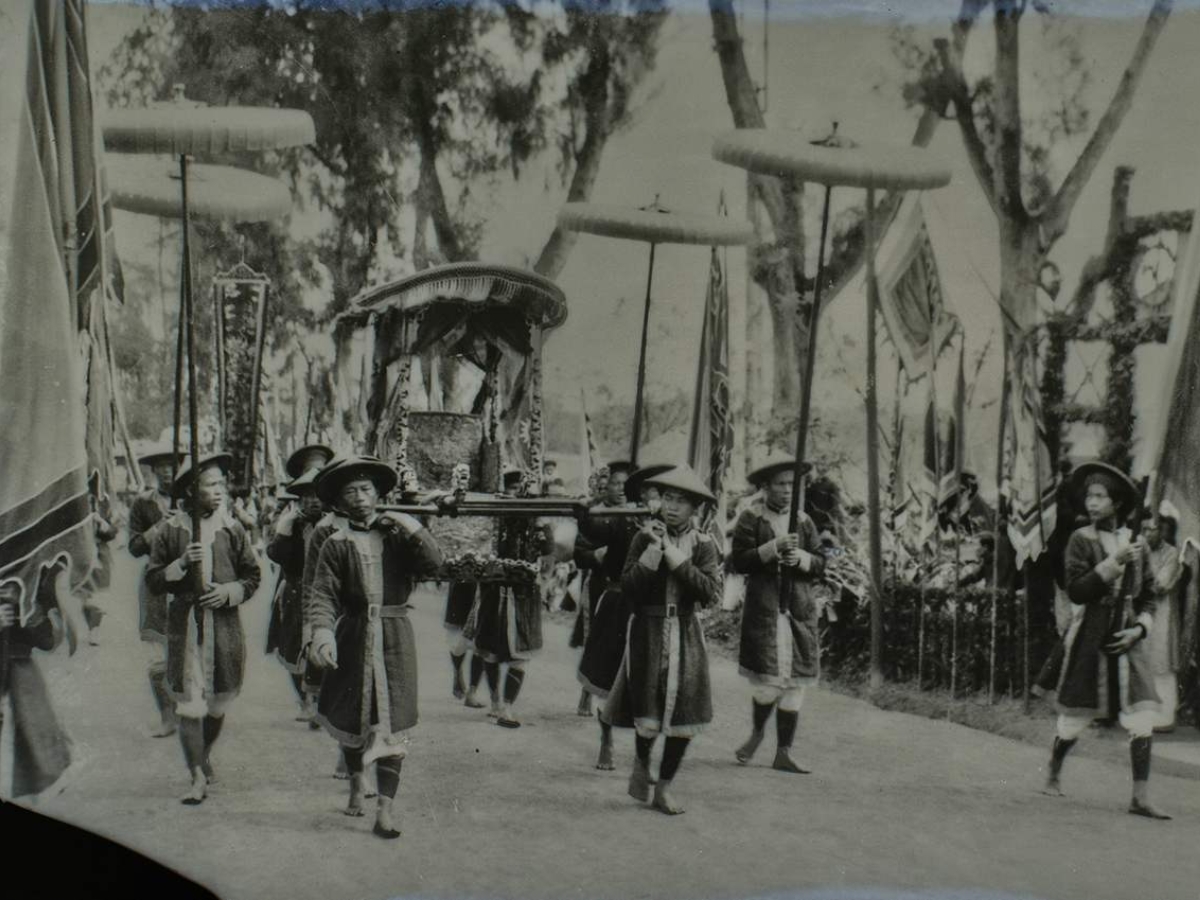
The Nam Giao Ceremony was the most important ritual under the monarchy. (Source: Collected)
The ceremony was usually held in spring, marking the beginning of a new year with wishes for a prosperous nation. Civil and military officials, soldiers, and the populace were all mobilized to attend, demonstrating the solemnity and importance of the ceremony. The Nam Giao Ceremony not only carried religious significance but also served to strengthen the loyalty of the subjects, fostering solidarity, faith, and reverence for royal authority.
3.2. Political Thought and the Power of the Ho Dynasty
The construction of the Ho Dynasty's Nam Giao Altar was not merely a religious or spiritual act but also clearly reflected the political thinking and the aspiration to consolidate power of the Ho Dynasty. After ascending the throne and moving the capital to Tay Do, Ho Quy Ly had this altar built as a symbol of supreme authority, affirming the legitimate position of the new dynasty in the relationship between “heaven – earth – humanity”.
By establishing the altar and organizing the ceremony according to royal rituals, Ho Quy Ly skillfully asserted himself as the successor to the “heavenly mandate”, qualified to lead the nation in place of the weakened Tran Dynasty. This was his way of using rituals to consolidate the legitimacy and legalize the power of the Ho Dynasty before the populace and the officials of the time. Moreover, the Ho Dynasty's Nam Giao Altar also demonstrated the vision of a reformist king. He was not only concerned with politics and the economy but also focused on beliefs and culture, considering them the foundation for uniting people's hearts, maintaining order, and strengthening national power.
4. Tips for Visiting the Ho Dynasty's Nam Giao Altar
Visiting the Ho Dynasty's Nam Giao Altar, visitors can not only admire a unique ancient architectural work but also have the opportunity to learn about the rituals, culture, and ideology of the Ho Dynasty. To make the visit more complete and meaningful, visitors can refer to some tips below.
4.1. Prepare Appropriate Attire and Necessities for Visiting the Relic Site
When visiting the large relic site with most activities outdoors, visitors should choose neat, cool, yet polite attire. Tops with sleeves, long pants, sports shoes, or flat sandals are suitable choices for convenient movement. Additionally, visitors should bring hats, umbrellas, drinking water, and sunscreen if visiting in the summer. For large groups or those with young children, visitors should prepare personal items in advance, arrange a reasonable itinerary to avoid harsh sun and ensure safety when moving around the Do Son Mountain area.
4.2. Things to Avoid and Notes on Spiritual Culture
As a sacred relic associated with the ritual of sacrificing to Heaven and Earth, visitors should maintain a solemn attitude, speak softly, refrain from laughing or climbing on the altars. When offering incense or taking photos, visitors should ask for permission from the site manager and avoid actions that intrude upon the sacred areas.
Furthermore, it is strictly forbidden to litter or place loose change or personal items arbitrarily on artifacts or stone steles, as this is considered disrespectful to the heritage. Showing reverence, maintaining a clean environment, and behaving civilly will contribute to preserving the cultural and spiritual values of the Ho Dynasty's Nam Giao Altar, helping this place remain a sacred and proud destination of Thanh Hoa province.
4.3. Combine Visits with Other Famous Tourist Attractions in Thanh Hoa
After visiting the Ho Dynasty's Nam Giao Altar, visitors can combine their trip with a visit to the stone World Heritage site of Ho Citadel, the over 200-year-old Tay Giai ancient house, or the Lam Kinh relic site associated with the Later Le Dynasty and the Lam Son Uprising. Additionally, if visiting Thanh Hoa in the coming years, visitors will have the opportunity to visit Huyen Tich Am Tien – a new spiritual destination being planned and built amidst a serene mountainous landscape. Upon completion, this place promises to become a unique space for worship and sightseeing, contributing to enriching the journey of cultural, historical, and spiritual exploration in the land of Thanh Hoa.

Huyen Tich Am Tien promises to become an impressive spiritual and cultural destination in Thanh Hoa in the future. (Source: Collected)
The journey to the Ho Dynasty's Nam Giao Altar not only helps visitors understand more about the ancestral worship of Heaven and Earth but also feel the vision, ideology, and humanistic spirit of the Ho Dynasty. Amidst the ancient and sacred space, each step seems to touch the traces of history, awakening pride in a golden era of the nation. If you have the chance to visit Thanh Hoa, don't forget to visit the Ho Dynasty's Nam Giao Altar – a destination preserving profound cultural values, where you return to your roots and make the journey of discovering Vietnamese heritage more meaningful and complete.