















1. Overview of Sung Nghiem Dien Thanh Pagoda
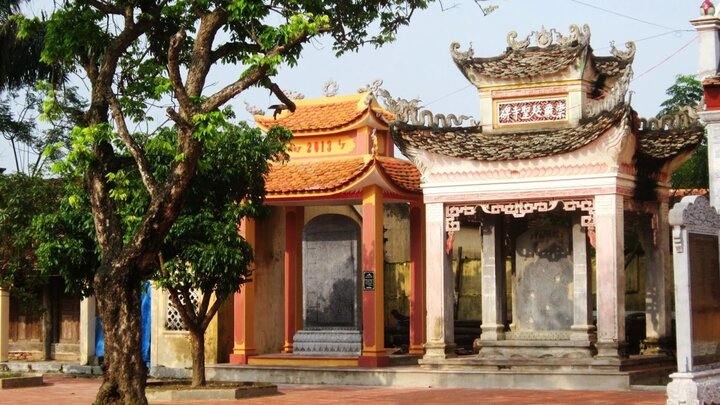
Sung Nghiem Dien Thanh Pagoda is located in Hau Loc commune, Thanh Hoa province – a land rich in historical and cultural traditions. During the Northern Domination period, this place was once the administrative center of Cuu Chan district, an important economic, cultural, political, and military center for many centuries.
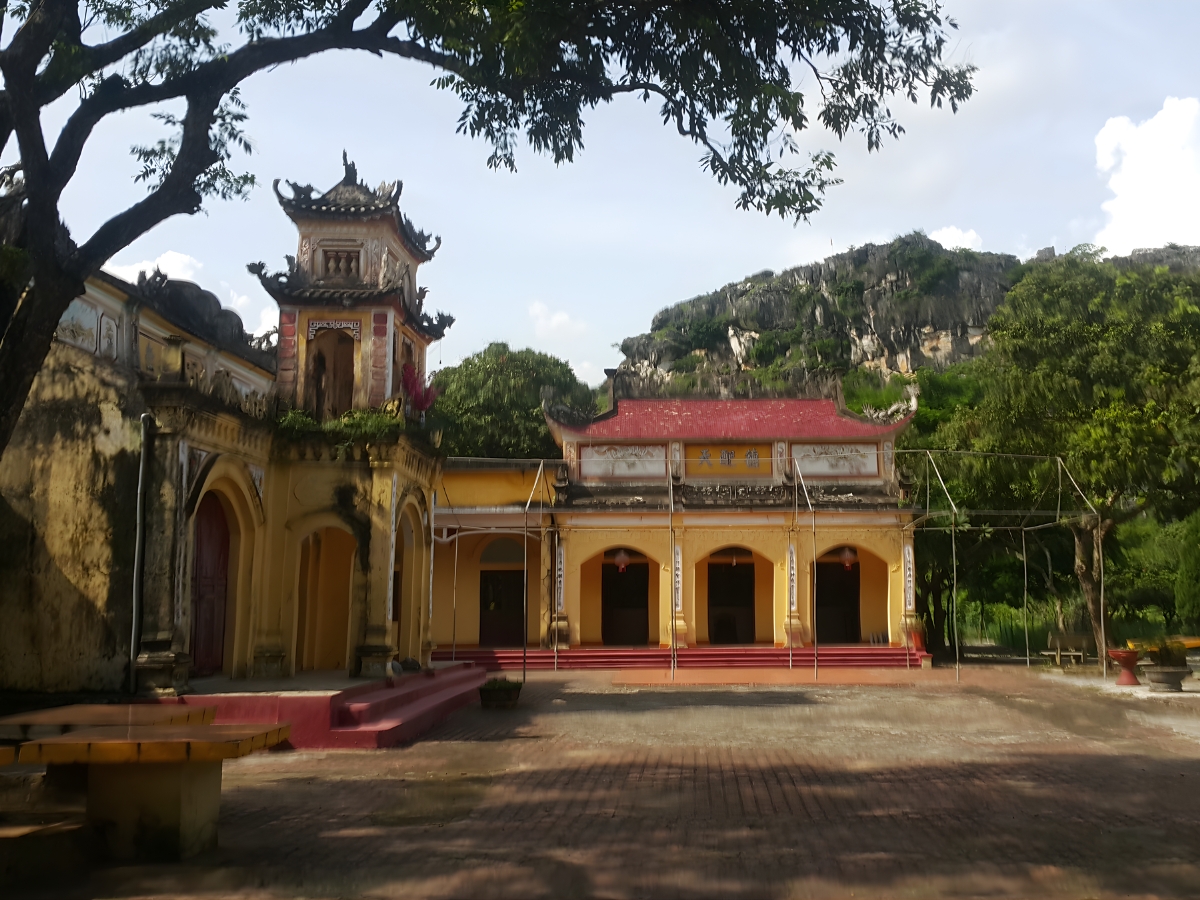
Sung Nghiem Dien Thanh Pagoda is located in Hau Loc commune, Thanh Hoa province. (Source: World Heritage Electronic Magazine)
Thanks to this special location, this land is considered a "sacred land that produces heroes", a place that has produced many famous people and important events recorded in history books as well as folk memory. It is on this sacred land that Sung Nghiem Dien Thanh Pagoda was built, becoming not only an ancient Buddhist work but also a symbol of the spirit of studiousness, faith, and reverence for the Dharma of the people of Thanh Hoa through generations.
2. History of Formation and Development of Sung Nghiem Dien Thanh Pagoda
Sung Nghiem Dien Thanh Pagoda was built very early, but the specific date is no longer clearly recorded. According to the stele inscription on the Sung Nghiem Dien Thanh Tu Bi Ky stele preserved at the pagoda, in 1118, the pagoda was renovated by two provincial officials, Grand Tutor Ly Thuong Kiet and Chu Cong, who made great contributions to the protection and development of Thanh Hoa. During their time stationed here, Ly Thuong Kiet built ramparts, strengthened Linh Truong commercial port, and paid attention to restoring pagodas to stabilize the spiritual life of the people. Fifteen years later, when Chu Cong succeeded as governor, he continued to repair Sung Nghiem Dien Thanh Pagoda, affirming the pagoda's position in the Buddhist spiritual life of Thanh Hoa.
Through many dynasties, the pagoda was a famous Zen monastery of Ai Chau, a gathering place for monks and followers from all over the region. However, due to historical upheavals, the pagoda was repeatedly damaged, especially during the resistance war against the French. In 1952, the front hall was destroyed by bombs, and the Ly Dynasty stele was also chipped at the top. Despite this, local people and resident monks persistently restored and preserved the relic, maintained Buddhist activities, and prevented the pagoda from being lost. This joint effort demonstrated the deep connection between Buddhism and the folk life of Thanh Hoa.
To preserve its historical value, in 1990, Sung Nghiem Dien Thanh Pagoda was recognized as a National Historical and Cultural Relic by the Ministry of Culture. From 1997, the pagoda underwent large-scale renovation with items such as the bell tower, middle hall, front hall, ancestor house, and stone bridge. By 2010, the restoration work was basically completed, giving the pagoda a magnificent appearance while retaining its ancient charm. Thanks to the contributions of Buddhists from everywhere, the lotus pond and the arched bridge leading to the pagoda were built, creating a serene landscape, blending architecture and nature. Today, Sung Nghiem Dien Thanh Pagoda is not only a rare ancient relic but also a spiritual symbol, preserving the essence of Buddhism and the history of Thanh Hoa over thousands of years.
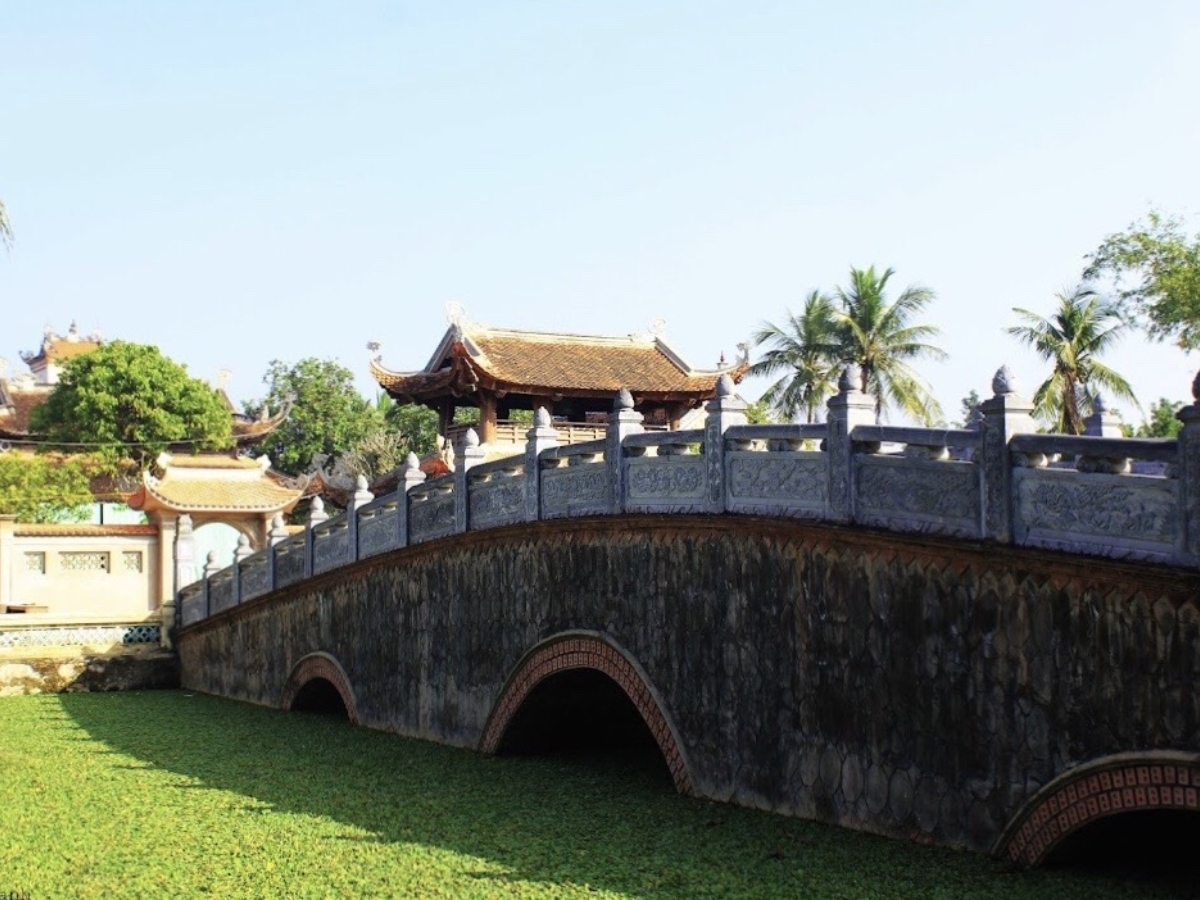
The lotus pond and arched bridge were built thanks to contributions from Buddhists everywhere. (Source: According to Chan Phat)
3. Discover the unique architectural features and artistic value at Sung Nghiem Dien Thanh Pagoda
Sung Nghiem Dien Thanh Pagoda is one of the typical ancient pagodas bearing the traditional Vietnamese architectural style, elaborately built with delicate lines and extremely exquisite carved patterns. The pagoda roof is tiled with hài-shaped tiles, and the roof ridge curves like a peacock spreading its wings, reflecting the elegance and aspiration of Buddhist spirit. On the roof and column tops, intricate carvings depict dancing phoenixes and reverent dragons, creating a beauty that is both majestic and graceful. The surrounding walls form a space separate from the noisy outside world, with corridors surrounding the eaves, opening up to a pure and airy landscape throughout the four seasons.
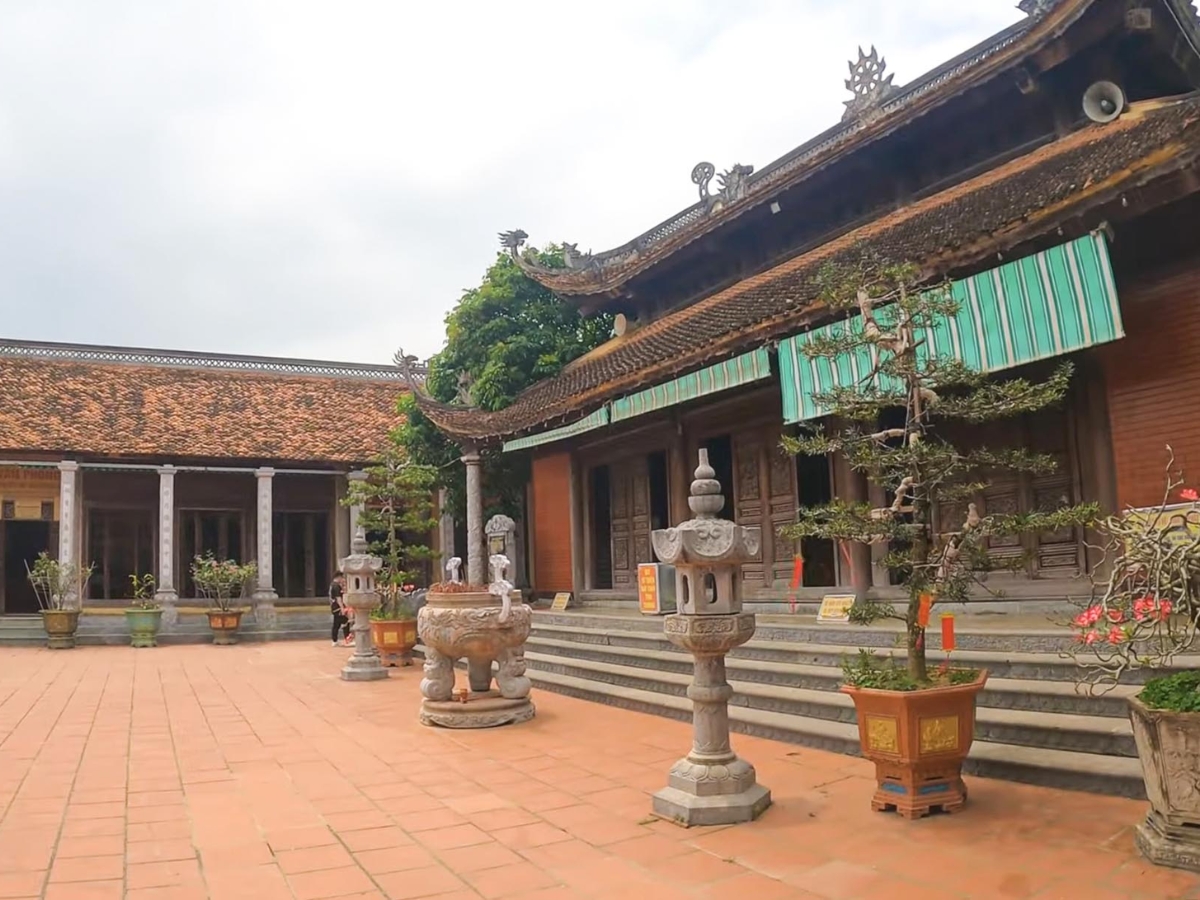
The architecture of the pagoda is deeply traditional. (Source: Sai Gon Tiep Thi)
The pagoda grounds are spacious, harmoniously arranged between architecture and nature. The Tam Quan gate features two symmetrically placed stone elephant statues, with a majestic bell tower above, symbolizing the steadfastness and purity of Buddhism. From the gate, to the left is a stone stele listing the names of those who contributed to the pagoda's construction; to the west are two ancient stone gongs preserved for hundreds of years. Surrounding the grounds are gardens, lotus ponds, and delicate orchid clusters, making the space even more peaceful and serene.
The pagoda's layout is divided into three main sections: the first, second, and third sanctuaries, along with a system of worship halls and auxiliary buildings arranged in the traditional "inner palace, outer kingdom" style. The pagoda has 5 bays for the main hall, 4 bays for the inner sanctuary, and a 5-bay ancestral hall, recently expanded with two additional bays on the right. The inner sanctuary worships Buddha, while the main hall worships Ly Thuong Kiet. The combination of Buddhist elements and the worship of national heroes creates a rare characteristic, reflecting the Vietnamese spirit of "drinking water, remembering its source."
4. Treasures and Heritage Rich in Historical Value at Sung Nghiem Dien Thanh Pagoda
Sung Nghiem Dien Thanh Pagoda is not only famous for its ancient architecture but also as a repository of many rare artifacts of special historical, cultural, and artistic value. Each artifact in the pagoda is a vivid testament to past dynasties, reflecting the glorious development of Vietnamese Buddhism during the Ly-Tran periods, and showcasing the talent and dedication of folk artisans. These treasures are not only of religious significance but also invaluable resources for researchers studying the spiritual life, beliefs, and art of medieval Vietnam.
Among the precious heritage, the most notable is the stone stele from the Ly Dynasty, inscribed in 1118. The stele is intricately carved in Han script, recording the renovation and reconstruction of the pagoda under the direction of Thái úy Ly Thuong Kiet and Chu Công. In addition to its historical value, the stele is also a work of art with its deep carving and elegant script, reflecting the perfect level of stone carving and calligraphy art of the Ly period. Furthermore, within the pagoda grounds, three stone pedestals dating from the same period are preserved. These stone bases are elaborately carved with lotus and flame cloud motifs, signifying the solemnity and refinement of the worship space.
Another distinctive feature is the system of terracotta dragon and phoenix heads from the Tran Dynasty, considered vivid evidence of the master craftsmanship and kiln technology of the ancients. These artifacts have soft lines and intricate carvings, clearly showing the flexibility and liveliness of mythical creatures in Buddhist decorative art. On the stone steps of the old pagoda, there are still Ly Dynasty dragons gracefully winding, symbolizing the vitality and sacredness of the Buddhist land. Additionally, the pagoda preserves 22 ancient wooden statues, a bronze bell from the Nguyen Dynasty weighing about 500 kg, along with many woodblock prints, merit steles, and statues of Ly Thuong Kiet. All possess profound artistic and spiritual value.
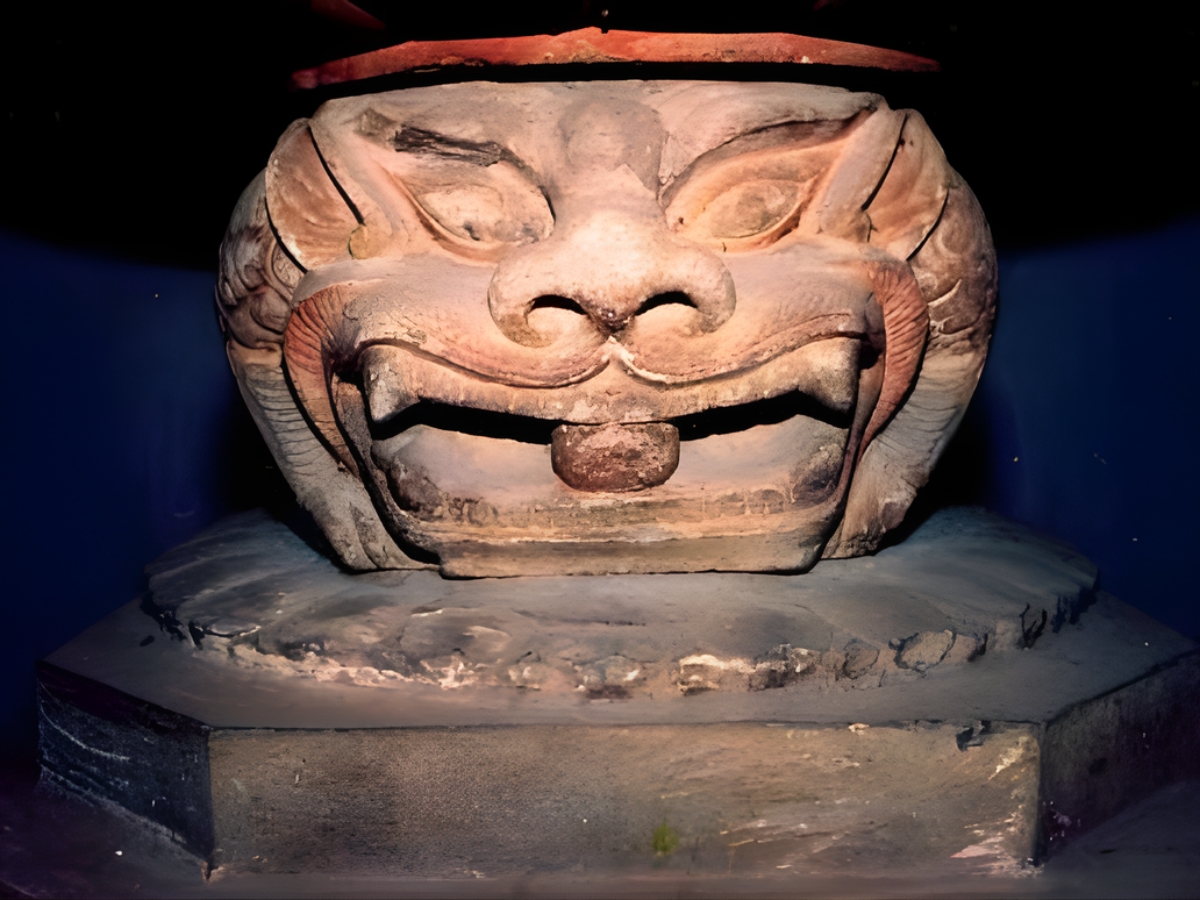
Dragon head artifact preserved at Sung Nghiem Dien Thanh Pagoda. (Source: Collected)
5. Suggested 1-day itinerary to visit Sung Nghiem Dien Thanh Pagoda and explore the Thanh Hoa region
If you only have one day to explore Thanh Hoa, start your journey with a visit to Sung Nghiem Dien Thanh Pagoda . In the morning, visitors should depart early to enjoy the tranquil atmosphere of the pagoda as mist still lightly drifts over the curved tiled roofs. This is the ideal time to worship, take photos, and feel the peace amidst the resonant temple bells. After visiting the main hall, the ancient stupa garden, and precious artifacts such as Ly Dynasty stone steles, ancient Buddha statues, or terracotta dragon and phoenix heads, visitors can take a few minutes to stroll around the grounds, admire the lotus pond, orchid garden, and breathe in the fresh air of the Thanh Hoa countryside.
At noon, stop by eateries around the Hau Loc area to enjoy Thanh Hoa specialties such as nem chua (fermented pork roll), cha tom (shrimp cake), Tu Tru banh gai (thorn leaf cake), or canh la dang (bitter leaf soup). Each dish carries a rich, rustic flavor that is uniquely of this land. After resting, in the afternoon, visitors can travel to Sam Son beach to enjoy the cool water and stroll on the fine sand. In the evening, don't forget to visit Sam Son beach square, where sparkling lights and a vibrant atmosphere attract a large number of tourists. Visitors can take a walk, enjoy coffee by the sea, watch water music performances, or take photos with modern structures like the wave symbol and the twin dolphin statue.
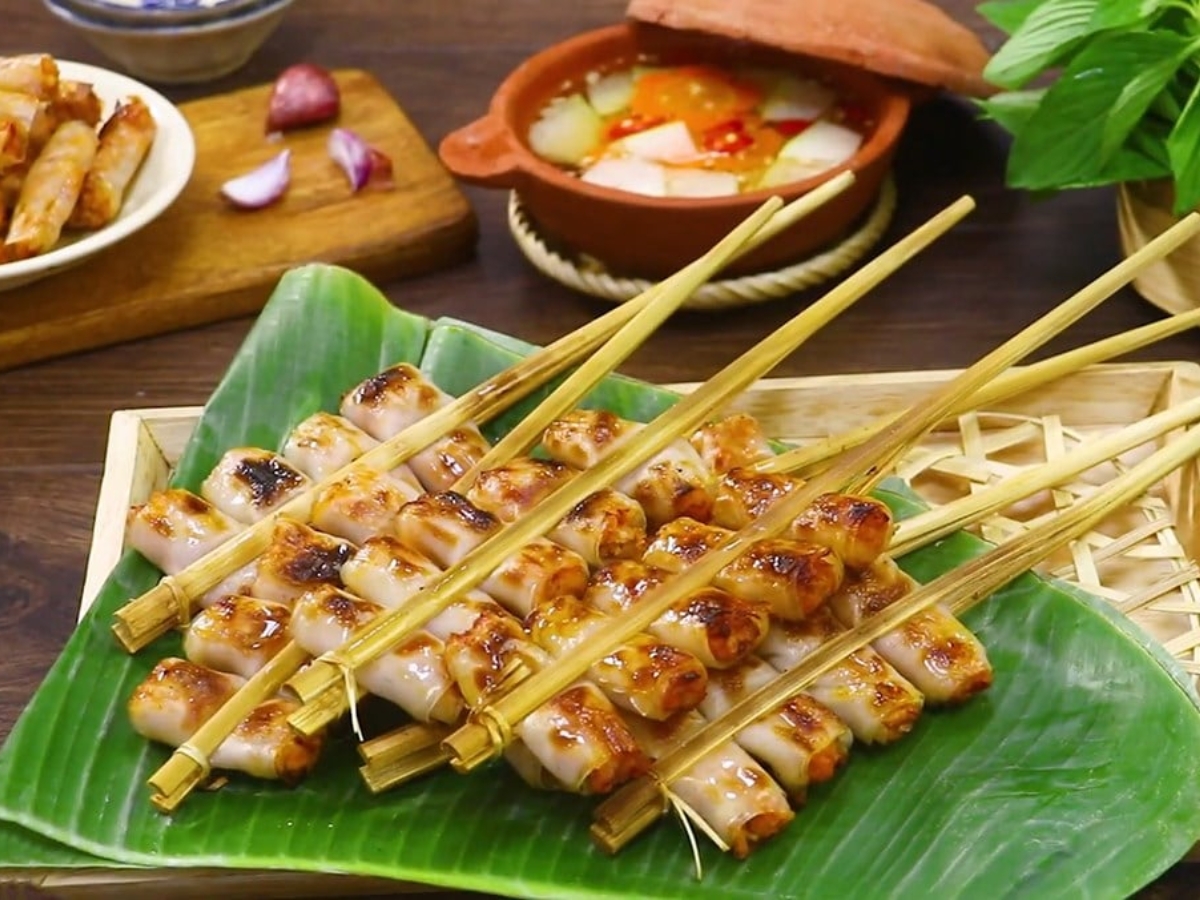
Enjoy shrimp cake - a specialty of Thanh Hoa. (Source: Collected)
If you visit Thanh Hoa in the coming years, you can stop by Huyen Tich Am Tien – a spiritual cultural work being built on a grand scale, promising to become the leading spiritual tourist destination in the Thanh Hoa region. This place will be a unique combination of Buddhist architecture, majestic natural space, and pilgrimage and worship activities, bringing a peaceful, profound experience to all visitors when returning to the sacred land of Thanh Hoa.
Sung Nghiem Dien Thanh Pagoda is a vibrant symphony between the past and the present, preserving the quintessence of art and Buddhist spirit of the Ly Dynasty. Despite experiencing nearly a millennium, the pagoda still retains its ancient, solemn, and sacred appearance. Every step taken on the pagoda grounds is a touch of history, feeling the harmony between people and the Thanh Hoa land and sky. Come to Sung Nghiem Dien Thanh Pagoda, to listen to the thousand-year-old breath still echoing, and to let your soul settle in the space imbued with the sacred spirit of the Ly Dynasty.