















1. Brief Introduction to the Temple of Le Lai
1.1. Geographical Location of the Temple of Le Lai
The Temple of Le Lai, also known as Tep Temple, is located on a low hill in the center of Tep village, Kien Tho commune, Thanh Hoa province. This is a mountainous region rich in tradition in the Holy Land and is also the hometown of Trung Tuc Vuong Le Lai (Le Lai, the Prince of Loyalty). The temple is located within the complex of the Lam Kinh National Special Historical Site, about 6 km west of the Lam Kinh main temple and over 50 km from Thanh Hoa city center.
The temple is nestled amidst a landscape of rolling mountains and lush green trees, with a gentle small stream in front and gentle forested hills behind, creating a peaceful and sacred atmosphere. With its advantageous geographical location and harmonious feng shui, the Temple of Le Lai is not only a place of worship to commemorate the merits of the hero who "risked his life to save the king" but also an important cultural and spiritual destination on the journey to explore Thanh Hoa.
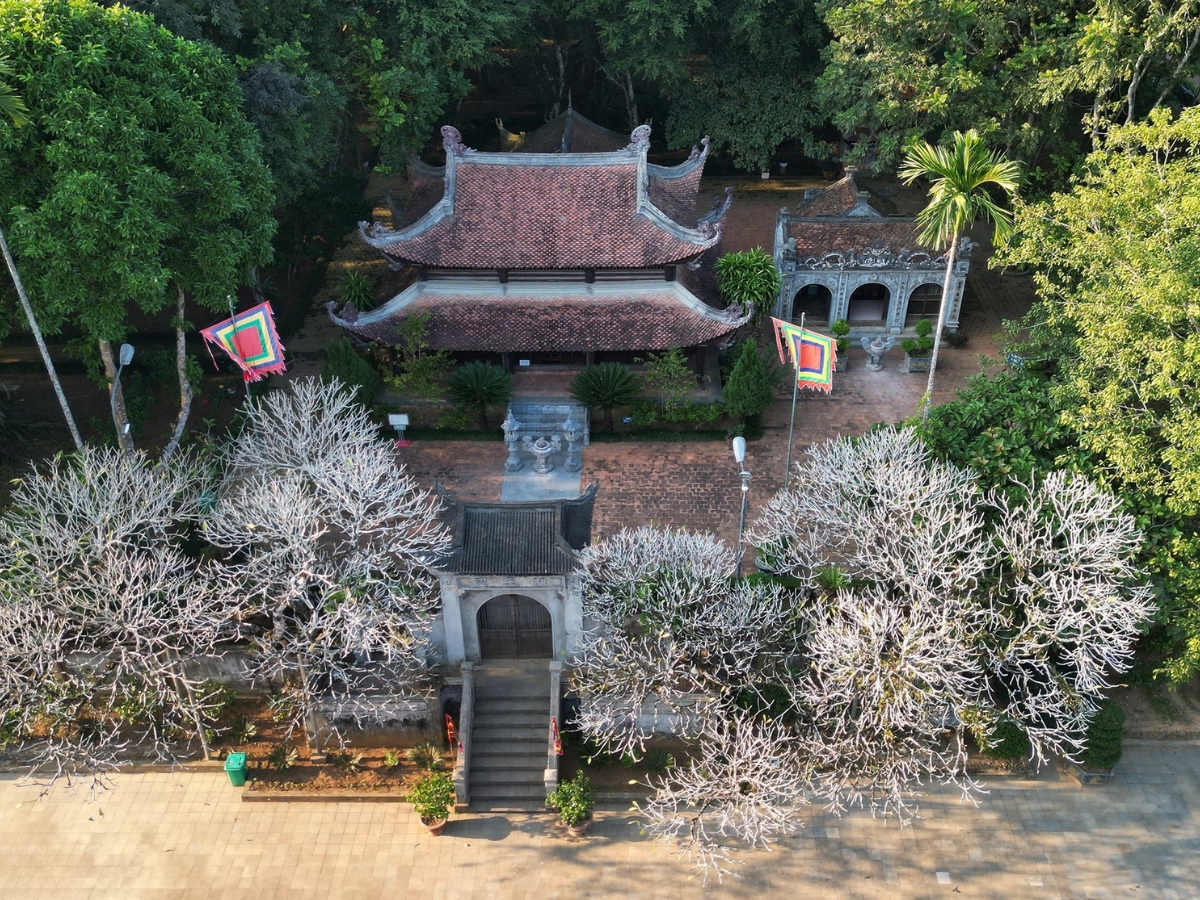
The Le Lai Temple is located on a low hill in the center of Tep village, Kien Tho commune. (Source: VnExpress)
1.2. Historical Value and Legends of Le Lai
According to the book Dai Viet Thong Su, in 1416, Le Lai, along with Le Loi and 17 other generals, organized the Lung Nhai oath-taking ceremony, vowing to raise the Lam Son uprising banner to repel the invading Minh aggressors and reclaim the country for Dai Viet. During that oath, Le Lai was appointed Commander-in-Chief of the Grand Army, with the title Noi Hau, demonstrating the trust and respect Le Loi had for him.
In 1419, when the Lam Son rebels were surrounded by the Minh army on Chi Linh mountain, in a critical situation, Le Lai decided to risk his life to save his lord. He swapped his royal robe and rode an war elephant in place of Le Loi, charging into battle to distract the enemy forces, allowing the commander and the rebels to retreat safely. The unequal battle led to his capture and execution in Dong Do, ending the life of a loyal, brave general devoted to the great cause.
Le Lai's sacrifice became an eternal symbol of loyalty and the spirit of selflessness for the country. After ascending the throne, Le Loi ordered the construction of the Le Lai Temple in Tep village, the hero's hometown, and decreed that future officials and subjects should commemorate Le Lai's death one day before his own. Since then, the saying "the twenty-first Le Lai, the twenty-second Le Loi" has been passed down among the people as a deep tribute to the hero who dared to "die in place of the king for the country and its people".
2. Unique Architecture and Space of the Le Lai Temple
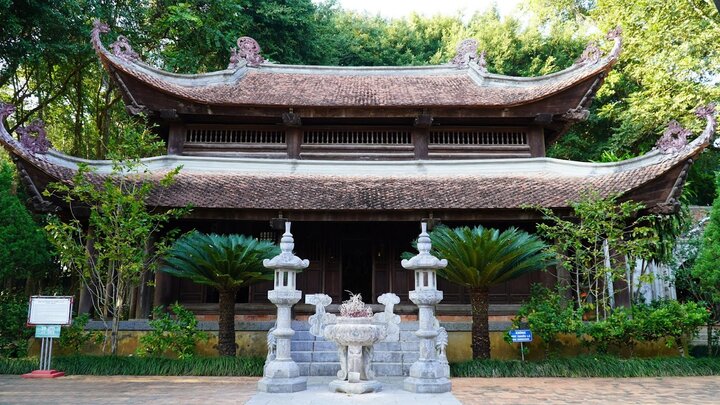
The Le Lai Temple is situated on a high, flat, and airy plot of land, praised by ancients as having the "dragon guarding, tiger crouching" posture. In front of the temple is a large, crescent-shaped lake reflecting the ancient curved roofs, creating a scene that is both solemn and graceful. The overall temple possesses an ancient, solemn beauty that still exudes sophistication, thanks to its meticulous carvings and harmonious, flowing architectural lines.
The temple is built in the "chong ruong gia chieng" architectural style, a traditional style common in the old Northern region, characterized by its sturdy wooden structure and gracefully curved tiled roofs. Inside, the altars are solemnly arranged, adorned with vibrant red lacquer and gold leaf, showing reverence for the hero who sacrificed for the greater cause. The inner sanctuary houses many precious ancient artifacts such as lacquered boards and couplets carved on solid wood, praising Le Lai's merits and loyal example. To the right of the temple is the Mother Temple, dedicated to Duc Thanh Chua Ba Nuong A Thien – Le Lai's wife, who shared the arduous early years of the Lam Son cause with her husband.
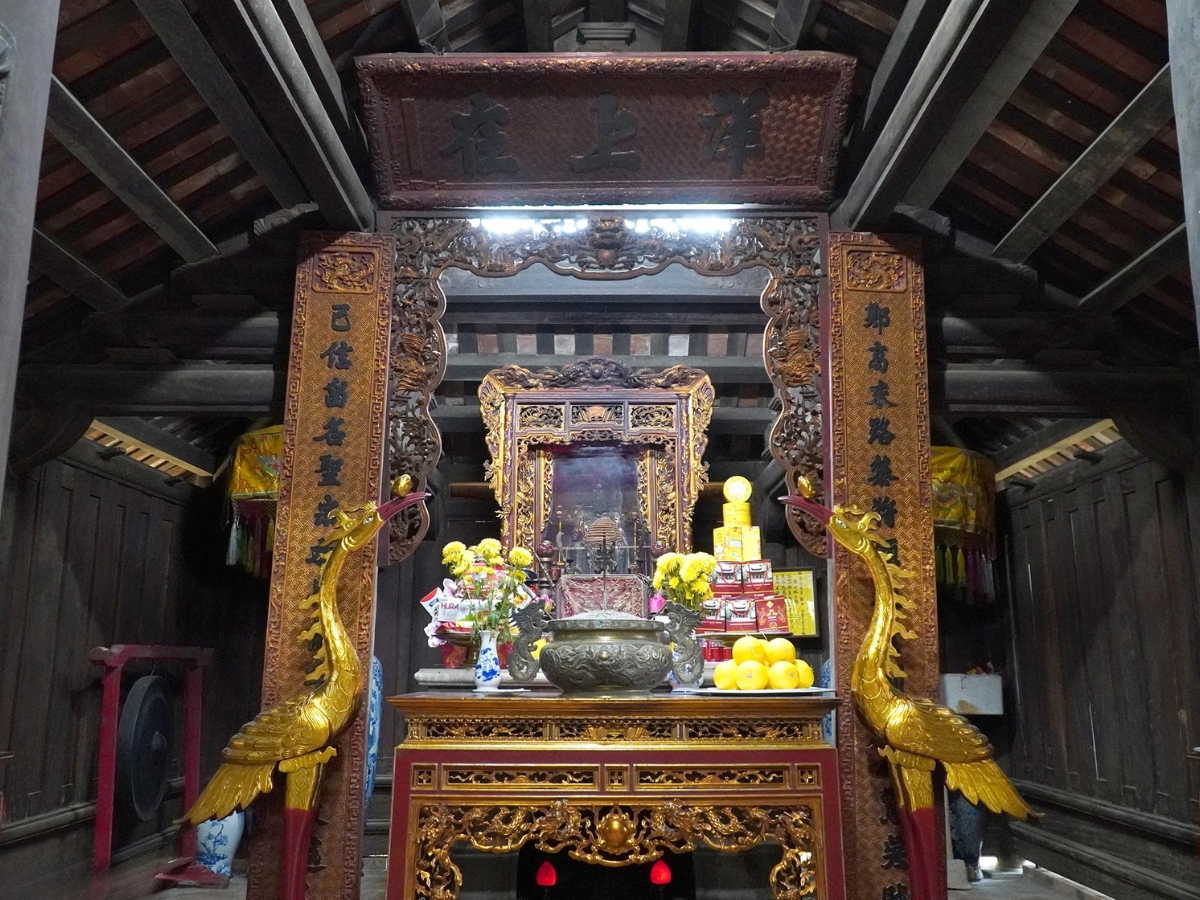
Inside Le Lai Temple, the altar is decorated with gilded lacquer. (Source: VnExpress)
3. Festivals and cultural activities at Le Lai Temple
3.1. Le Lai's death anniversary ceremony and traditional rituals
Annually, Le Lai Temple organizes major festivals on two occasions during the year. These are the 21st day of the 8th lunar month (a day designated by King Le Loi for the entire nation to remember the hero Le Lai) and the 8th day of the first lunar month (the exact anniversary of his death). This is an occasion for local people and visitors from afar to gather in their homeland of Kien Tho to commemorate and express gratitude for the great contributions of the hero who “risked his life for the king”, contributing to the victory of the Lam Son Uprising.
The ceremony part is conducted solemnly according to the ritual of worshipping deities during the Le dynasty, with activities such as offering incense, performing rituals, and reading eulogies praising the merits of the loyal and valiant hero. This is followed by a lively festival part with many unique folk cultural activities such as palanquin processions around the village, Chầu Văn singing, sword dances, archery, and gong and drum performances. All create a sacred yet familiar atmosphere, deeply imbued with traditional imprints and expressing the deep gratitude of posterity towards the immortal hero. The festival is not only an occasion to commemorate Le Lai but also a spiritual cultural beauty, a source of pride for the people of Thanh Hoa, contributing to the preservation and dissemination of the historical and humanistic values of the Lam Son land.
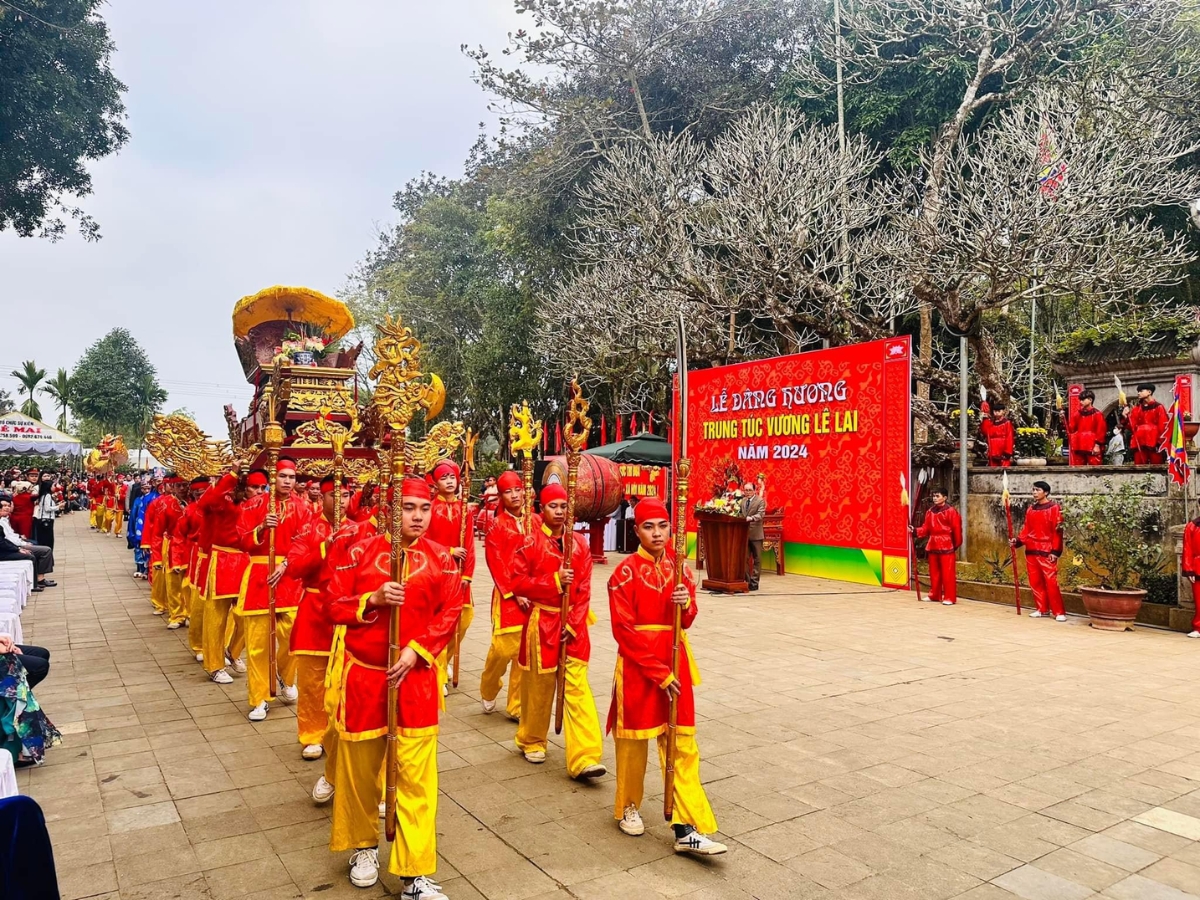
Festive, bustling atmosphere at the Le Lai Temple. (Source: Collected)
3.2. Year-round cultural and spiritual activities
Not only vibrant during the festival season, Le Lai Temple is also a sacred destination that attracts a large number of people and visitors from all over the year. On the 1st and 15th day of each lunar month or during traditional holidays and Tet, many local people and pilgrims come to the temple to offer incense to commemorate the merits of the hero Trung Túc Vương Le Lai, while praying for luck, peace, and health for themselves and their families.
In the quiet and sacred space, visitors light incense, calm their hearts with sincere respect to remember the one who sacrificed for a great cause, thereby further appreciating the historical values and national spirit. Besides offering incense, the temple also hosts many traditional cultural activities such as reading eulogies, calligraphy writing, asking for calligraphy blessings at the beginning of the year, or visiting and learning about the history of the Lam Son Uprising. Therefore, Le Lai Temple is not only a place that preserves the heroic memories of the past but also a close spiritual place where people entrust their faith, turn towards their roots, and cultivate the national principle of "when drinking water, remember the source".
4. Tips for visiting Le Lai Temple
Visiting Le Lai Temple , visitors can not only immerse themselves in a sacred space imbued with historical significance but also have the opportunity to experience the traditional culture of the Lam Son land. To make the trip more complete, visitors should note some tips below.
4.1. Ideal time to visit
The most beautiful time to visit Le Lai Temple is in autumn, when the weather is cool, the temple grounds are covered with greenery, and the air is fresh in the midland region. Additionally, visitors can come during the festival season, especially on the 21st day of the 8th lunar month or the 8th day of the 1st lunar month. This is the most lively and bustling time of the year, when visitors can immerse themselves in the festive atmosphere and deeply feel the gratitude and pride of the people of Thanh Hoa towards the hero Le Lai.
4.2. Attire and etiquette to note
As a sacred place of worship, visitors should choose polite and modest attire, avoiding overly short or brightly colored clothing. When entering the temple, maintain a solemn attitude, speak softly, and do not take photos arbitrarily in the main altar area. When offering incense, visitors should prepare simple offerings such as incense, flowers, betel leaves and areca nuts, and fruits to show sincere respect.
4.3. Combine with visits to other famous attractions in Thanh Hoa
After offering incense and visiting Le Lai Temple , visitors can continue their journey to explore other famous destinations in the Thanh Hoa region to learn more about history and enjoy the beautiful natural scenery. Near the temple is the Lam Kinh Historical Site, where King Le Loi and the founding heroes are buried. Here, visitors can stroll among ancient trees, listen to stories about the Lam Son Uprising, and feel the sacred historical atmosphere. Afterwards, visitors can visit Ho Citadel and Tay Giai ancient house to admire unique architectural works bearing the imprint of the ancient land.
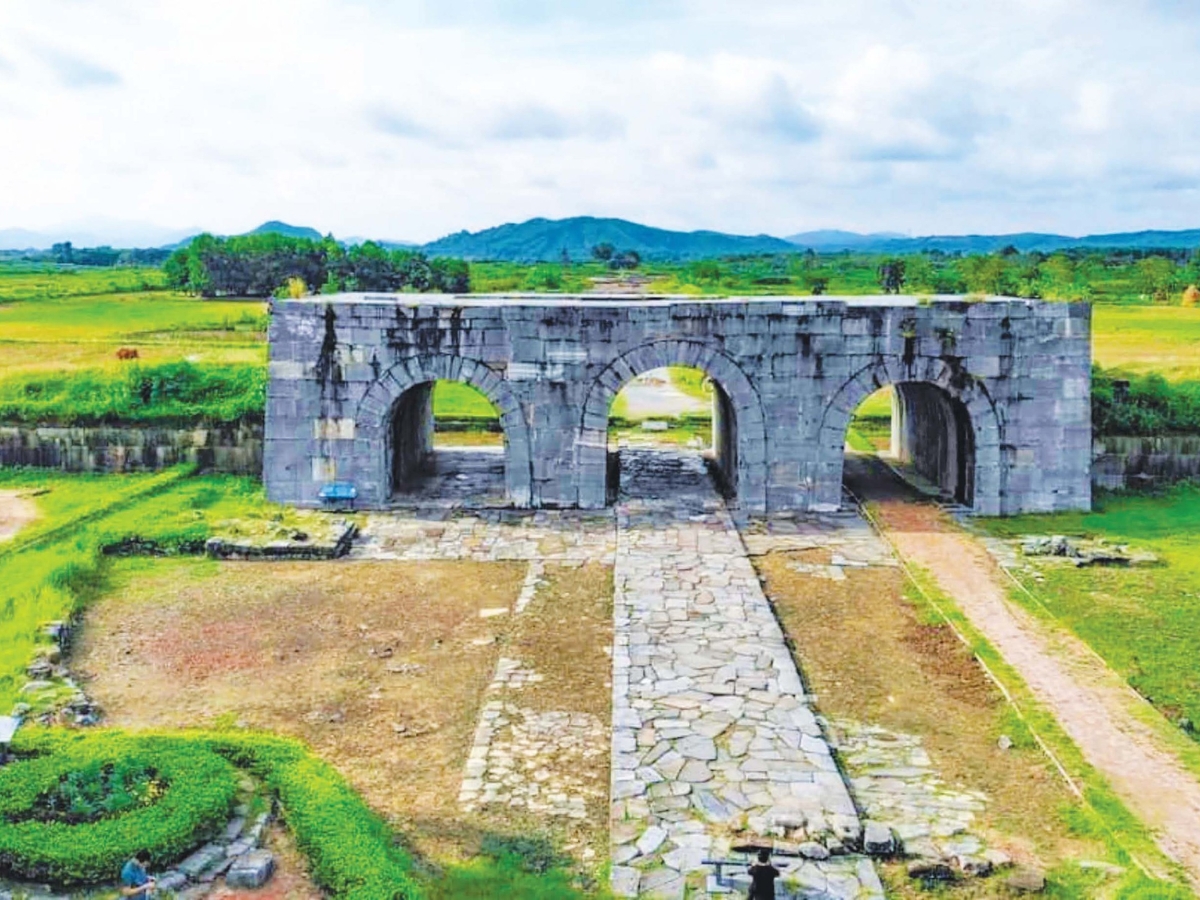
Visit and listen to the historical stories associated with Ho Citadel. (Source: Health & Life Newspaper)
If you love nature, you can stop by Pu Luong or Ben En to enjoy the fresh air, go boating, take a walk, and explore peaceful villages. In the near future, that journey can be extended to Huyen Tich Am Tien, a spiritual tourist destination being built amidst majestic mountainous scenery. When completed, this place promises to offer an ideal space for worship, relaxation, and sightseeing, helping visitors end their trip with a sense of peace and fulfillment.
Amidst the peaceful mountains and forests of Kien Tho, the Le Lai Temple still stands tall as a testament to the loyalty and the spirit of “selfless devotion to the nation” of the Lam Son hero. Each incense stick offered here is a deep expression of gratitude to the one who sacrificed for the righteous cause, so that the country could be unified. Today, the Le Lai Temple is not only a spiritual destination but also a place that preserves historical memories and the nation's moral traditions. If you have the chance to visit Thanh Hoa, please visit this sacred temple once to feel the breath of history, return to your roots, and reflect on the immortal loyal example.