















1. Overview of Le Hoan Temple
1. Where is Le Hoan Temple located?
Le Hoan Temple is located in Trung Lap village, Xuan Lap commune, Thanh Hoa province – a sacred land considered the cradle of many national heroes. This is the hometown of King Le Dai Hanh, who made great contributions to unifying the country, establishing the Tien Le dynasty, and ushering in a prosperous period for the nation after the 12 Warlords period.
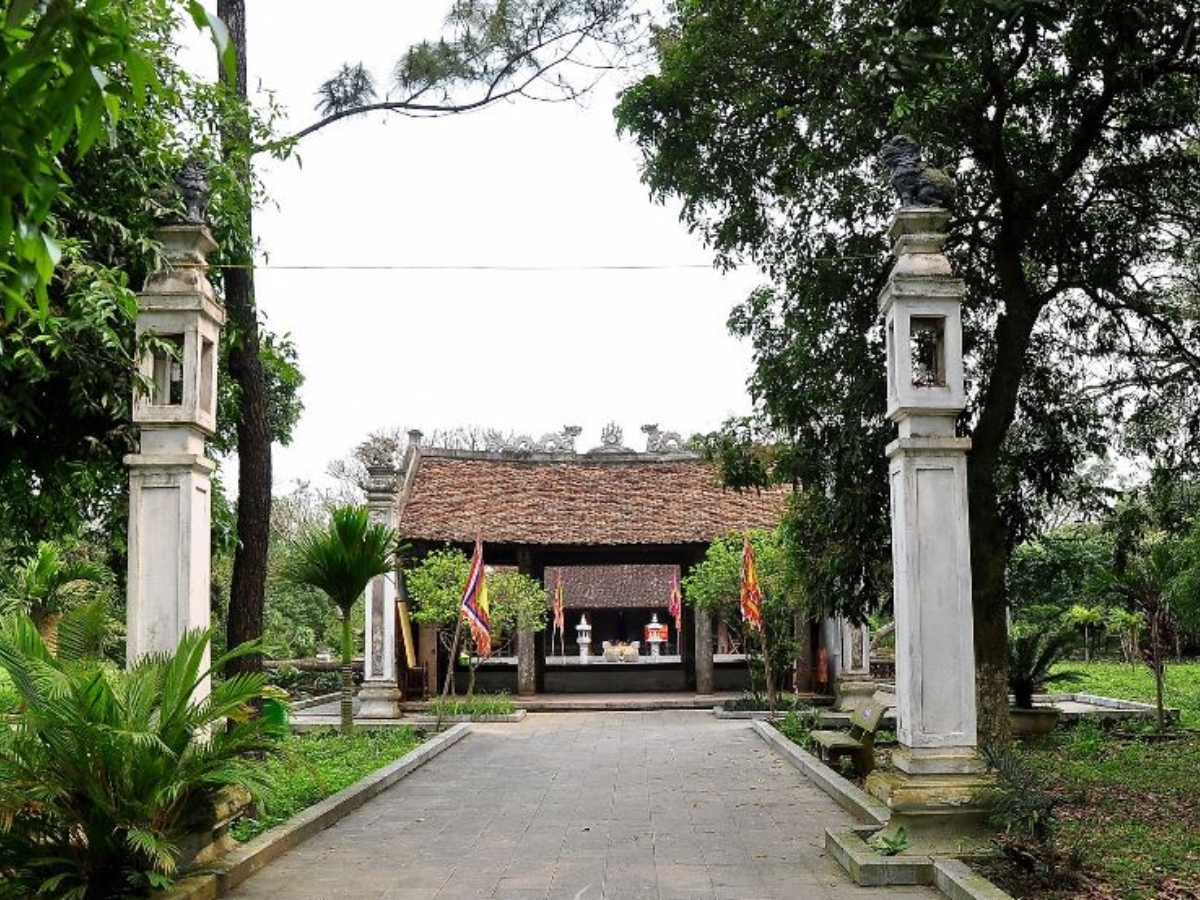
Le Hoan Temple is located in Trung Lap village, Xuan Lap commune, Thanh Hoa province. (Source: Collected)
1.2. History of the formation of Le Hoan Temple
The temple was built to commemorate the great merits of King Le Hoan, the wise ruler who led the army and people of Dai Co Viet to defeat the invading Song army in 981, maintaining national independence. Over hundreds of years, Le Hoan Temple has been preserved, restored, and considered a typical sacred place of Thanh Hoa region. With its special historical, cultural, and architectural values, in 2018, the temple was ranked as a Special National Monument, becoming a proud symbol of Thanh Hoa.
2. Admire the unique architecture of Le Hoan Temple
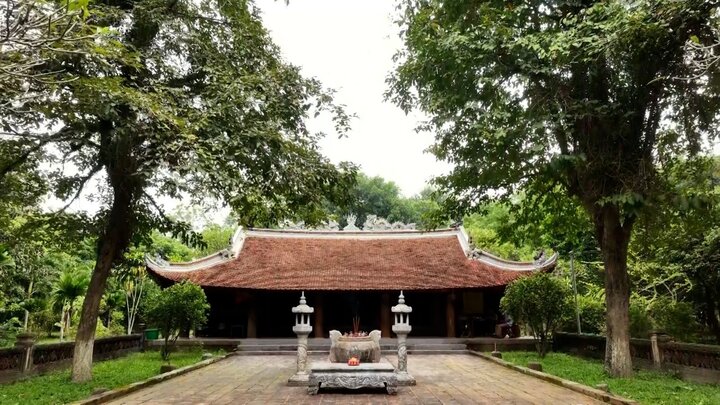
Le Hoan Temple is a large-scale architectural complex dedicated to worship, bearing the strong imprint of the history and culture of the Early Le Dynasty. The entire relic area was built to commemorate King Le Dai Hanh and his parents who raised him, including the Sinh Thanh foundation, the Queen Mother's tomb, the Royal Father's tomb, and Le Dot's tomb. The temple complex is arranged in the traditional "Công" (工) shape, consisting of 13 bays with three main areas: the Front Hall, the Middle Hall, and the Rear Sanctuary.
The wooden truss system is intricately carved, clearly showing the architectural characteristics of the Early Le Dynasty. Components such as purlins, ceiling beams, brackets, and corner rafters are all firmly connected, creating a stable and majestic whole. The rich carving style with techniques of pierced carving, relief carving, and openwork carving brings a soft yet solemn beauty to the temple. As a result, Le Hoan Temple is considered one of the historical and cultural relics with the most ancient and unique artistic value in Thanh Hoa today.
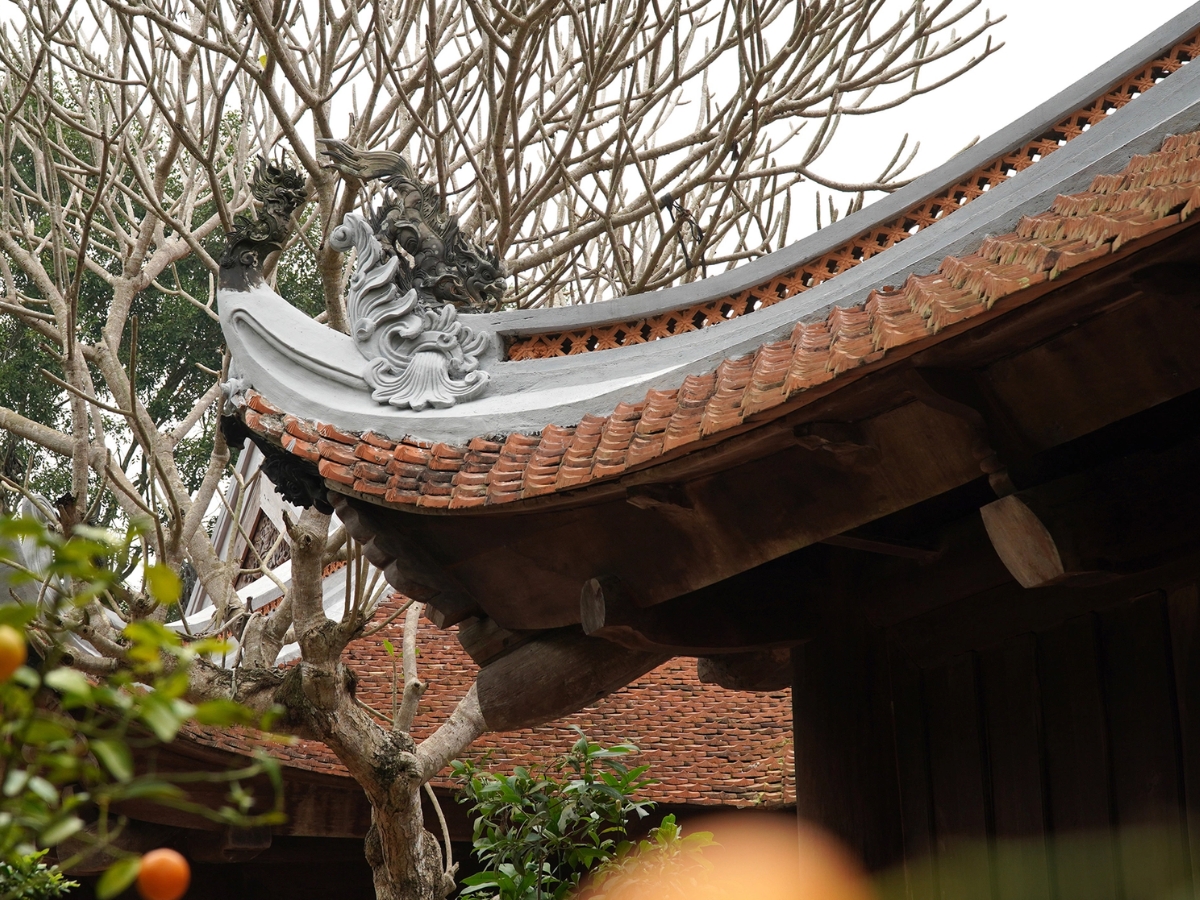
The ancient temple features a curved, upturned roof design, as commonly seen in ancient Vietnamese communal houses and pagodas. (Source: VnExpress)
Not only outstanding in architecture, Le Hoan Temple also preserves many valuable artifacts, reflecting a glorious period in the nation's history. Notably, there are also two stone steles from the 17th century recording the life and career of King Le Dai Hanh, along with 14 royal decrees from the Le and Nguyen dynasties. These artifacts are not only priceless historical relics but also showcase the beauty of the cultural life and beliefs of the people of Thanh Hoa.
3. Experiencing Traditional Festivals at Le Hoan Temple
Annually, the festival at Le Hoan Temple is held from the 7th to the 9th day of the 3rd lunar month, an occasion for people to commemorate the great contributions of Emperor Le Dai Hanh and the ancestors who contributed to building the nation and protecting its sovereignty. Through the ups and downs of history, the festival is still maintained and solemnly organized by the people of Thanh Hoa, demonstrating deep gratitude and pride towards the wise king. In recent years, the scale and venue of the festival have been increasingly expanded, attracting a large number of local people and visitors from all directions, affirming the enduring vitality of the festival in modern cultural life.
The festival at Le Hoan Temple consists of two parts: the ceremony and the festivities. The ceremony part is imbued with a sacred and solemn atmosphere with rituals of offerings, incense burning, and especially the palanquin procession to commemorate the merits of Emperor Le Dai Hanh and the generals of the Early Le dynasty. The palanquins are carried from the temple to Quoc Mau Temple, then after the ceremony, they are carried back, then proceed to Hoang Khảo's tomb before returning to the main temple. This palanquin procession not only vividly recreates the cultural life of the Early Le period but also embodies the moral principle of 'when drinking water, remember its source', the sincere respect and deep gratitude of the people towards Emperor Le Dai Hanh and his parents.
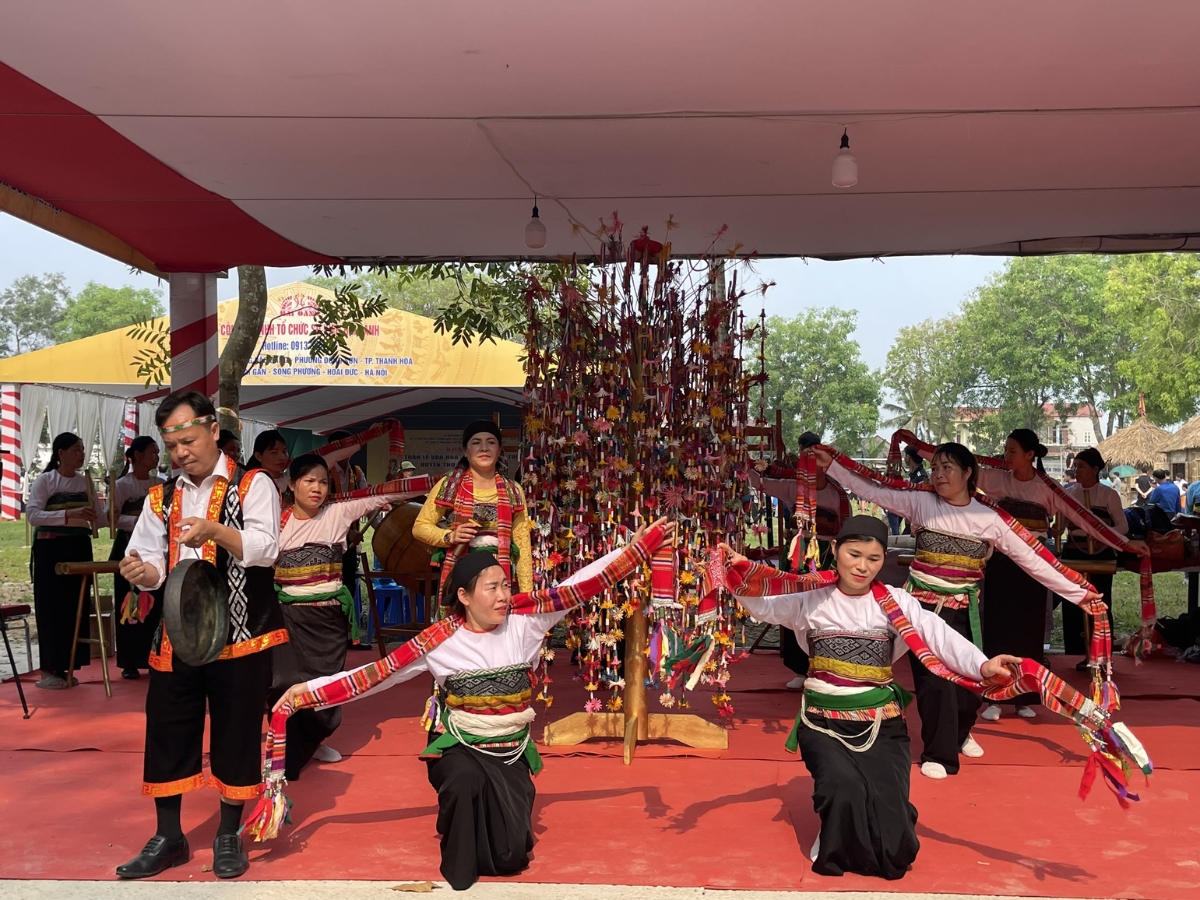
Pồn - Pông dance performance at the Le Hoan Temple festival. (Source: thoxuan.vn)
4. Experience and notes when visiting Le Hoan Temple
To make your visit to the Le Hoan Temple complete and meaningful, visitors should prepare some things below. These small notes will not only help visitors have a smooth journey but also show respect for the spiritual space and special historical site of Thanh Hoa.
Prepare appropriate attire and necessary items: When visiting the Le Hoan Temple, visitors should choose polite, modest, and neat clothing. Avoid wearing overly short or offensive clothing as this is a sacred space. Additionally, bring water, hats, umbrellas, and cameras for convenience and to capture beautiful moments during your exploration.
Respect regulations and preserve the heritage space: During your visit, visitors must comply with the regulations of the relic site, do not encroach on the worship areas, and refrain from touching displayed artifacts. Maintain order, avoid making noise, and pay special attention to environmental protection, not littering within the temple grounds.
Combine with visits to other famous tourist attractions in Thanh Hoa: After offering incense at the Le Hoan Temple, visitors can continue their journey to explore famous places such as Ho Citadel, Cam Luong magic fish stream, and Lam Kinh historical site. Notably, in the coming years, Huyen Tich Am Tien at Nua mountain is expected to be completed and operational, promising to become a new spiritual tourist destination, contributing to enriching the exploration journey of Thanh Hoa's cultural and historical heritage.

The Legendary Fairy Temple (Huyen Tich Am Tien) promises to become an impressive spiritual tourist destination in Thanh Hoa in the future. (Source: Sun Home)
The journey to Le Hoan Temple is not just a visit to a historical site, but also an occasion for everyone to return to the roots of the indomitable spirit and patriotism of the Vietnamese nation. Amidst the ancient, majestic space and strongly marked by the Tien Le period, visitors can feel the breath of history and national pride spreading in every curved roof. If you have the chance to visit Thanh Hoa, visit Le Hoan Temple once to offer incense in remembrance, listen to the story of the outstanding wise ruler, and fully appreciate the sacred beauty of the Thanh Hoa land.