
















1. Cua Dat Temple during Tet – A popular spiritual journey
1.1. Location, outstanding features, and cultural value of Cua Dat Temple
Cua Dat Temple during Tet (or Cua Dat) is located in the land of Muong Chieng Van, Van Xuan commune, about 60 km from Thanh Hoa center. The temple is situated on the left bank of the Chu River, at the confluence of the Chu River and the Dat River, with a wide expanse of water in front and lush green mountains and forests behind, creating a harmonious space between nature and belief.
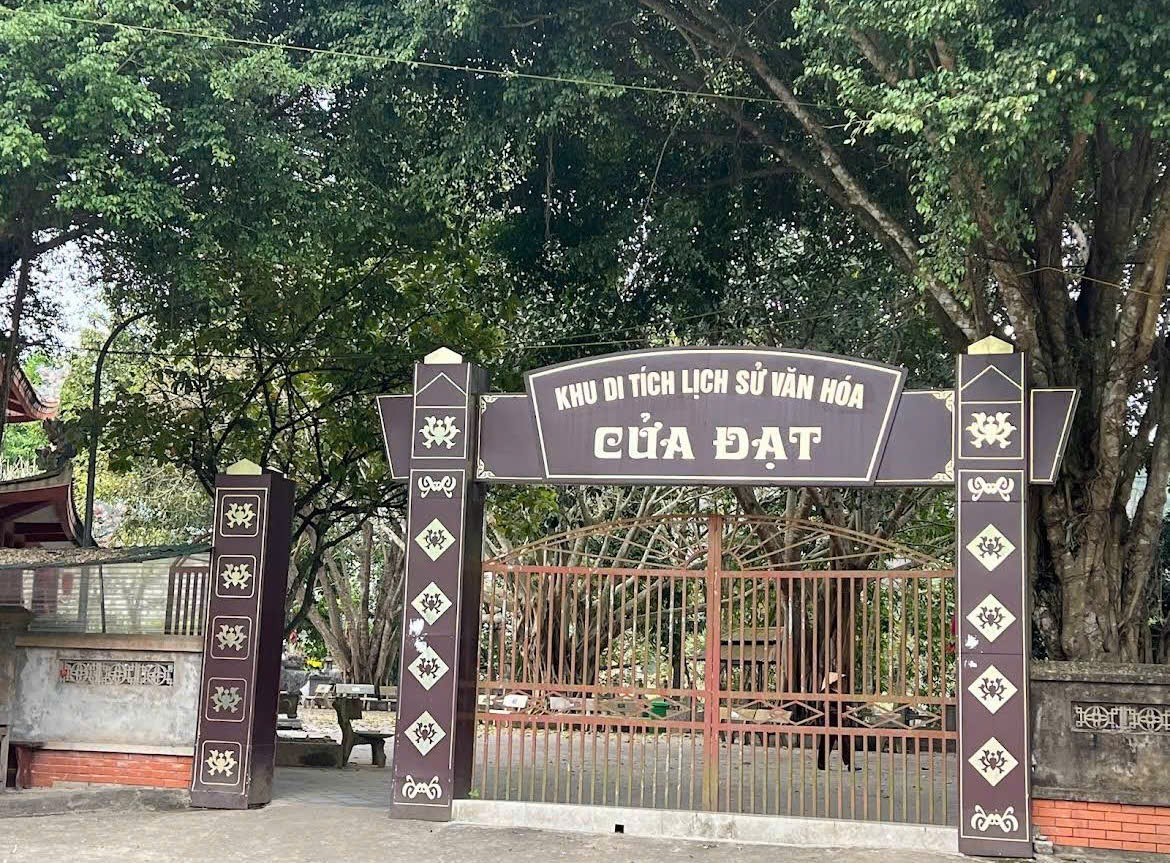
Cua Dat Temple historical site, located on the left bank of the Chu River amidst lush green mountains and forests. (Source: Collected)
The temple is dedicated to Ba Chua Thuong Ngan, a holy mother associated with mountains and forests in the Vietnamese Mother Goddess worship, along with Cam Ba Thuoc – leader of the Can Vuong movement, who made significant contributions to the patriotic movement in Western Thanh Hoa in the late 19th century. With its outstanding historical, cultural, and spiritual values, Cua Dat Temple has been recognized as a provincial-level historical and cultural relic, becoming an important site for local religious activities.
The temple grounds are spacious and airy, combined with the serene Chu River scenery and rolling mountains, making a pilgrimage here at the beginning of the year a solemn yet very relaxing experience.
1.2. Why is Cua Dat Temple attractive to tourists during Tet?
At the beginning of the year, Cua Dat Temple during Tet welcomes a large number of tourists from all over to offer incense, praying for peace, prosperity, and health for their families. The festive atmosphere is vibrant in the early days of spring, especially from the 1st to the 15th day of the first lunar month, creating a distinct traditional cultural activity of the Va Xuan region.
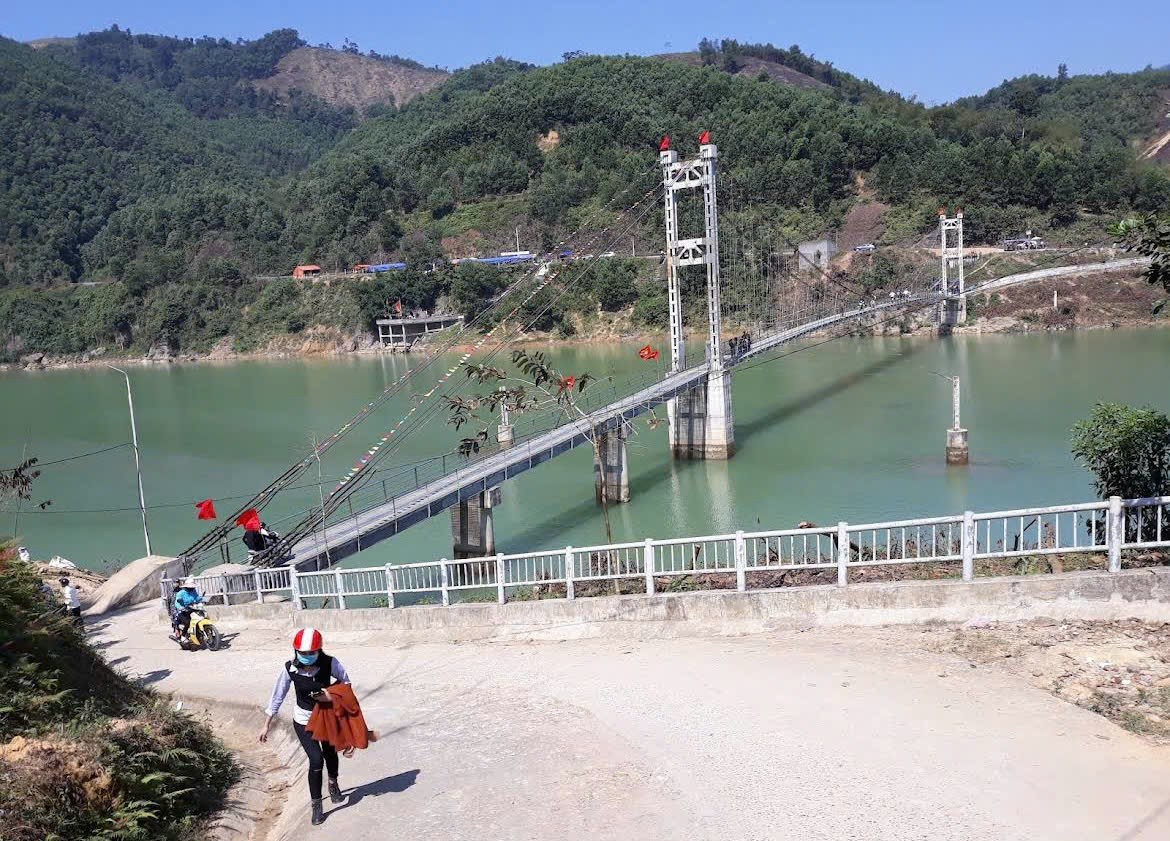
The river and mountain route of western Thanh Hoa leads to Cua Dat Temple, bringing visitors a peaceful feeling at the beginning of the year. (Source: Collected)
What makes many visitors choose Cua Dat Temple during Tet is not only its spiritual aspect but also the spring travel experience combined with nature. On the journey to the temple, visitors have the opportunity to admire the characteristic scenery of mountains, forests, rivers, and water of the western Thanh Hoa region, bringing a gentle and peaceful feeling at the beginning of the year.
The combination of historical value, Mother Goddess worship beliefs, and natural scenery has helped Cua Dat Temple during Tet become one of the prominent spiritual destinations, chosen by many for their spring travel and worship journeys whenever Tet arrives and spring returns.
2. Experience moving to Cua Dat Temple during Tet
2.1. Instructions for traveling from Hanoi, Ho Chi Minh City, and surrounding provinces
From Hanoi, the distance to Cua Dat Temple during Tet is about 170 km, with an average travel time of 4 to 5 hours. Visitors can take a bus from Giap Bat or Nuoc Ngam bus stations to the old Thanh Hoa city, with a travel time of about 3–3.5 hours, then continue to Van Xuan commune. During the peak Tet season, it is advisable to book tickets 5 to 7 days in advance to ensure availability and avoid price increases.
If traveling by private car, the convenient route is to follow the Phap Van – Cau Gie – Ninh Binh Expressway, then take National Highway 1A to Thanh Hoa, and then turn onto National Highway 47 or National Highway 45 towards Van Xuan. This option is suitable for families or large groups, allowing for time flexibility, but it is advisable to depart early to avoid traffic jams.
Visitors from Ho Chi Minh City often choose to fly to Tho Xuan Airport (Thanh Hoa) with a flight time of about 2 hours. From the airport, the distance to Cua Dat Temple during Tet is about 45–50 km, traveling by taxi or hired car takes about 1–1.5 hours. Provinces near Thanh Hoa can flexibly travel by motorbike or private car along connecting national highways.
2.2. Intra-provincial travel in Thuong Xuan, Thanh Hoa
From the center of the old Thanh Hoa city to Cua Dat Temple during Tet, visitors need to travel an additional 60 km. Taxis, hired cars, and motorbikes are commonly used means of transport, with taxis and private hired cars being suitable for families, while motorbikes are ideal for those who want to combine spring travel and sightseeing.
The road to the temple is paved and quite easy to travel, but during Tet, it is often crowded with vehicles, especially in the morning hours. Visitors should avoid traveling during peak hours or proactively park early in the parking area near the temple. The parking fee usually ranges from 10,000 to 30,000 VND depending on the vehicle type and is clearly posted during holidays and Tet.
3. Unmissable experiences at Cua Dat Temple during Tet 2026
3.1. Spiritual rituals and traditional festivals at the beginning of the year
The most outstanding experience when visiting Cua Dat Temple during Tet is participating in familiar spiritual rituals such as peace prayer ceremonies, offering incense, and asking for good fortune at the start of spring. From the 1st day of Tet to the 15th day of the first lunar month, the stream of people visiting the temple is constant, creating a bustling festival atmosphere while maintaining the inherent solemnity of the sacred place.
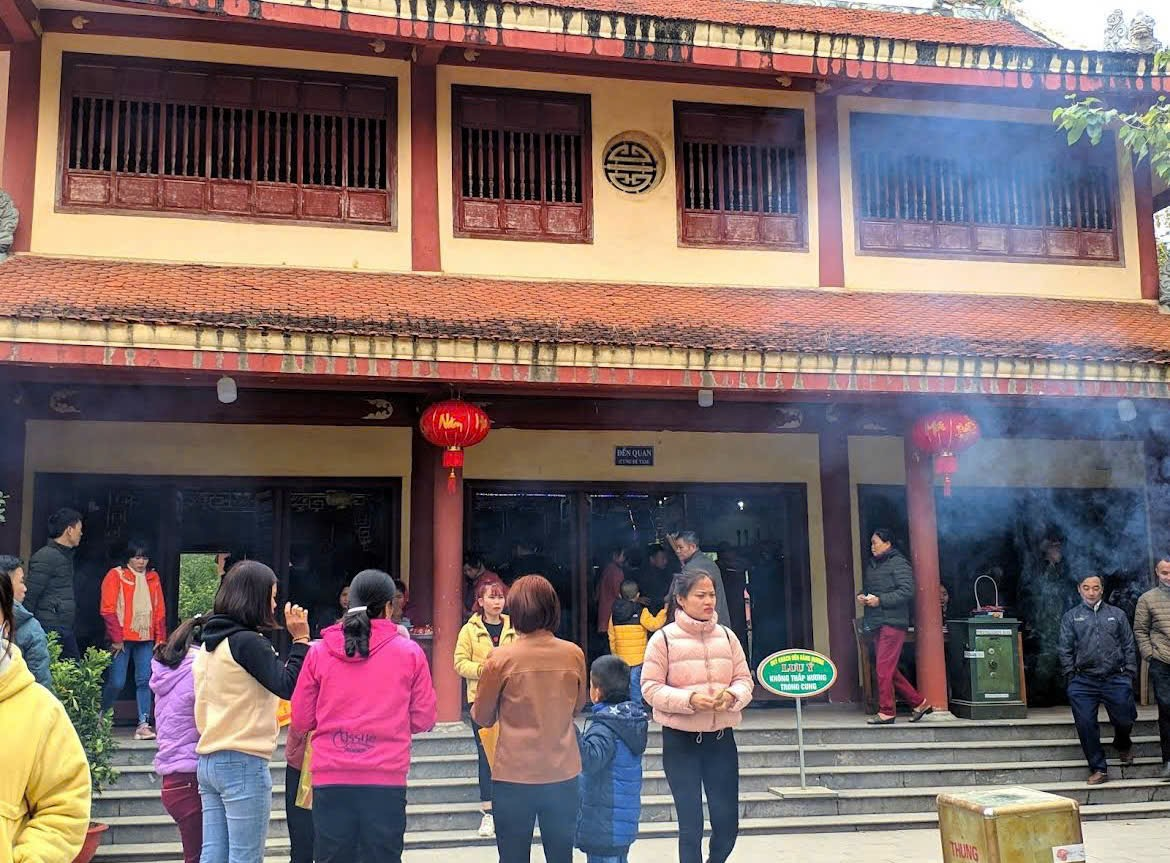
Incense offering ritual at Cua Dat Temple, where visitors entrust their wishes for peace at the beginning of the year. (Source: Collected)
The incense offering ritual at the temple is usually performed with the hope of a peaceful new year, harmonious family life, and smooth work. The temple's space is located amidst river and mountain nature, helping visitors clearly feel the tranquility, different from many crowded festival spots in the plains. This is also the reason why Cua Dat Temple during Tet is chosen by many people for a spring travel journey with deep spiritual meaning.
3.2. Discover architecture, landscape, and monument symbols
Besides the spiritual aspect, Cua Dat Temple during Tet also impresses with its ancient architecture, bearing the traditional characteristics of temples in the midland-mountainous region of Thanh Hoa. The main sections such as nghi mon, tien duong, and hau cung are harmoniously arranged, facing the river and water space, creating a feeling of both sacredness and closeness to nature.
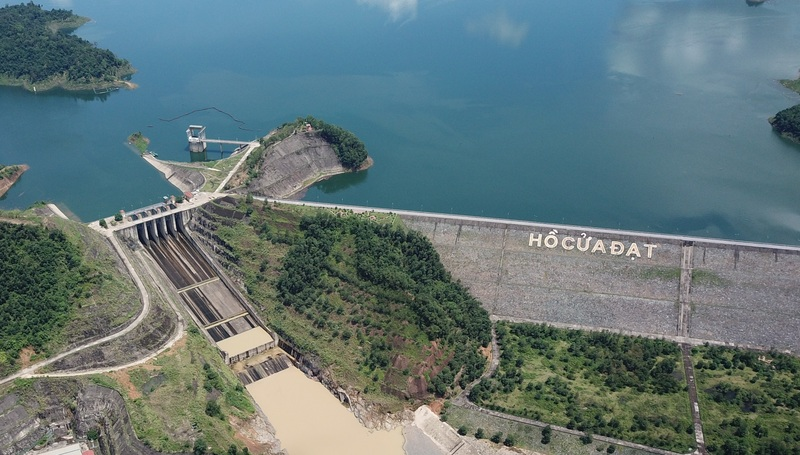
From the grounds of Cua Dat Temple, gaze out at the gentle Chu River and the vast Cua Dat Lake amidst the upstream mountains and forests. (Source: Collected)
From the temple grounds, visitors can gaze out at the gentle Chu River and the vast Cua Dat Lake area upstream. In the early spring days, the scenery here becomes even more pristine, suitable for those who want to combine pilgrimage and sightseeing. Additionally, the area around the temple is also associated with many historical imprints, contributing to the cultural value of a visit during Tet 2026.
3.3. Combined tourism activities at Cua Dat
After offering incense at Cua Dat Temple during Tet, many visitors choose to combine it with a visit to Cua Dat Lake – a major irrigation work in Thanh Hoa, notable for its vast water surface and surrounding mountainous scenery. This is a suitable stopover for relaxation, photography, and enjoying the gentle spring travel atmosphere.
In addition to Cua Dat Lake, visitors can also connect their itinerary to visit other temples and pagodas in the former Thuong Xuan district and surrounding areas, creating a complete spiritual-ecological tourism journey at the beginning of the year. With its characteristic natural landscape and long-standing cultural values, the Cua Dat area is increasingly chosen by many for pilgrimage trips combined with early spring check-ins in 2026.
4. Cuisine and amenities around Cua Dat Temple during Tet
4.1. Specialty dishes to try in Xuan – Cua Dat
After offering incense at Cua Dat Temple during Tet, visitors can visit local eateries around the center of Van Xuan commune to enjoy specialty dishes of the western Thanh Hoa region. The most popular is grilled bamboo tube sticky rice (com lam) served with grilled meat or free-range chicken, a familiar dish of the Thai ethnic group who have lived here for a long time. The price for a serving of com lam and grilled items usually ranges from 50,000 to 120,000 VND, suitable for both small groups and families.
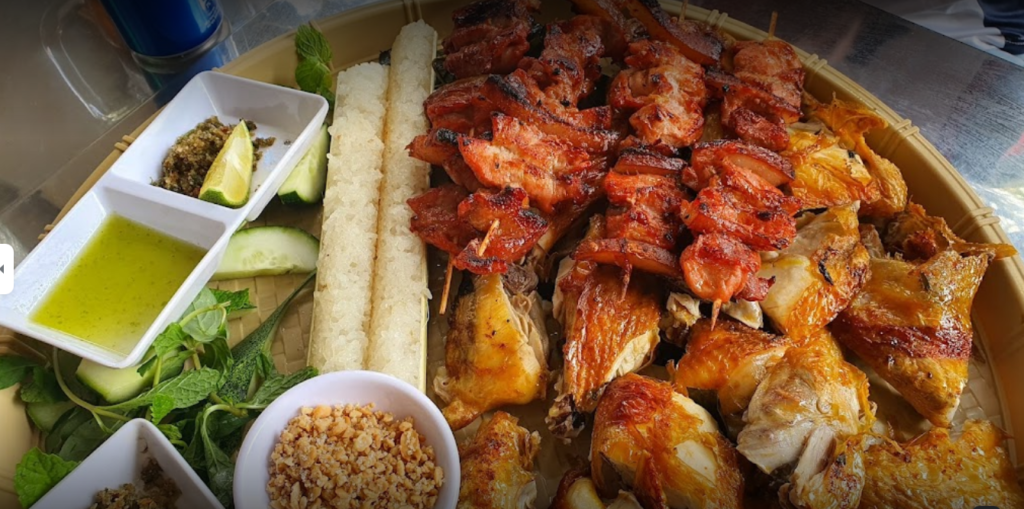
Bamboo tube sticky rice with grilled mountain chicken – Van Xuan specialty, rich mountain flavor, chosen by many tourists when visiting Cua Dat Temple. (Source: Collected)
Additionally, Chu River fish dishes such as grilled fish, fish stewed with wild bamboo shoots, or braised fish are also chosen by many tourists during Tet. The fish ingredients are caught from the river or Cua Dat Lake area, processed traditionally, resulting in a rich and palatable flavor. Some eateries are open throughout Tet, especially from the second day onwards. However, tourists should inquire about opening hours beforehand as operating times may be shorter than usual.
4.2. Tet Holiday Utility Services: Parking, Accommodation, Purchasing Offerings
During peak periods, Cua Dat Temple during Tet has a centralized parking area for both cars and motorbikes, with clearly posted fees, commonly ranging from 10,000 to 30,000 VND per entry. Tourists should park early and walk to the temple to avoid congestion, especially during morning hours.
Regarding accommodation, the Van Xuan area currently has several guesthouses, small hotels, and homestays serving visitors for early year pilgrimages. Accommodation facilities are mainly concentrated in the district center or areas near Cua Dat Lake, suitable for families or friends traveling for 1-2 days. Room prices during Tet usually range from 300,000 to 700,000 VND per night depending on the room type and booking time.
Offerings, incense, flowers, and votive paper are readily available for sale at stalls near Cua Dat Temple during Tet . Tourists should buy simple offerings, sufficient for incense burning, to maintain solemnity and ease of movement. Some people also choose to buy small feng shui items or souvenirs with auspicious meanings for the new year, but it is advisable to clarify prices before purchasing to avoid unnecessary expenses.
5. Festivals and Unique Cultural Activities at Cua Dat Temple During Tet
5.1. Cua Dat Traditional Festival: Time, Prominent Rituals
The Cua Dat Temple festival is usually held in early spring, commonly from after the Lunar New Year until around the 15th day of the first lunar month, when the number of pilgrims increases. During the festival days, Cua Dat Temple during Tet holds traditional ceremonies such as the opening ceremony, incense offering ceremony to commemorate Ba Chua Thuong Ngan and Cam Ba Thước, praying for favorable weather, prosperous life, and peace.
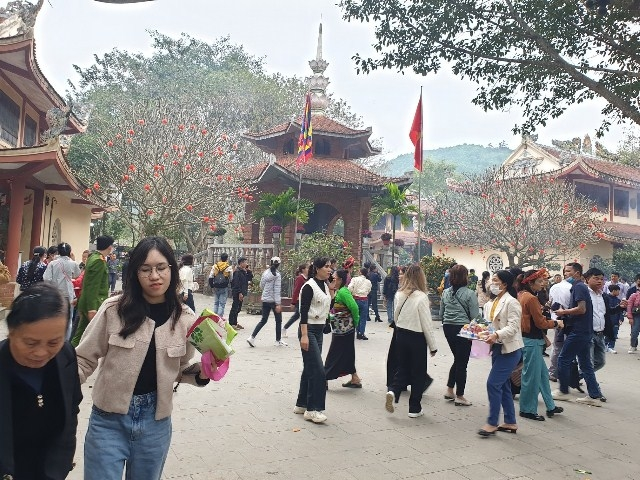
Festival commemorating the Goddess Mother of the Upper Region at Cua Dat Temple, vibrant with spring colors, attracting many tourists at the beginning of the year. (Source: Collected)
The ceremony was performed with solemn rituals, with the participation of local government representatives, the monument management board, and many local people. The festival part took place interspersed with cultural and folk game activities bearing the strong cultural identity of Thanh Hoa's mountainous region, creating a lively atmosphere, attracting tourists in the early days of the new year.
The greatest significance of the festival at Cua Dat Temple during Tet lies in preserving the Mother Goddess worship belief and honoring ancestors, becoming an occasion for the local community to bond and introduce traditional cultural beauty to visitors from all directions.
5.2. Accompanying cultural and artistic activities
Alongside the main rituals, Cua Dat Temple during Tet also hosts many cultural and artistic activities for locals and tourists. Programs of folk art performances, traditional singing and dancing of the Thai ethnic group in Van Xuan are often organized within the framework of the festival, contributing to recreating the characteristic cultural life of the western mountainous region of Thanh Hoa.
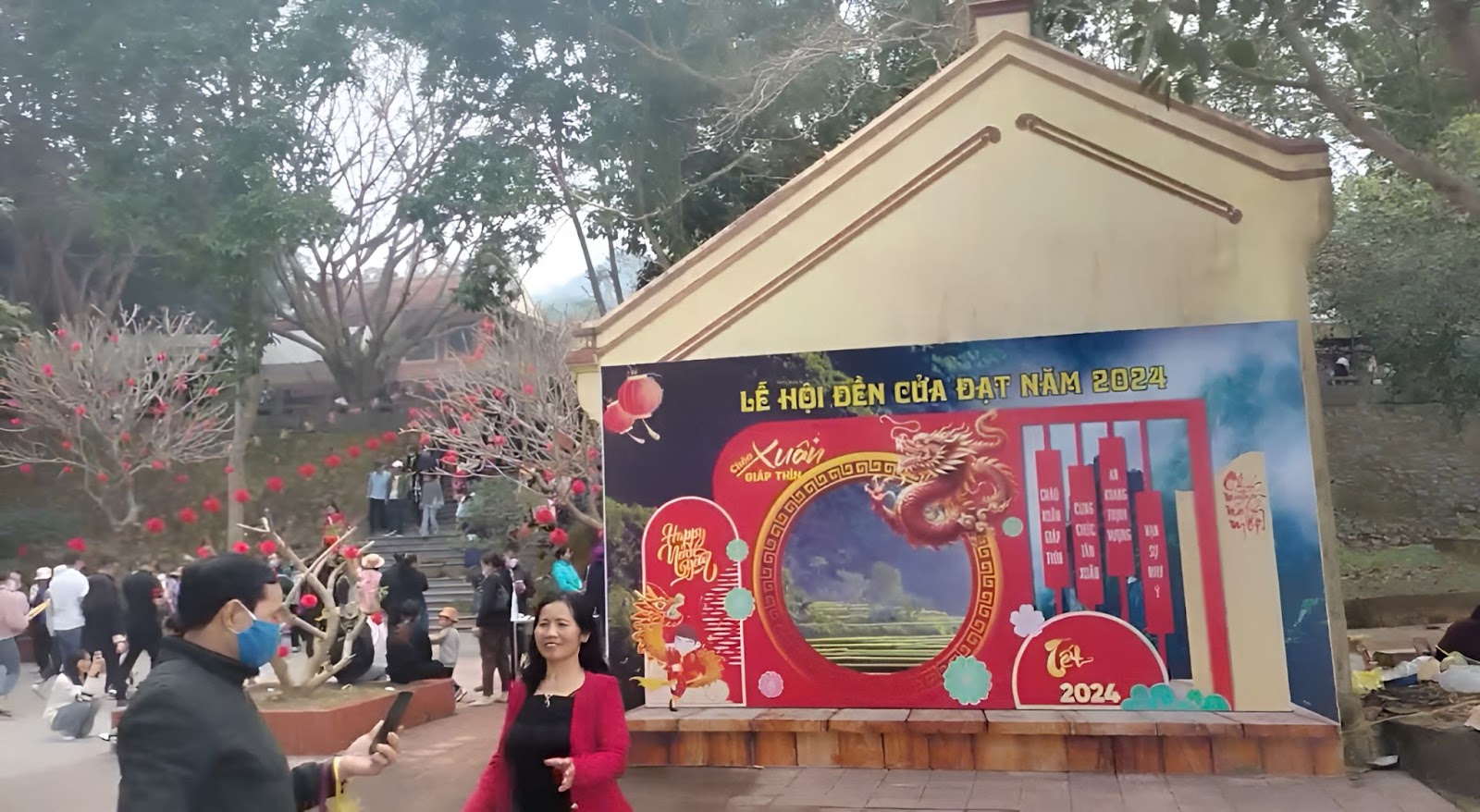
The festival atmosphere at Cua Dat Temple is bustling in early spring, a check-in spot attracting tourists during Tet. (Source: Collected)
Additionally, in some years, there are exhibitions of images and documents about the history of the relic site, and about the life and career of Cam Ba Thước, helping tourists better understand the historical and cultural values of Cua Dat Temple during Tet. These activities not only enrich the spring travel experience but also contribute to raising awareness of preserving and promoting the values of the relic site within the community.
6. Useful experiences and tips when visiting Cua Dat Temple during Tet 2026
6.1. Prepare clothing and items when going for the first prayer of the year
When visiting Cua Dat Temple during Tet, tourists should prioritize polite, modest, and subtle-colored clothing to suit the spiritual space. Neat clothing, sneakers, or flat shoes are reasonable choices because the temple grounds are quite spacious and have many steps to navigate. In the early days of spring, the weather in Van Xuan is often cool in the early morning and evening, so bring a light jacket to keep warm.
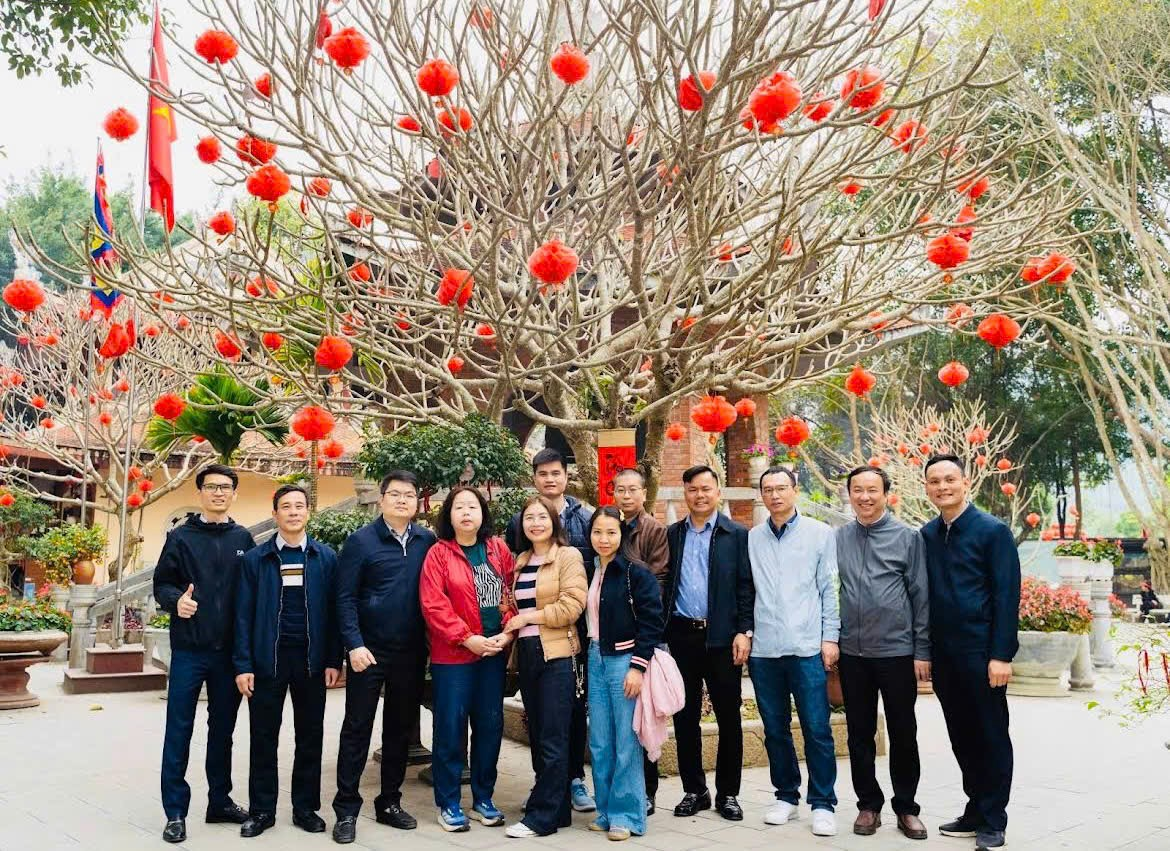
Elegant attire when taking photos at Cua Dat Temple, enhancing the serene spring travel beauty and the spiritual atmosphere at the beginning of the year. (Source: Collected)
Additionally, visitors only need to prepare simple offerings including incense, flowers, sweets, or savory offerings depending on personal beliefs. Bringing personal drinking water and a small bag for essential items will make the pilgrimage to Cua Dat Temple during Tet more convenient, especially during peak hours.
6.2. Notes on customs and festival culture at Cua Dat
When offering sacrifices at Cua Dat Temple during Tet, visitors should comply with the general regulations of the relic site, maintain a serious attitude, speak softly, and avoid jostling or pushing. Incense offering should be done according to the guidance of the management board or the temple keeper, avoiding placing offerings indiscriminately, which mars the aesthetics.
Besides, the awareness of maintaining general hygiene is very important during crowded festival days. Visitors should dispose of trash in designated areas, do not write or vandalize architectural elements, contributing to the preservation of the relic space and the long-term cultural values of Cua Dat Temple during Tet.
6.3. Tips for beautiful photos and check-ins, and avoiding crowds
With the advantage of harmonious river and mountain scenery, Cua Dat Temple during Tet is a destination chosen by many tourists to capture early spring moments. The ideal time for photography is usually early morning before 8 AM or early afternoon, when the crowd is not too large and the natural light is more beautiful.
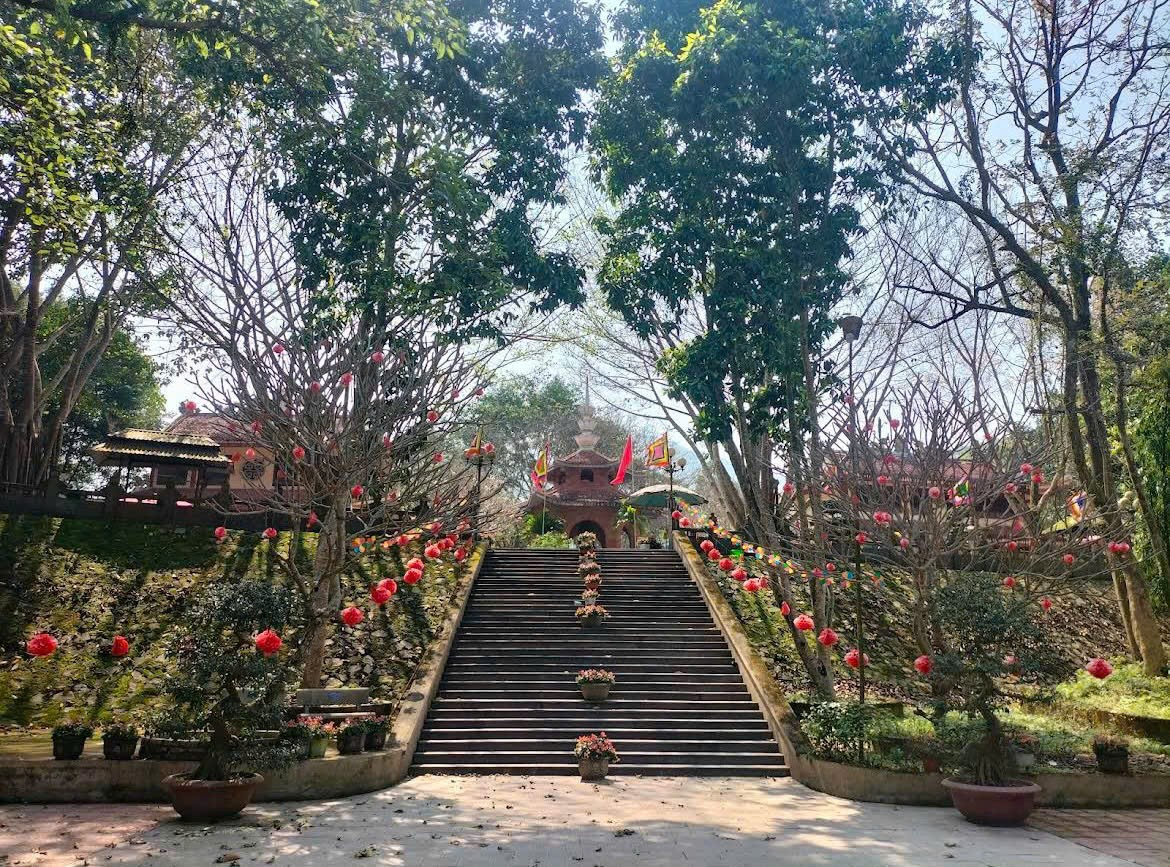
The check-in corner at Cua Dat Temple is filled with natural light, with stone steps covered in spring colors amidst a serene spiritual space. (Source: Collected)
Popular spots are usually the temple gate area, the temple courtyard facing the Chu River, and the paths leading to the temple with surrounding mountainous scenery. To avoid crowds in the frame, visitors can visit on off-peak days or proactively take quick, concise photos without lingering too long at central locations.
Besides the spiritual journey, visitors can combine their trip with a visit to the Sam Son sea square – one of the most modern and vibrant check-in spots in Thanh Hoa today.
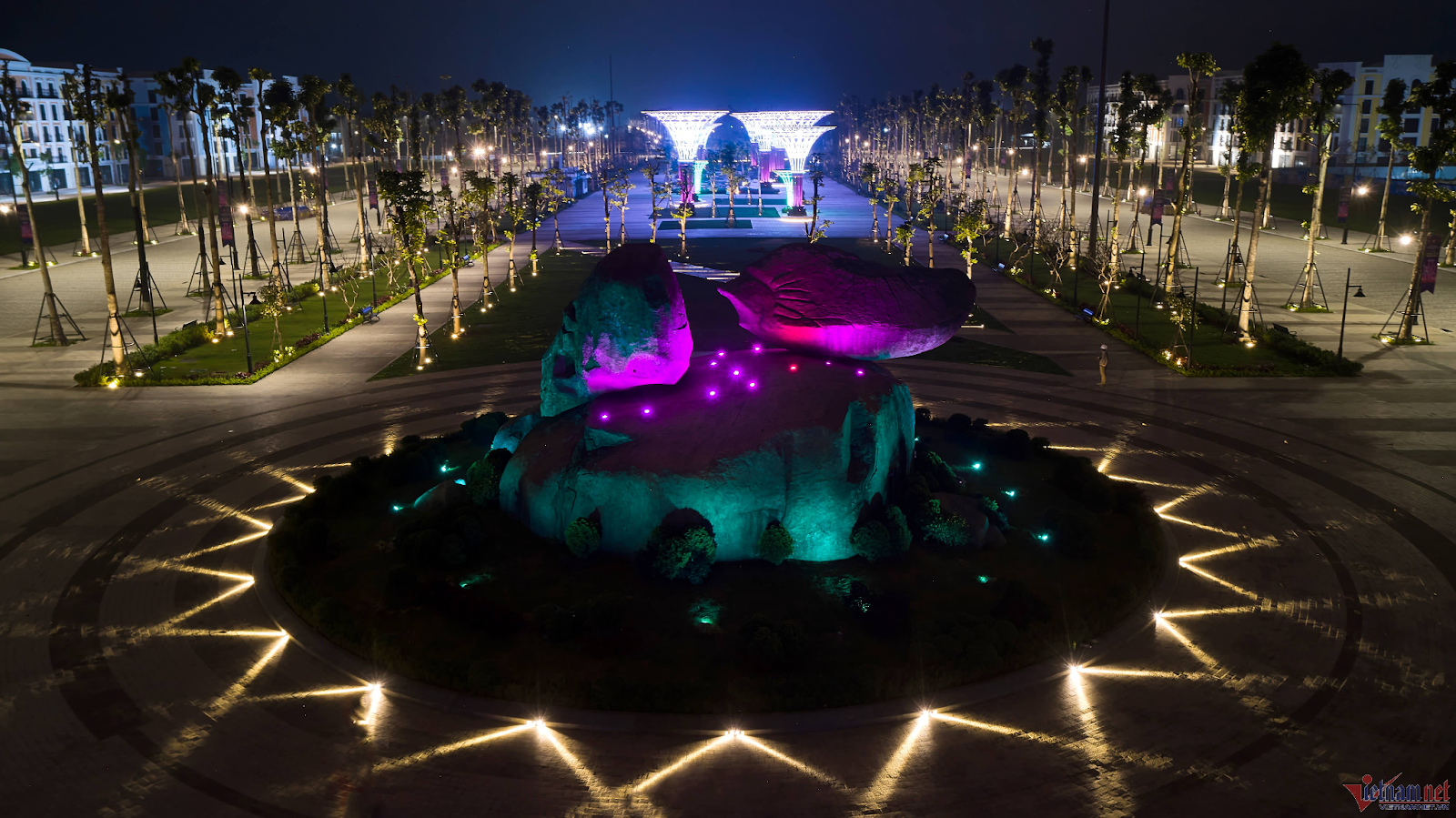
Sam Son beach square shines brightly at night, a vibrant water music check-in point attracting tourists every evening. (Source: Collected)
Every evening, the square area becomes extremely bustling with a spacious walking area, a water music system combined with lights attracting a large number of people and tourists to stop and enjoy. This is an ideal place to stroll, take photos, enjoy the sea air at night, and feel the youthful, vibrant rhythm of the coastal city of Sam Son, especially suitable for families and groups of friends after a day of sightseeing and spring travel.
With a sacred spiritual space, harmonious river and mountain scenery along with long-standing historical – cultural values, the Cua Dat temple during Tet is a suitable destination for those who want to find peace and start the new year in a solemn yet nature-friendly atmosphere. From the travel itinerary, festival experience, local cuisine to practical tips for visiting the temple, each element contributes to a complete spring trip.
If you are looking for a destination that is both spiritually meaningful and can combine sightseeing, visiting scenery, and relaxation at the beginning of the year, the Cua Dat temple during Tet 2026 is a suggestion worth considering for your spring travel itinerary in Thanh Hoa. Thorough preparation and a reasonable itinerary will make the trip more meaningful, starting a new year of peace and good luck.