















1. Overview of the Later Lê Dynasty Ancestral Temple
1.1. Where is the Later Lê Dynasty Ancestral Temple?
The Later Lê Dynasty Ancestral Temple (Thai Mieu Nha Hau Le) is located in Hac Thanh ward, Thanh Hoa province, on an area of over 4,200 m². This is one of the most important ancestral worship structures of the Later Lê dynasty, a place to commemorate the kings, queens, and meritorious officials who contributed to establishing and maintaining the Lê dynasty's reign for over three centuries. The space around the Ancestral Temple is surrounded by greenery and a lake, creating a solemn and tranquil scene, fitting for the sacred nature of the imperial ancestors' worship place.
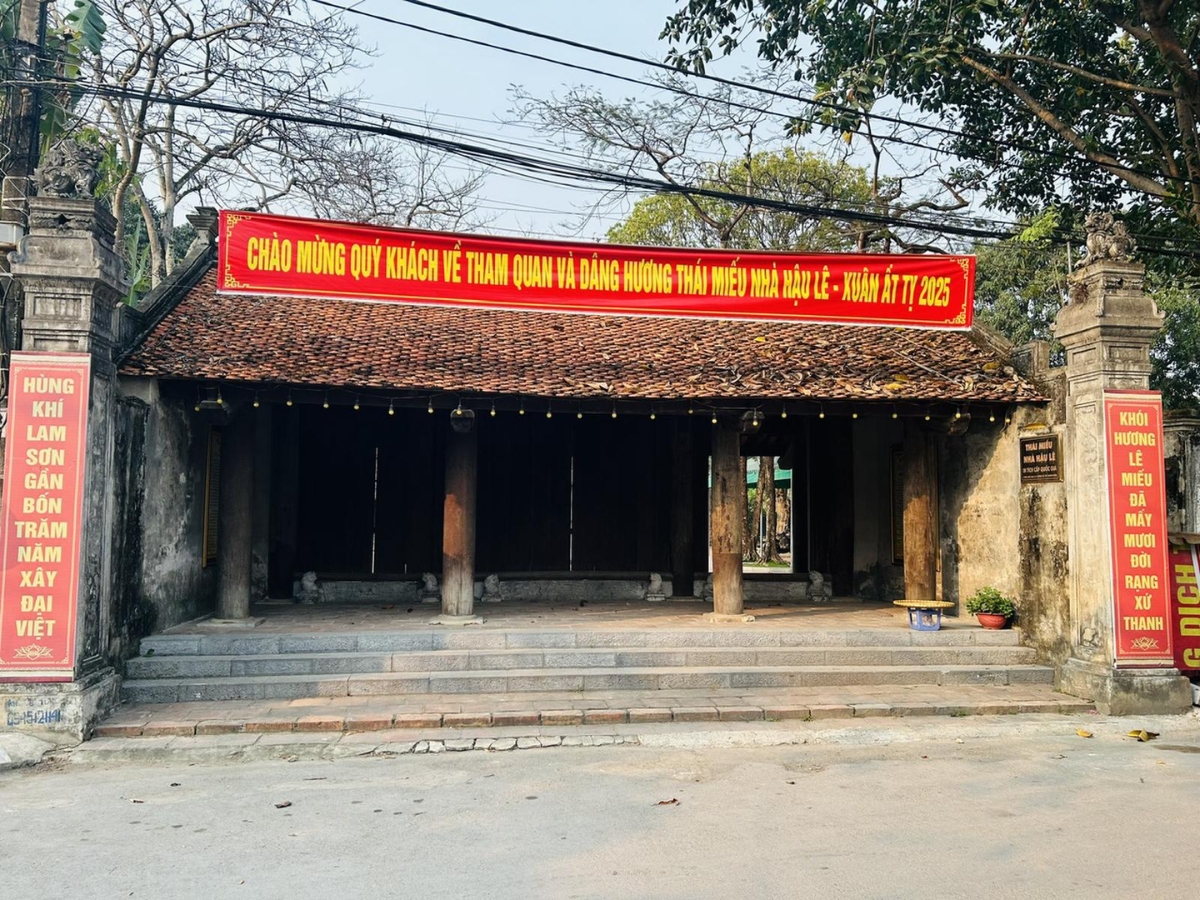
The Later Lê Dynasty Royal Temple is located in Hac Thanh ward, Thanh Hoa province. (Source: Thanh Tra Newspaper)
1.2. Origin and history of formation
According to historical records, the Later Lê Dynasty Royal Temple was initially built in the Lam Kinh area, Lam Son commune, Thanh Hoa province during the reign of King Lê Thái Tổ. The structure was continuously expanded and completed by successive kings such as Lê Thái Tông and Lê Nhân Tông, becoming a place to worship ancestors, kings, and meritorious officials of the Lê dynasty.
After a major fire, the Later Lê Dynasty Royal Temple was moved to Thăng Long and renamed Hoằng Đức Palace. However, in 1805, by order of King Gia Long of the Nguyễn dynasty, the structure was relocated back to its homeland in Thanh Hóa. The temple was rebuilt on Bố Vệ land, next to Thanh Hóa citadel (now part of Hac Thanh ward). Since then, the Later Lê Dynasty Royal Temple has been preserved and renovated by the local people, considered a sacred symbol of gratitude and a connection to the glorious history of a golden era.
1.3. Spiritual significance and role as a national worship center
The Later Lê Dynasty Royal Temple is not only a historical monument but also a sacred spiritual symbol associated with the Later Lê dynasty. It is a place that honors the kings, queens, and meritorious officials of the Lê dynasty, embodying the principle of "when drinking water, remember the source" and the deep gratitude of future generations for those who contributed to building and defending the nation.
With its special historical, architectural, and cultural values, the Later Lê Dynasty Royal Temple has been granted the title of "National Historical and Cultural Architectural Monument" by the Ministry of Culture, Sports and Tourism. The structure is a vivid testament to the brilliant development of Vietnamese architecture and beliefs during the Lê period, deeply reflecting the gratitude towards ancestors, and promoting the nation's traditions of loyalty, filial piety, and benevolence. Today, it serves not only as a national worship center but also as an important cultural and spiritual destination, contributing to preserving the national identity and continuing the glorious historical legacy of the country.
2. Unique architecture of the Later Lê Dynasty Royal Temple
The Later Lê Dynasty Royal Temple is one of the outstanding structures representing traditional Vietnamese architecture, harmoniously blending the styles of the Later Lê and Nguyễn dynasties. The overall structure is balanced, comprising main sections such as the nghinh môn (gate), courtyard, front hall, and rear hall, creating an imposing and ancient worship complex that retains its national character.
In front of the Later Lê Dynasty Royal Temple is the majestic nghinh môn, situated along a small path in Quảng Xá village, opening up a sacred and tranquil space. Passing through the gate reveals an ancient screen wall and a spacious courtyard, where solemn royal ceremonies were once held. Previously, there were rows of tả vu (left wing) and hữu vu (right wing) on both sides of the courtyard, each with seven bays used for officials to prepare for rituals, but only traces remain today due to the ravages of time. The relic site has now been restored and renovated, partially recovering its former majestic and ancient appearance.
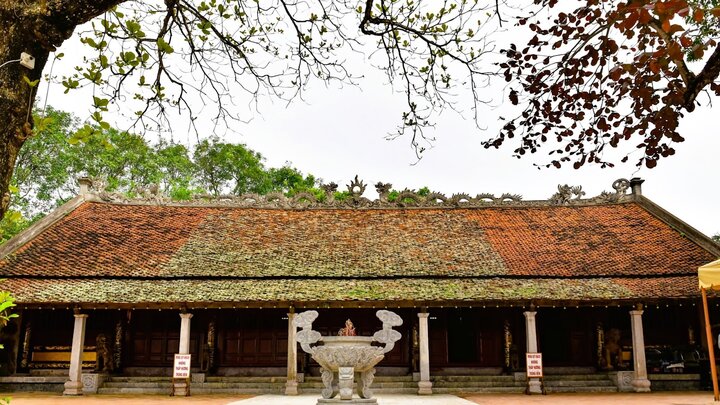
The center of the Later Lê Dynasty Royal Temple consists of two connected halls, the Front Hall and the Rear Hall, arranged in a "Nhị" (two) character shape. Each hall has seven bays with curved, slipper-shaped tiled roofs, topped with "lưỡng long chầu nguyệt" (two dragons flanking the moon) decorations symbolizing power and prosperity. In front of the Front Hall stand two 6-meter-high nanh columns, carved with crouching lions as guardians, representing sacred protection. Inside, the Front Hall features five altars; the central altar honors the council of officials, while the sides honor princes and meritorious officials like Nguyễn Trãi and Lê Lai. The Rear Hall, built in the "chồng rường kẻ bẩy" (interlocking bracket system) style, has 32 wooden pillars lacquered red and carved with dragons amidst clouds. It houses the memorial tablets of 27 kings, empress dowagers, and four ancient sacred deities, symbolizing gratitude and reverence towards the ancestors of the Lê imperial family.
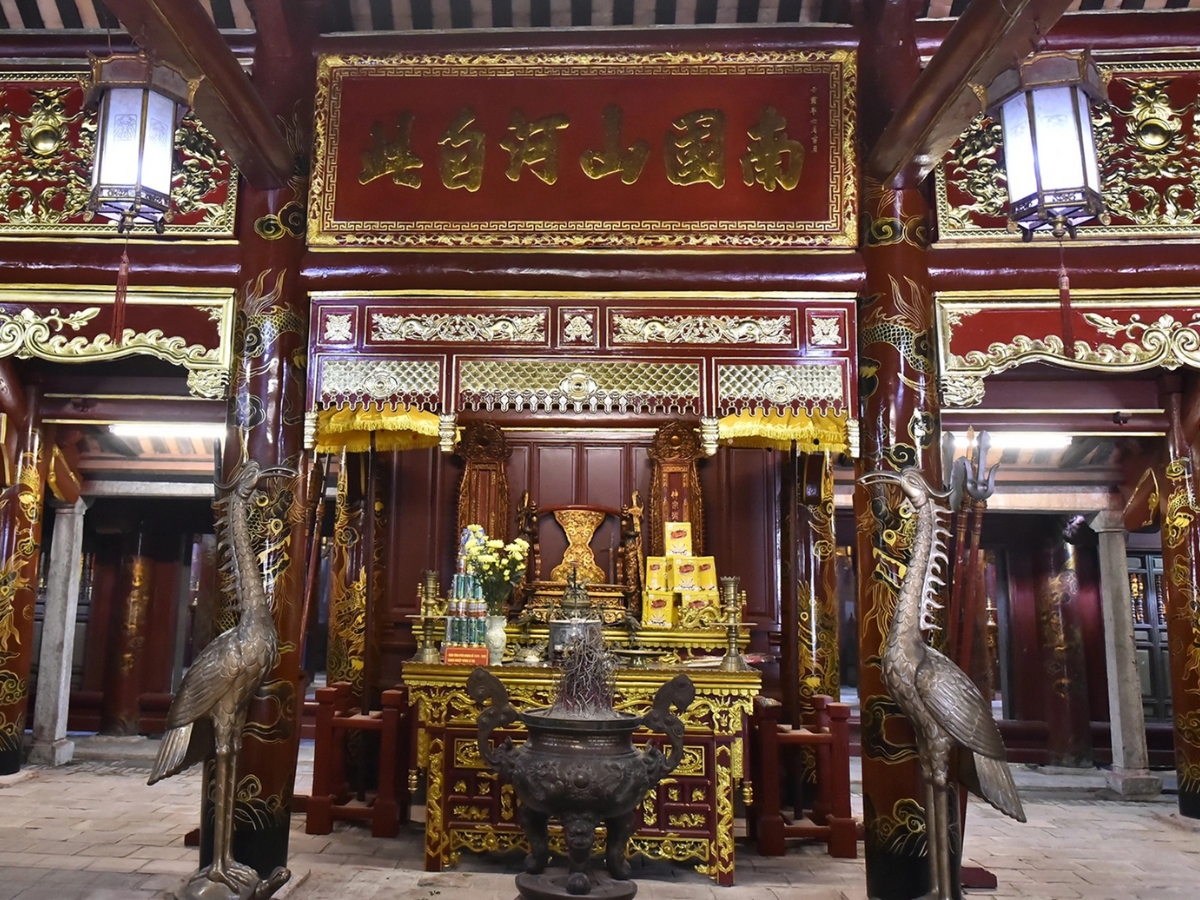
The Tien Dien area at the Hau Le Dynasty Royal Temple. (Source: VnExpress)
3. Traditional Festivals at the Hau Le Dynasty Royal Temple
Annually, on the 21st and 22nd of the 8th lunar month, the people of Thanh Hoa enthusiastically organize festival activities and offer incense in remembrance at the Hau Le Dynasty Royal Temple, the Lam Kinh historical site, and the Le Loi Monument. This is an occasion for the people to express their deep gratitude to the kings, queens, and meritorious officials of the Le dynasty.
During the festival days, the atmosphere becomes solemn yet very intimate. Local people and visitors from all over gather to offer incense, participate in ancestor worship ceremonies, palanquin processions, drum performances, and many other unique folk art performances. Alongside the rituals, the festival also features traditional games such as tug-of-war, wrestling, and dragon dances, recreating the spirit of solidarity and pride of the people of Thanh Hoa. The festival at the Hau Le Dynasty Royal Temple is not only a major cultural and spiritual event but also an opportunity for today's generation to return to their roots, honor traditional values, and awaken national pride.

The festival at the Temple of the Later Lê Dynasty is solemnly organized, expressing the people's gratitude to the Lê dynasty. (Source: Cong Ly Newspaper)
4. Guide to visiting the Temple of the Later Lê Dynasty
4.1. Route to the Temple of the Later Lê Dynasty
From Hanoi, visitors can easily travel to the Temple of the Later Lê Dynasty with a distance of about 170 km, equivalent to 3-4 hours by vehicle. Depending on their needs and time, visitors can choose various means of transport such as coaches, private cars, or motorbikes.
The travel route is quite convenient: from the center of Hanoi, visitors follow the Phap Van – Cau Gie expressway, then turn left onto the Ninh Binh – Thanh Hoa expressway. Upon reaching the central Thanh Hoa area, turn right onto National Highway 1A and go straight for about 10 km. Continue to turn left onto Lam Son street, travel another 5 km, and visitors will see the Temple of the Later Lê Dynasty on the right, appearing amidst the airy and peaceful space of Hac Thanh ward. This is a flat, easy-to-navigate route, suitable for both personal vehicles and tourist buses.
4.2. Experience tips for visiting the Temple of the Later Lê Dynasty
Visiting the Temple of the Later Lê Dynasty, visitors can not only admire the ancient architecture but also have the opportunity to learn deeply about the history of the Later Lê dynasty. To make the trip more meaningful, visitors should note some tips:
Ideal time to visit: The best time to visit is from August to October of the lunar calendar or during the early spring. This is when the weather is cool, convenient for travel, and also when festivals commemorating the Lê kings take place. Visitors can combine worship, sightseeing, and immerse themselves in the solemn and sacred atmosphere of traditional festivals.
Choose appropriate attire and observe proper conduct: As it is a sacred place of worship, visitors should choose modest, discreet attire, avoiding short or overly bright clothing. When entering the main hall, maintain a respectful attitude, speak softly, refrain from laughing, and limit phone usage. Additionally, visitors must comply with preservation regulations, avoid climbing or leaning on ancient structures. Behave gently, yield to others when crowded, and maintain general hygiene to preserve the sacred landscape of the relic.
Photography and experience tips: The grounds of the Temple of the Later Lê Dynasty offer many beautiful photo opportunities with its crescent moon lake, ancient trees, moss-covered tiled roofs, and majestic ancient architecture. Visitors can take souvenir photos or join guided tours to better understand the memorial tablets, worship rituals, and the history of the Later Lê dynasty.
Combine with visits to famous sites in Thanh Hoa: After offering incense, visitors can combine their trip with exploring other famous destinations in Thanh Hoa such as the Lam Kinh Historical Site, Ho Citadel, Tay Giai ancient house, or Ben En National Park with its poetic scenery. Besides, Thanh Hoa is investing in and building Huyen Tich Am Tien, a large-scale spiritual complex nestled amidst majestic mountains. Upon completion, this place promises to become an attractive destination for visitors who love a tranquil space, wish to find peace, and worship amidst fresh nature.
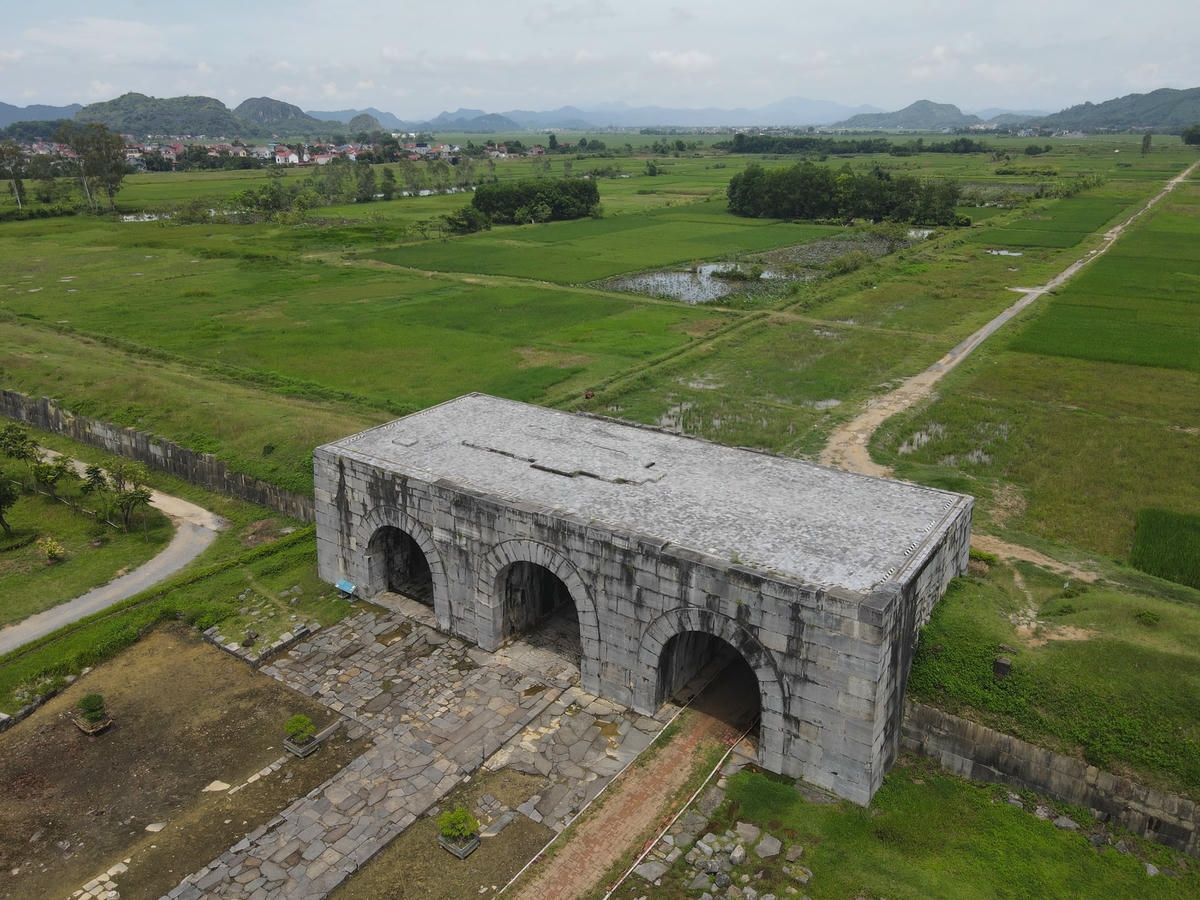
Combine sightseeing and historical exploration at Ho Citadel. (Source: Dai Doan Ket Newspaper)
Amidst the gentle land of Thanh Hoa, the Hau Le Dynasty Royal Temple stands majestically and solemnly as a living testament to a golden era. This structure not only holds significant historical and architectural value but also symbolizes loyalty, affection, and national pride. Visiting the Hau Le Dynasty Royal Temple, visitors will immerse themselves in a sacred atmosphere, listen to the breath of history, and deeply feel the national spirit nurtured through generations. This will undoubtedly be an unmissable destination on your journey to discover your roots and explore the culture of Thanh Hoa.