
















1. About Thanh Ha Pagoda
Thanh Ha Pagoda is one of the most sacred and famous ancient pagodas in Thanh Hoa province, located at 34 Ben Ngự Street, Hac Thanh Ward, Thanh Hoa Province. Visitors and Buddhist followers coming from National Highway 1A, turn at the intersection towards Hac Thanh Ward, onto Truong Thi Street, to Nga Ba Bia, then onto Ben Ngự Street. As you get closer, visitors should observe on the left, peeking through the green trees, the majestic and solemn Tam Quan gate with its bell tower, which is Thanh Ha Pagoda.
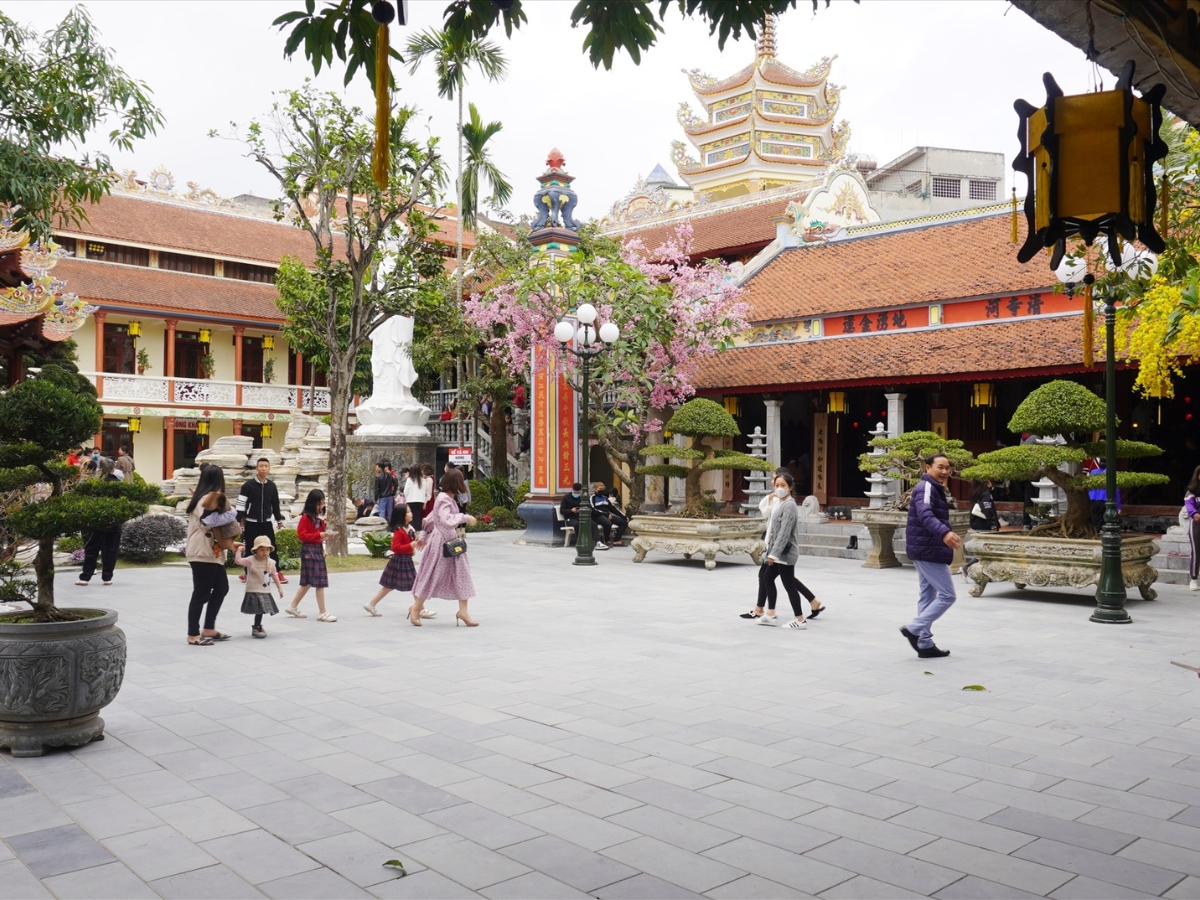
Thanh Ha Pagoda is one of the most sacred ancient pagodas in the Thanh Hoa region. (Source: Lao Dong Newspaper)
Not only a sacred pilgrimage site, Thanh Ha Pagoda also serves as the headquarters of the Thanh Hoa Provincial Buddhist Sangha Executive Council, hosting many important religious events and festivals of the local Buddhist community. The pagoda's serene atmosphere, with the sound of bells echoing in the heart of the city, makes it a peaceful haven for those seeking tranquility and peace amidst the bustling city life.
2. Understanding the history and cultural value of Thanh Ha Pagoda
2.1. Historical imprints of Thanh Ha Pagoda through different periods
According to ancient documents, Thanh Ha Pagoda was founded during the Tran Dynasty, around the 13th century. Legend has it that during a military campaign against Champa, King Tran Thai Tong visited the pagoda to offer incense and pray for peace and prosperity, making it one of the most sacred pagodas in the Thanh Hoa region.
During the Nguyen Dynasty, the pagoda continued to play an important role in spiritual life. In the first year of Thanh Thai (1889), the king issued a decree for pagodas and temples to be restored and worship to be conducted according to old customs, including Thanh Ha Pagoda. This affirmed the value and status of this ancient pagoda in the spiritual and cultural life of the people. In the 10th year of Bao Dai (1935), the pagoda underwent a major renovation with the contributions of the villagers and the support of the Hoanh district official. The Venerable Monk of Huong Du Pagoda (Ninh Binh) assigned Master Thich Thanh Trinh and Thich Thanh Duc to directly design and supervise the construction. The inauguration ceremony was celebrated with great joy, becoming a significant festival for the entire region.
Throughout the two resistance wars against France and America, Thanh Ha Pagoda suffered damage from bombs and artillery but steadfastly endured, being renovated and restored many times after peace was restored. Today, the pagoda is not only a typical historical and cultural relic but also a prominent spiritual destination, attracting numerous Buddhists and tourists for worship and to find peace.
2.2. Role in educating morality and spirituality for the younger generation
Not only a spiritual destination for the people of the Thanh Hoa region, Thanh Ha Pagoda also plays a crucial role in nurturing, educating morality, and enriching the spiritual lives of the younger generation. Amidst the turbulent modern life, the pagoda becomes a space for young people to temporarily set aside academic and technological pressures, return to peace, listen to themselves, and learn to live slowly and virtuously.
Through study programs, dharma talks, and group activities, the pagoda helps young people better understand fundamental moral values such as filial piety, gratitude towards parents, sharing, honesty, and kindness. Each course, lecture, or activity is organized gently and intimately, combining Buddhist teachings with practical life skills lessons, helping them form positive thinking, respect themselves, love others, and live more responsibly towards society.
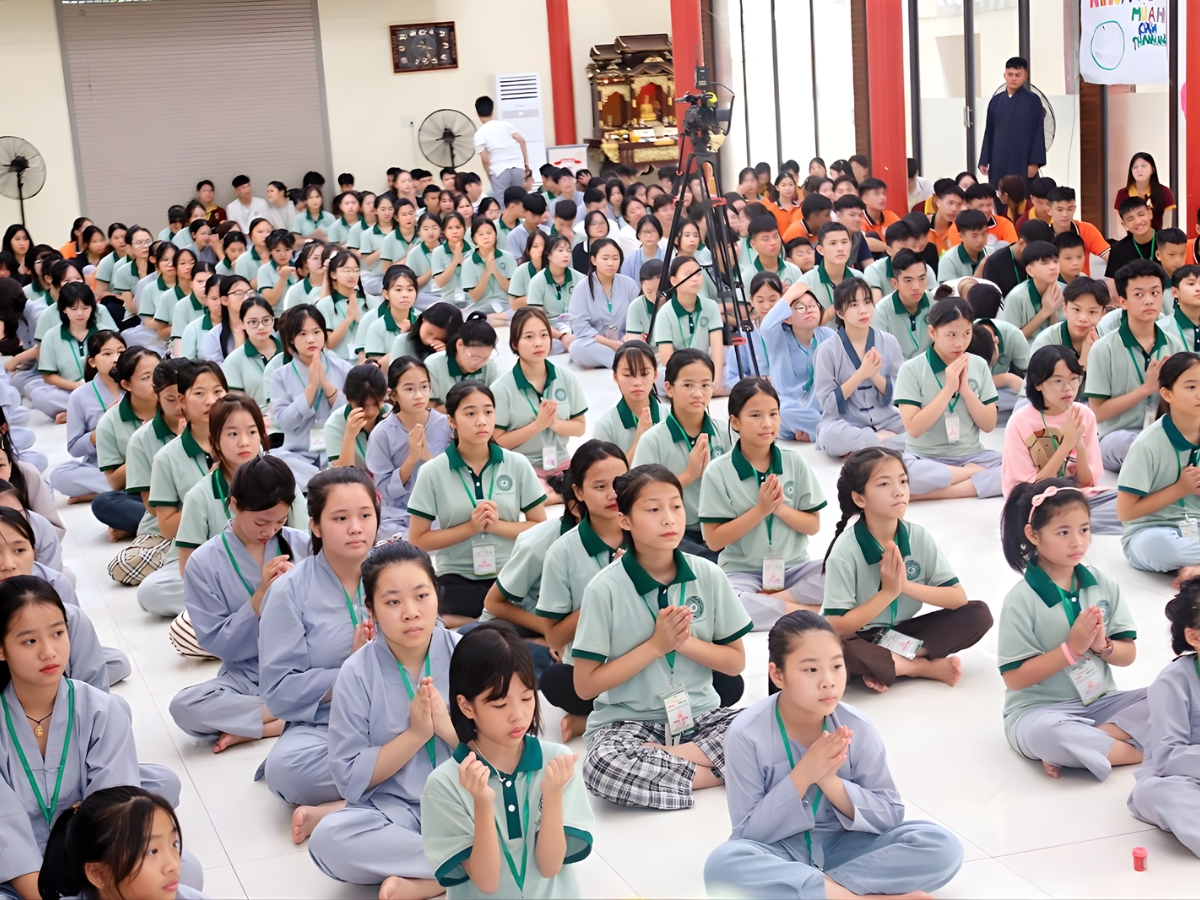
Thanh Ha Pagoda organizes meditation retreats to educate the younger generation in morality and spirituality. (Source: Collected)
The quiet and peaceful space of the pagoda also serves as an environment for teenagers to practice concentration, control their emotions, and direct their minds towards good deeds. Thanks to these activities with profound humanistic values, Thanh Ha Pagoda is not only a place for Buddhist pilgrimage but also a special 'moral school,' significantly contributing to building a generation of young people who are compassionate, tolerant, and empathetic.
3. The ancient architectural beauty and unique cultural space of Thanh Ha Pagoda
3.1. Overall architecture and spiritual space of Thanh Ha Pagoda
Thanh Ha Pagoda bears the architectural style of the Nguyen Dynasty but retains its unique, ancient, and harmonious character. The entire pagoda complex is harmoniously arranged between natural space and Buddhist architecture, creating a solemn yet approachable beauty. Passing through the Tam Quan gate, visitors will enter a tranquil space where the ringing of bells blends with the faint scent of incense, making the soul feel cleansed of all worries.
On the main sanctuary (Phật điện), Buddha statues are carefully arranged, embodying the profound spirit of Buddhism. Behind the three Tam The Buddhas is the Amitabha Buddha statue, the largest, symbolizing infinite wisdom and compassion. Next is the Sakyamuni Buddha, representing enlightenment, and the Thousand-Handed and Thousand-Eyed Avalokitesvara, symbolizing salvation from suffering. Finally, there is the Cuu Long (Nine Dragons) pedestal, housing the statue of the infant Sakyamuni in a teaching posture. The simple, unadorned arrangement makes the sanctuary space of Thanh Ha Pagoda appear serene and light, yet still exude majesty and sanctity.
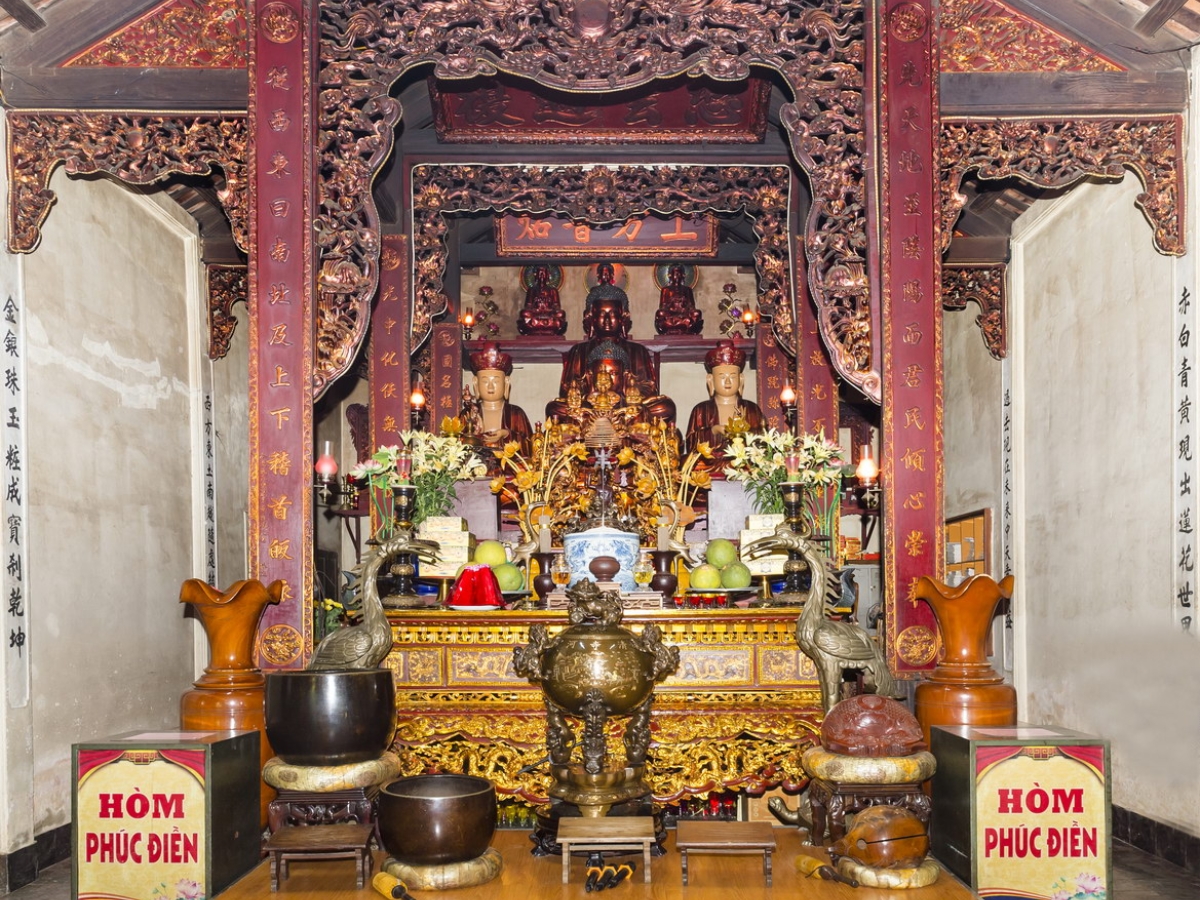
The altar area is carefully and solemnly arranged. (Source: Collected)
Not only prominent in the main hall, the entire campus of Thanh Ha Pagoda also features auxiliary structures such as the Ancestor's house, Monk's hall, Mother worship house, and Tu An House. The traditional wooden architecture combined with gently curved tiled roofs, along with intricate carved details, gives the pagoda both an ancient charm and showcases the talent of the Thanh Hoa people. This place is not only a place of worship but also a serene spiritual space, helping people turn towards goodness, wash away worries, and find peace in their souls.
3.2. Cultural heritage features and artifacts at Thanh Ha Pagoda
Besides its architectural value, Thanh Ha Pagoda preserves many cultural heritages of great significance to Buddhism and the people of Thanh Hoa. From the Tam Quan to the Nghi Mon, on the walls, wooden pillars, and horizontal lacquered boards, couplets and ancient texts are inscribed, praising morality, reminding people to live virtuously, be grateful, and cultivate virtue. The finely carved characters, imbued with the value of traditional calligraphy art, both express reverence for the Buddha and serve as profound moral messages passed down through time.
The ancient stupa garden within the pagoda's grounds houses relics and marks the merits of abbots through many generations. Notably, the stupas of Most Venerable Thich Minh Lang, Most Venerable Thich Thanh Trinh, and Most Venerable Thich Thanh Cam. The moss-covered ancient stupas amidst the tranquil green garden evoke a sacred feeling, connecting the past and the present. Additionally, the pagoda possesses many precious artifacts such as ancient Buddha statues, bronze bells, stone steles, and worship items dating back hundreds of years. With these values, in 1998, Thanh Ha Pagoda was ranked as a Provincial Historical and Cultural Relic, becoming a typical cultural-spiritual symbol of the Thanh Hoa people.
4. Typical cultural and religious activities at Thanh Ha Pagoda
As one of the major Buddhist centers of the province, Thanh Ha Pagoda annually organizes many unique cultural and religious activities, attracting a large number of monks, nuns, Buddhists, and visitors from all directions. Among these, the most prominent is the Vu Lan Festival of Filial Piety, held on the full moon of the seventh lunar month. This is one of the largest festivals of Buddhism in Thanh Hoa, conducted solemnly with rituals of chanting, offering incense, releasing captive animals, floating flower lanterns, and praying for the souls of ancestors. Beyond its spiritual significance, the festival also becomes a cultural celebration for the local people, where everyone turns towards their roots, nurtures filial piety, and the spirit of compassion.
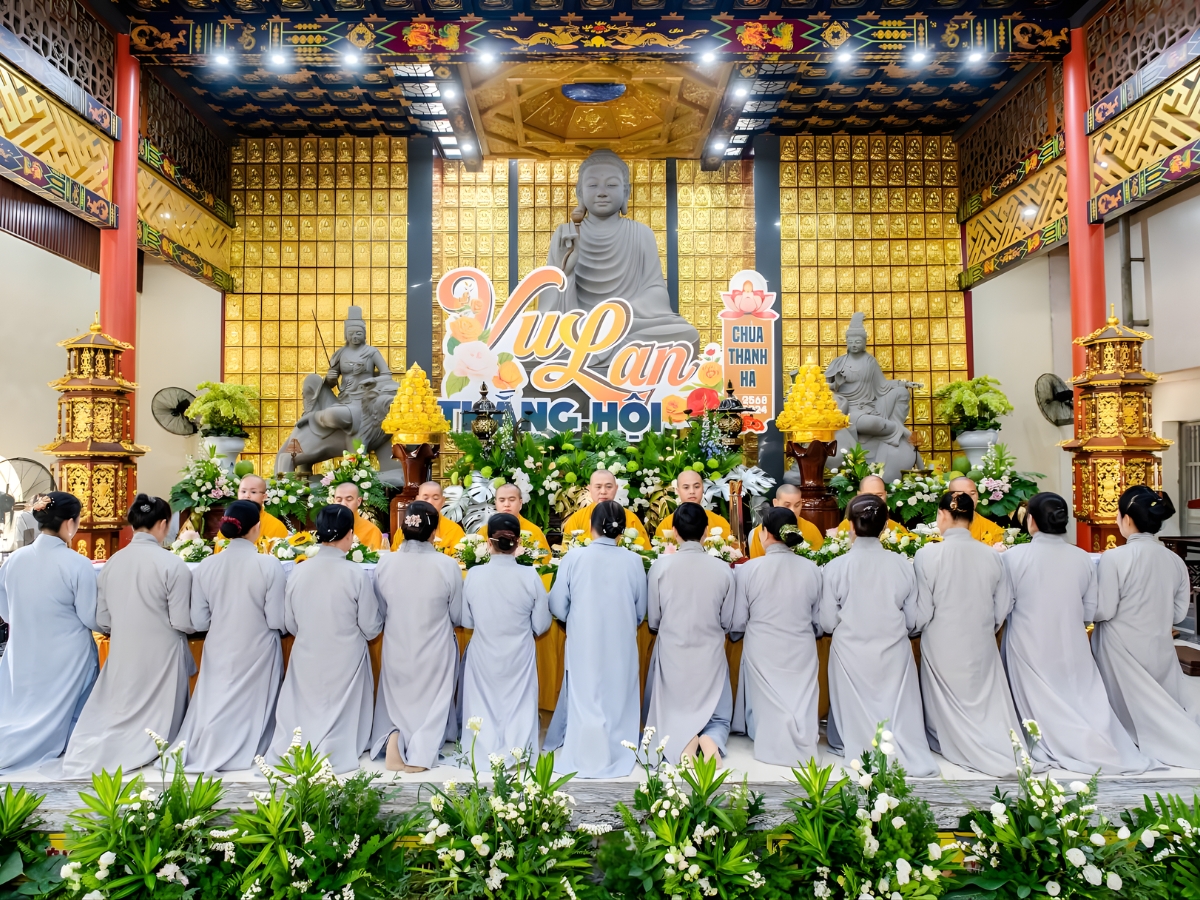
Grand Ullambana Ceremony of Filial Piety held at Thanh Ha Pagoda. (Source: Collected)
Besides, Thanh Ha Pagoda is also the venue for the summer retreat "Buddha, I'm home!", a special study program for teenagers. Through activities such as meditation, listening to dharma talks, skill-building activities, and volunteer work, the children learn to love and be grateful to their parents, and cultivate a virtuous character. This is a typical model of spiritual moral education, helping the younger generation balance their psychology and develop character in the current era.
In addition, the pagoda regularly organizes the Vesak festival, prayer for peace ceremonies, prayer for the deceased ceremonies, early year scripture chanting sessions, along with many charitable activities such as giving gifts to the poor, supporting disadvantaged students, and building charity houses. During each festival, the temple bell rings throughout the city, creating a sacred space filled with compassion. By maintaining these cultural and spiritual values, Thanh Ha Pagoda is not only a place of pilgrimage and worship but also a place that preserves and spreads the spirit of compassion and filial piety of Vietnamese people.
After visiting and paying homage at Thanh Ha Pagoda, tourists can continue their journey to explore other famous pagodas in the Thanh Hoa region such as Sung Nghiem Dien Thanh Pagoda, Dot Tien Pagoda, or Mat Da Pagoda,... Each pagoda has its own beauty, associated with the long-standing religious traditions and history of the Thanh Hoa land. Notably, Thanh Hoa province is currently implementing the Huyen Tich Am Tien Project, a large-scale spiritual cultural work that harmoniously combines elements of belief, culture, and natural landscape. This project is expected to become Thanh Hoa's premier spiritual tourist destination, contributing to affirming the position of the Thanh Hoa region on Vietnam's spiritual tourism map in the future.
The journey to rediscover the roots of Buddhist culture at Thanh Ha Pagoda is not just a trip for worship or paying homage to Buddha, but also to experience the profound spiritual values passed down through centuries. Amidst the modern pace of life, the pagoda retains its tranquility, serving as a place where people find peace, turn their hearts towards goodness, and express gratitude for the nation's cultural roots. If you are looking for a destination that harmonizes spirituality and culture, visit Thanh Ha Pagoda once to experience its tranquil atmosphere, listen to the echoing bell, and find peace in your soul.