















1. Overview of Ba Trieu Temple
1.1. Geographical location and scale of Ba Trieu Temple
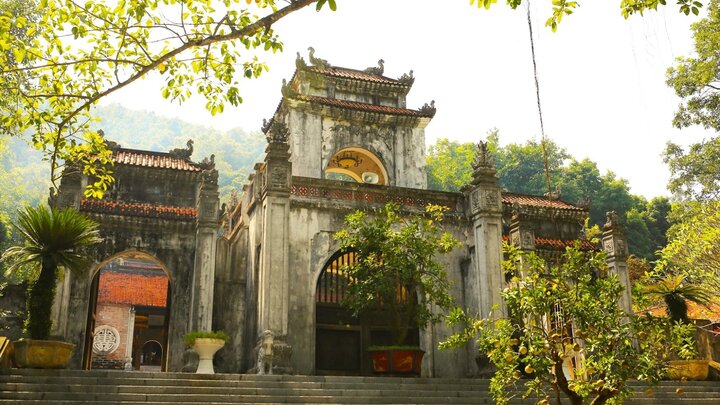
Ba Trieu Temple is located on Gai Mountain, in Phu Dien village, Trieu Loc commune, Thanh Hoa province. This is one of the important historical sites, associated with the name of the heroine Trieu Thi Trinh – who led the insurgent army to revolt against the northern invaders in the 3rd century. With the spirit of “I want to ride the strong wind, trample the big waves”, she is revered by the people and remembered as an indomitable symbol of the Vietnamese nation.
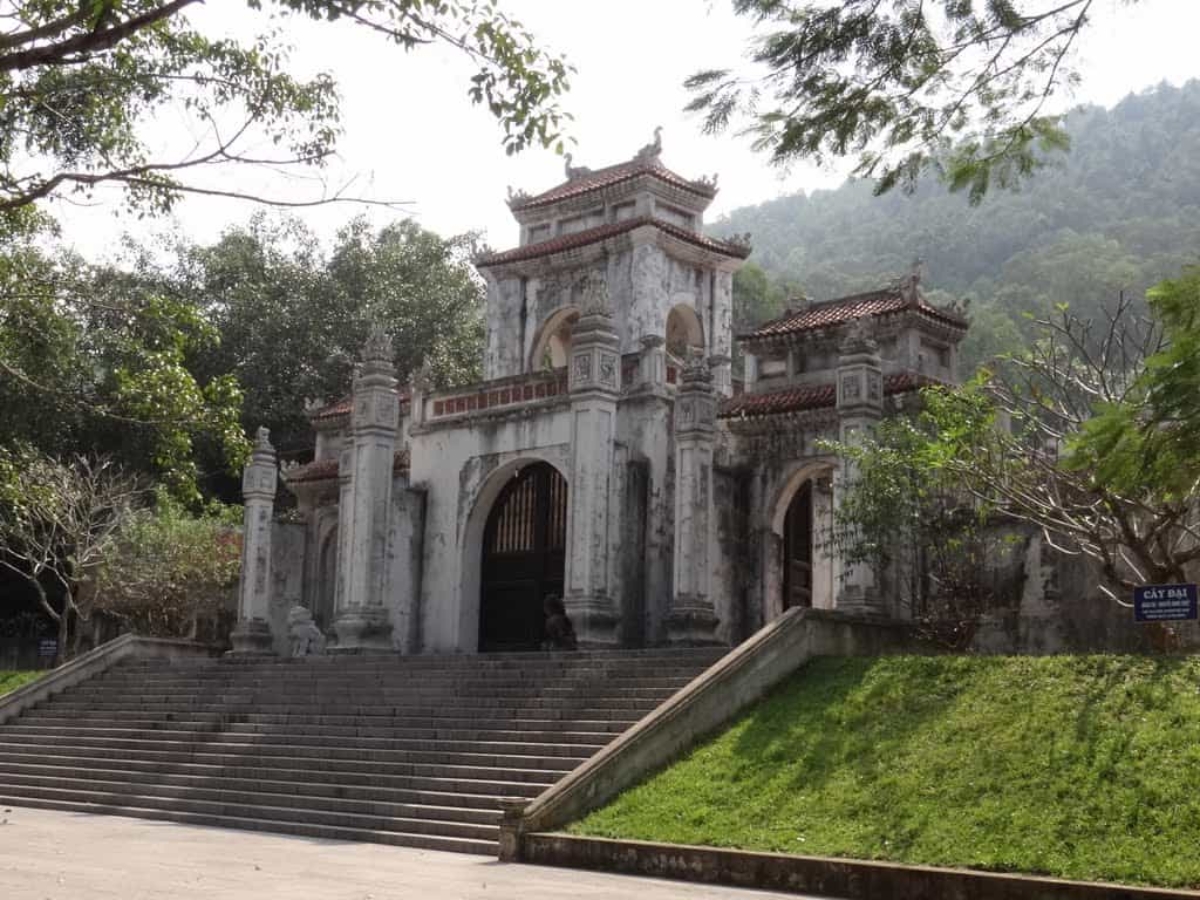
Ba Trieu Temple is where the female hero Trieu Thi Trinh is worshipped. (Source: Collected)
The temple is built in the architectural style characteristic of the North Central region, possessing a solemn, ancient beauty yet exuding sophistication and majesty. Through centuries, Ba Trieu Temple has been preserved almost intact, becoming a place that stores many precious antiques, legends, folk songs, and rare artifacts. Not only a spiritual destination, this place is also a symbol of national pride, reminding future generations of the indomitable spirit and immortal patriotism of Vietnamese women in history.
1.2. History of Ba Trieu Temple's formation
Ba Trieu Temple was founded in the 6th century during the reign of King Ly Nam De, with the purpose of commemorating and honoring the merits of the female general Trieu Thi Trinh. The temple is not only a place of worship for a national hero but also a symbol of the indomitable spirit, patriotism, and steadfast will of Vietnamese women in the early days of nation building.
During the reign of King Minh Mang, in the 18th century, Ba Trieu Temple was moved to its current location on Gai Mountain in Phu Dien village, Trieu Loc commune, Thanh Hoa province. Despite the vicissitudes of history and time, the structure has retained its majestic, ancient, and sacred aura. Annually, local authorities and residents regularly renovate and restore the temple to preserve its architectural value and serve the visiting and worshipping needs of tourists from near and far. Thus, the temple is not only a historical relic but also a spiritual anchor for the people of the Thanh region, preserving national pride through generations.
2. Discover the unique architecture of Ba Trieu Temple
2.1. Distinctive architecture of the relic complex
Ba Trieu Temple is a typical work of traditional North Central Vietnamese architecture, possessing a beauty that is both majestic and in harmony with nature. The entire complex is planned with a strict and harmonious layout, comprising main sections such as the outer gate, pond, screen, front hall, middle hall, and inner sanctuary. Looking from the outside, visitors can clearly feel the balance between the ancient architecture and the lush green natural landscape, creating a space that is both sacred and serene.
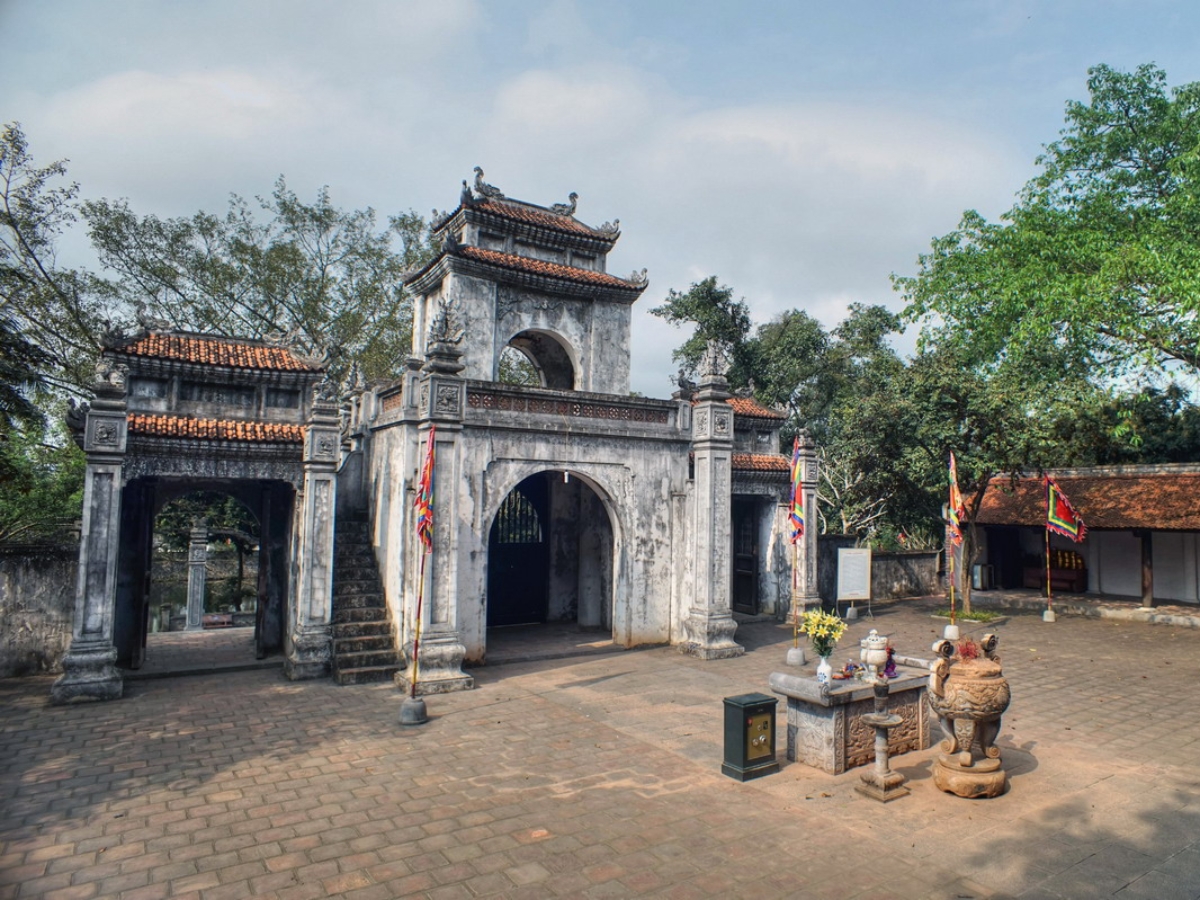
Ba Trieu Temple with a space that is both sacred and serene. (Source: Collected)
The outer gate area impresses with its monolithic stone quadruple pillars structure, topped with softly curved phoenix bird images, symbolizing noble beauty and authority. The walls on both sides are embossed with elephant figures paying homage, signifying the guarding of spiritual energy for the entire temple complex. Inside is a large pond, 29.8 m long and 42.2 m wide, creating a vibrant highlight and making the space harmonious and cool. Next is the monolithic stone screen placed before the middle gate, also designed in the quadruple pillar style, forming the main axis leading to the inner worship areas. The entire courtyard and pathways are paved with ancient blue stone, both sturdy and contemplative, making visitors feel like they are returning to ancient times.
2.2. Notable structures within the Ba Trieu Temple historical site
Passing through the main gate, visitors will arrive at the courtyard in front of the Front Hall, over 50m wide, paved with carved stone slabs. On the courtyard are two stone lanterns and a round incense burner, creating a sacred atmosphere before entering the main worship area. The left and right corridors are located on either side of the courtyard, each row consisting of 5 bays, with sturdy ironwood pillars and beams, and ancient tiled roofs, evoking the solemnity of traditional architecture.
The Front Hall is built in a 3-bay, 2-wing style, with a curving tiled roof, featuring intricately carved patterns of flowers, dragons, phoenixes, and winding foliage. Next is the Middle Hall, comprising 5 bays and 2 stories, with a gracefully curved roof, decorated with dragon motifs, cloud stone patterns, and folk patterns rich in national artistic character. At the very back is the Inner Sanctum, where the statue of Ba Trieu is enshrined, featuring a 3-bay, 2-wing architecture with an elaborately carved wooden frame, and meticulously sculpted bas-reliefs showing reverence for the national heroine.
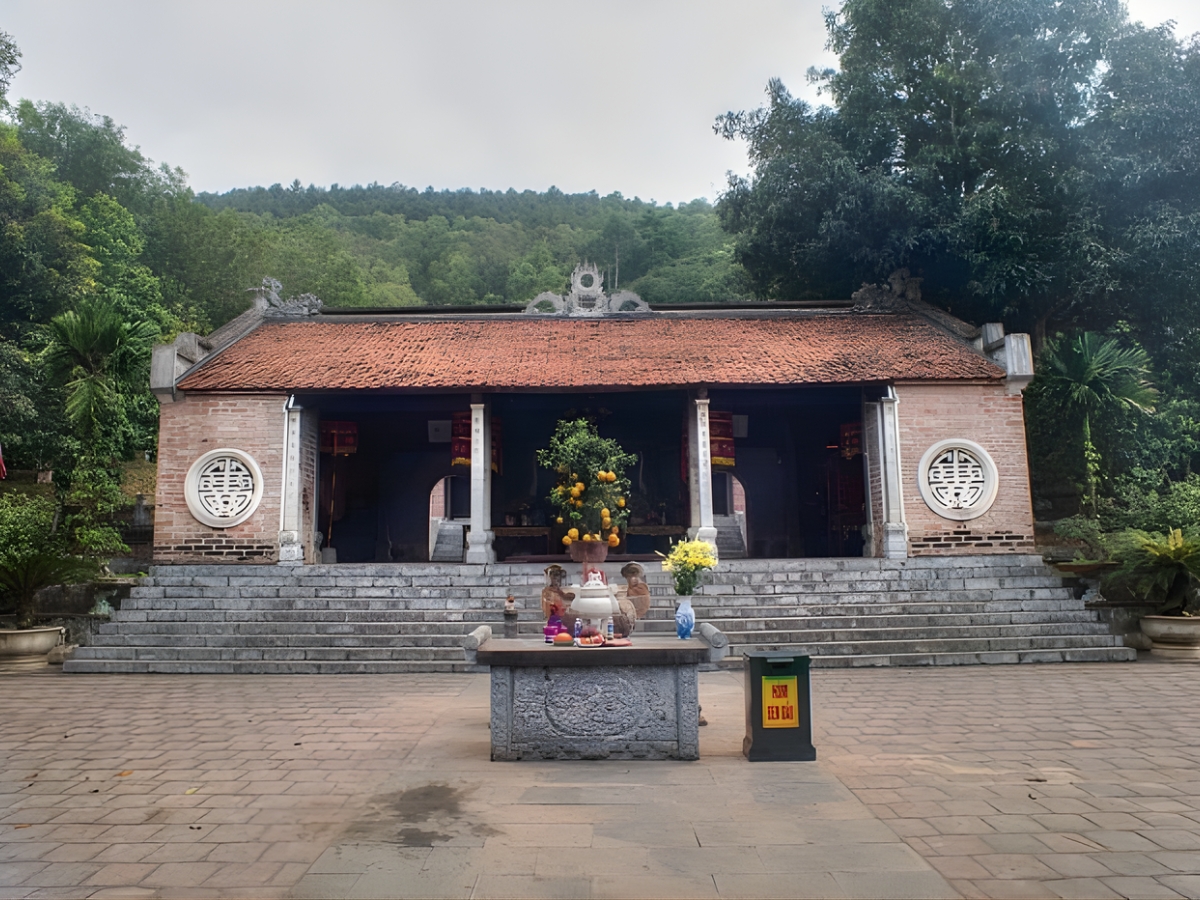
The ancient front hall, bearing the architectural colors of North Central Vietnamese temples (Source: Collected)
In addition, within the grounds of the Ba Trieu Temple is also Ba Trieu's tomb – her resting place on Gai Mountain, surrounded by lush green trees and majestic scenery. Nearby is the Ban The Shrine, where Ba Trieu's troops once gathered, taking an oath to resolutely fight against invaders and protect the country. All together, they form a complex of relics that is both solemn and rich in national identity, worthy of being the pride of the people of Thanh Hoa.
3. Experiencing the festival at Ba Trieu Temple
The Ba Trieu Temple Festival is one of the largest and most unique festivals in Thanh Hoa, held annually from the 21st to the 23rd day of the 2nd lunar month. This is an occasion for the people to commemorate the great contributions of the heroine Trieu Thi Trinh. The festival is deeply imbued with traditional culture, combining spiritual elements with historical values, attracting a large number of visitors from all directions to pay homage and immerse themselves in the sacred atmosphere of the festival.
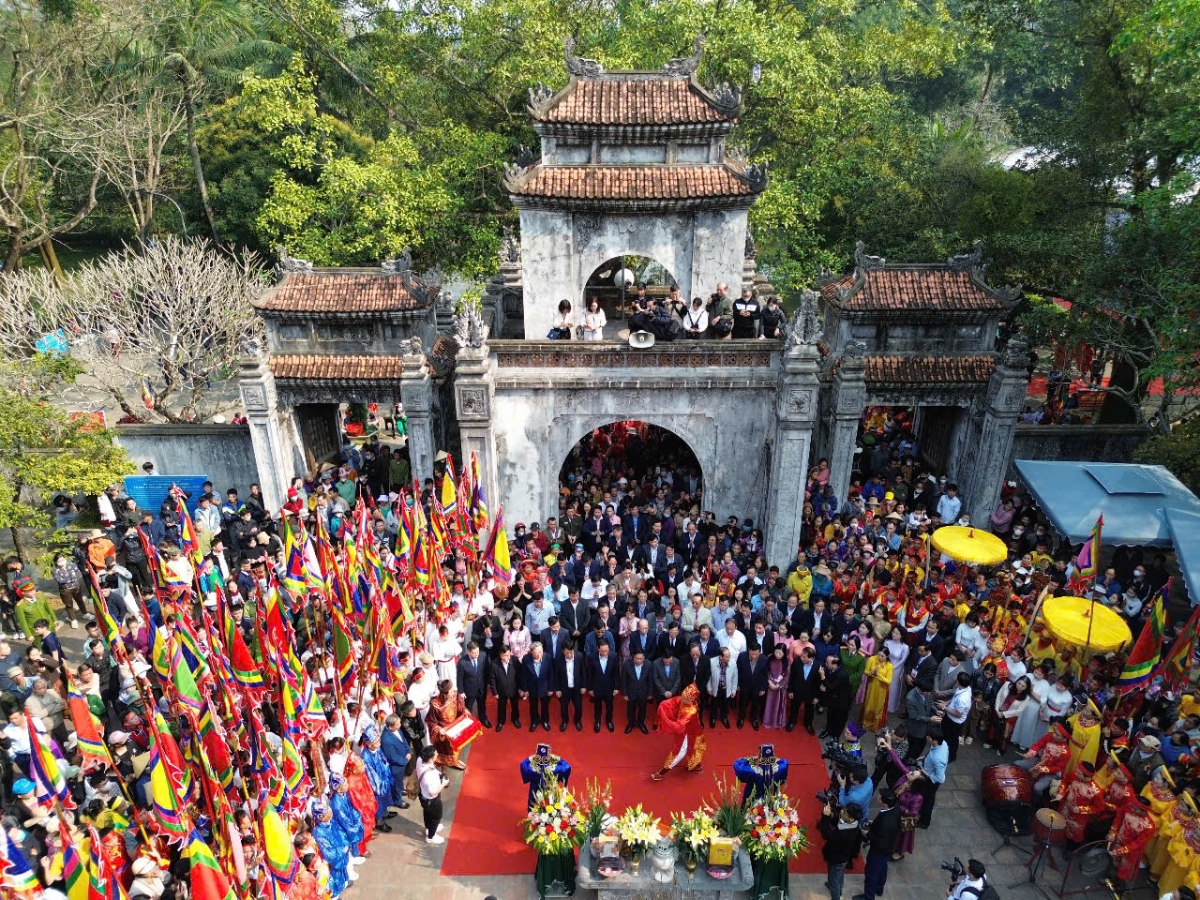
Ba Trieu Temple Festival attracts thousands of local people and visitors from all over. (Source: Collected)
During the festival days, many solemn rituals are held, such as the Mộc dục ceremony, the Tế Nữ quan ceremony, the Procession ceremony, and the Phụng Nghinh ceremony. The rituals are performed according to ancient traditions, showing deep respect for Bà Triệu. Parallel to the ceremonial part is the vibrant festival part with unique folk cultural activities such as the “Ngo – Trieu giao quan” game, chau van singing, wrestling, rice cooking competition, rope climbing, and Chinese chess. Each game and performance vividly recreates the martial spirit, intelligence, and strong vitality of the Vietnamese people. Visiting Ba Trieu Temple during the festival, visitors can not only admire the beauty of the relic but also have the opportunity to experience a bustling atmosphere rich in national cultural identity.
4. Combine visiting Ba Trieu Temple and nearby tourist attractions
After offering incense and visiting Ba Trieu Temple, visitors can combine their journey to explore many other famous tourist destinations in Thanh Hoa to fully appreciate the historical, cultural, and natural beauty of this place. Here are some suggestions that visitors can refer to:
Hai Tien Beach: This is one of the longest and most pristine beaches in the North Central region. With clear blue water, fine sand, and long rows of casuarina trees, this place is very suitable for those who want to relax, swim, and enjoy fresh seafood.
Hon Me Island: If you love exploring nature, Hon Me Island is an ideal destination. Coming to Hon Me Island, visitors will explore primeval forests with hundreds of types of wood, and rich fauna and flora. In addition, the waters around the island also have beautiful and rare coral reefs, creating ideal conditions for diving, coral viewing, and exploring the colorful underwater world.
Lam Kinh Historical Site: Lam Kinh Historical Site is associated with the Lam Son uprising and the Later Le dynasty. Here, visitors can admire ancient architectural works such as the mausoleums of the Le kings, temples dedicated to talented generals, along with gardens and lakes.
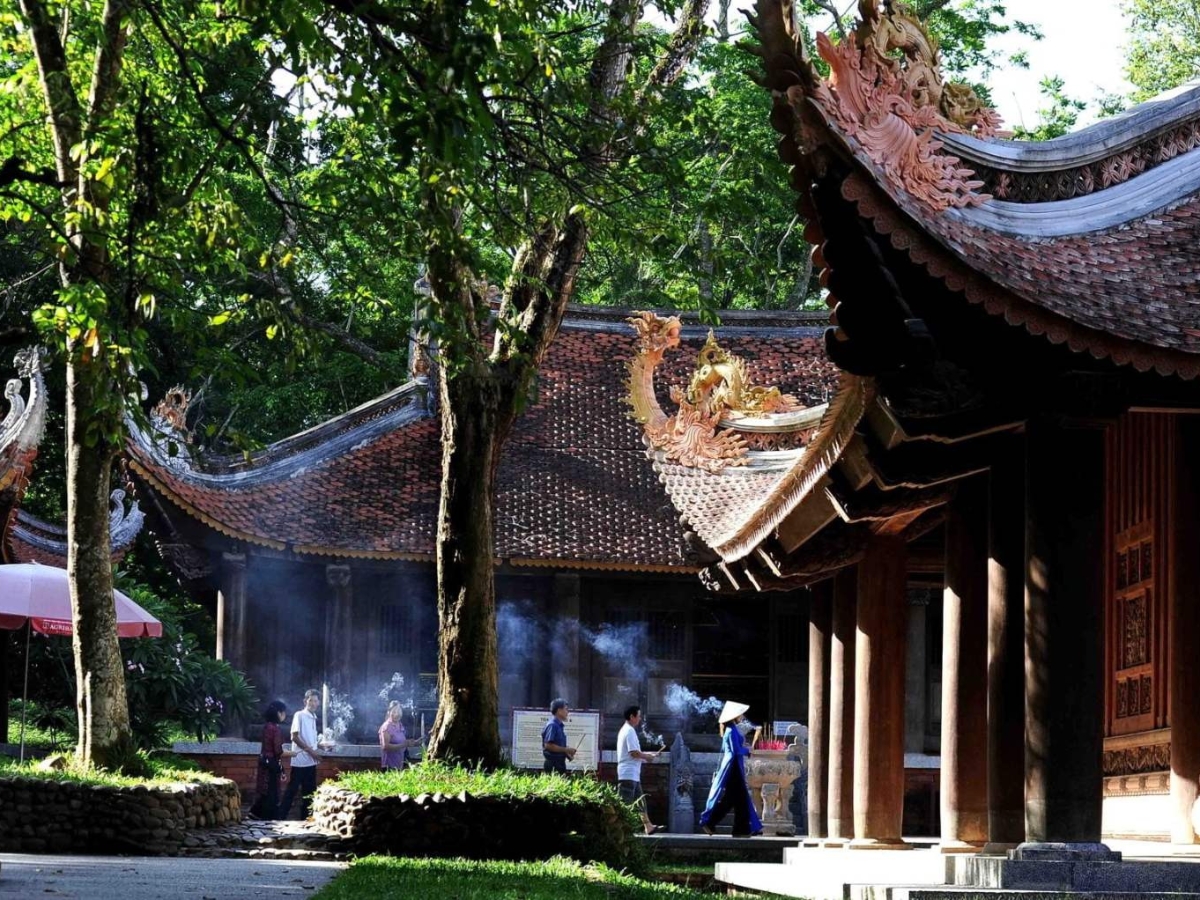
Combine sightseeing and worship at the Lam Kinh historical site. (Source: Ministry of Culture, Sports and Tourism)
Ho Dynasty Citadel: The citadel was built in 1397 by Ho Quy Ly, serving as the capital of the Dai Ngu kingdom. At Ho Dynasty Citadel, visitors can admire the massive stone architecture, learn about interesting historical stories, and enjoy the famous and delicious Phu Quang Che Lam specialty.
Am Tien Legend: Thanh Hoa is currently commencing the construction of the Am Tien Legend site in the Nua Mountain area, with the aim of developing it into a large-scale spiritual tourism center in the future. This place promises to offer a new spiritual destination, contributing to enriching the journey of exploring the cultural and historical heritage of the Thanh land.
Visiting Ba Trieu Temple is an opportunity for everyone to rediscover the heroic legacy of the national heroine, who became a symbol of indomitable will and unyielding patriotism. Amidst the ancient space of the temple and the majestic scenery of Gai Mountain, visitors can not only worship and offer incense but also deeply feel the national spirit flowing through every layer of soil and every tree. If you have the chance to visit Thanh Hoa, take the time to visit Ba Trieu Temple to listen to the heroic historical stories, feel the sacredness, and love this land rich in tradition even more.