















1. General introduction to Thanh Ha Pagoda Thanh Hoa Tet
Thanh Ha Pagoda Thanh Hoa Tet is always a familiar spiritual destination for the people of Thanh Hoa every spring. The pagoda is located in Truong Thi ward, Thanh Hoa, recorded by many historical documents and local cultural research as being over 700 years old, founded during the Tran dynasty. Having undergone many renovations and restorations, Thanh Ha Pagoda still preserves its ancient space, harmonizing traditional Buddhist architecture with a serene landscape in the heart of the city.
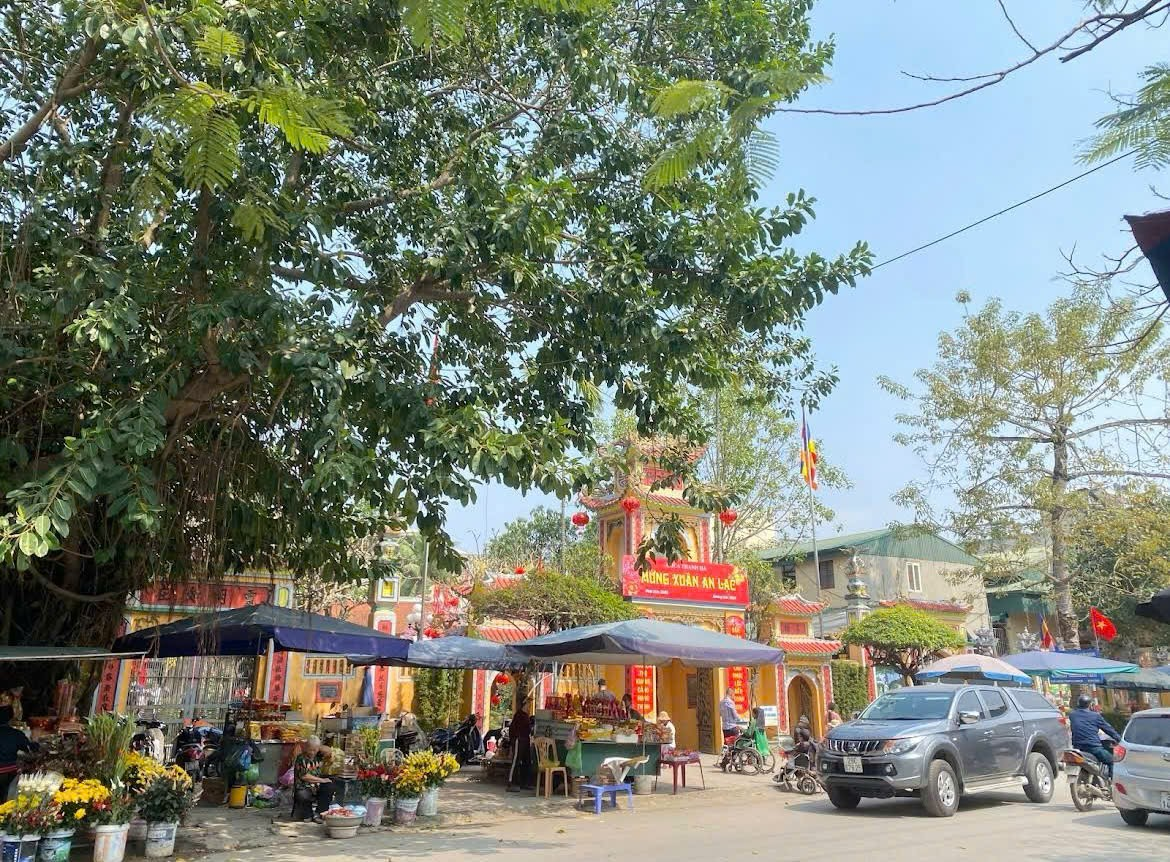
Thanh Ha Pagoda Thanh Hoa – an ancient spiritual space in the heart of the city. (Source: Collected)
At the beginning of the year, Thanh Ha Pagoda Thanh Hoa Tet becomes a spring travel and Buddhist lễ destination for many people and visitors from all directions. Not only a place to offer incense for peace and blessings, the pagoda also carries profound spiritual value, helping people find peace and goodness in the early days of the new year. The early spring rituals, the solemn atmosphere, and the stream of pilgrims create a characteristic cultural activity, contributing to affirming the role of Thanh Ha Pagoda as an important spiritual and cultural highlight of Thanh Hoa every Tet season.
2. Why should you visit Thanh Ha Pagoda Thanh Hoa Tet 2026?
2.1. An ancient sacred place, located right in the center
Thanh Ha Pagoda is located at 34 Ben Ngự Street, Trường Thi Ward, Thanh Hoa, a central location convenient for travel and combining with early year sightseeing and spring travel. Thanks to being located in a bustling area yet still maintaining a tranquil space, the pagoda creates a special harmony between ancient tradition and the modern breath of the city. During Tet, the pagoda grounds are solemnly decorated, vibrant with flowers, bringing a festive atmosphere rich in Vietnamese Buddhist cultural identity.
2.2. Spiritual space – a place to pray for peace and prosperity at the beginning of the year
In the early days of spring, Thanh Ha Pagoda Thanh Hoa Tet is a familiar spiritual destination for people to offer incense praying for peace, health, and prosperity for a smooth new year. Rituals such as early year Buddhist ceremonies, offering incense to the Three Jewels, asking for spring luck, and drawing fortune sticks are performed solemnly, reflecting the belief in goodness and the desire for good things in folk culture.
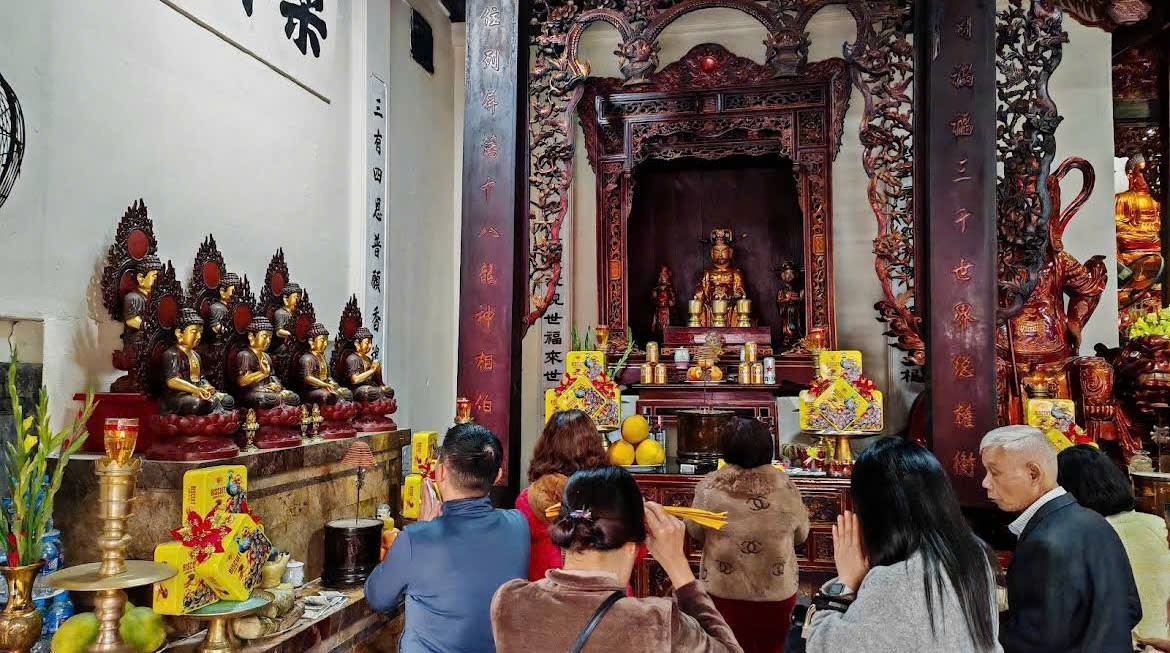
Moment of offering incense at Thanh Ha Pagoda – where visitors entrust their wishes for peace on their spiritual journey. (Source: Collected)
Each stick of incense offered is not just a personal wish but also expresses gratitude to ancestors, Buddhas, and predecessors who have contributed to preserving the pagoda over centuries.
2.3. Participating in and experiencing special New Year's Eve and New Year's Day festivals
One of the most anticipated moments when visiting Thanh Ha Pagoda in Thanh Hoa during Tet is the time of welcoming New Year's Eve and the first morning of the year. On New Year's Eve, crowds gather at the pagoda in a sacred, reverent atmosphere, praying together for a peaceful new year. On the first morning of the year, the sound of the pagoda bell rings out amidst the chilly spring air, creating a profound feeling, helping everyone set aside their worries to start the new year with a peaceful, light, and hopeful mindset.
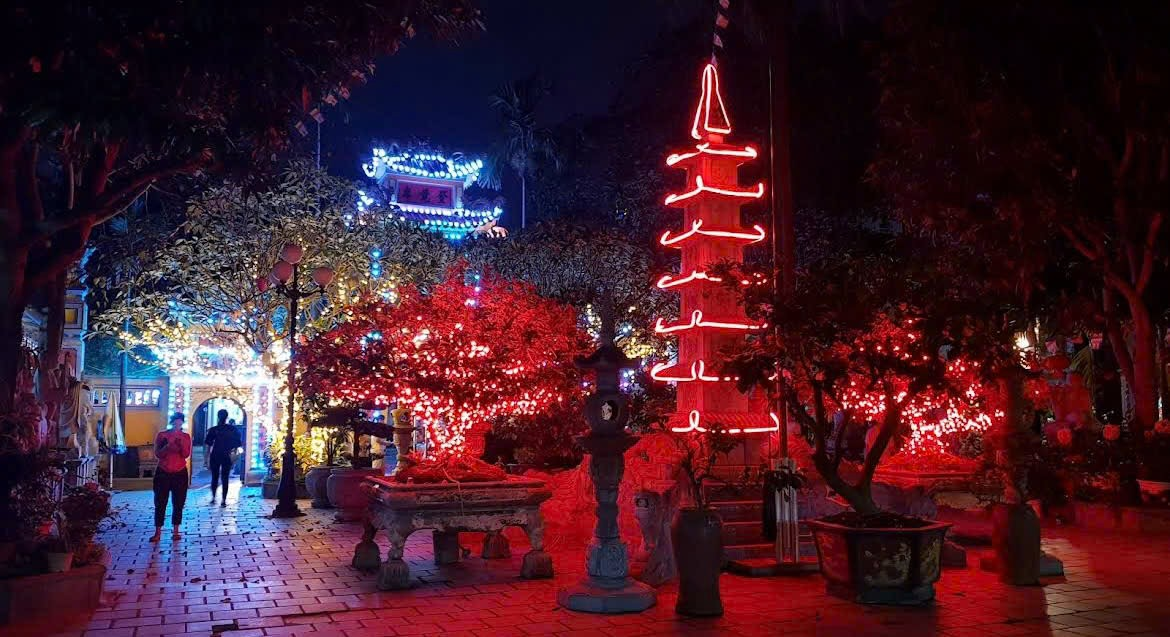
New Year's Eve at Thanh Ha Pagoda shines brightly with lights, where people devoutly pray for peace and good fortune. (Source: Collected)
3. Unique History and Architecture of Thanh Ha Thanh Hoa Pagoda
3.1. History of Construction and Historical Role
According to historical documents and local cultural research, Thanh Ha Pagoda was founded during the Tran Dynasty, over 700 years ago. Initially, the pagoda was a place of religious practice for residents along the Ma River, and it also played an important role in the spiritual life of the ancient Thanh Hoa village community. Through various feudal dynasties, especially the Le and Nguyen periods, Thanh Ha Pagoda was repeatedly renovated and expanded, becoming an influential Buddhist center in the region.
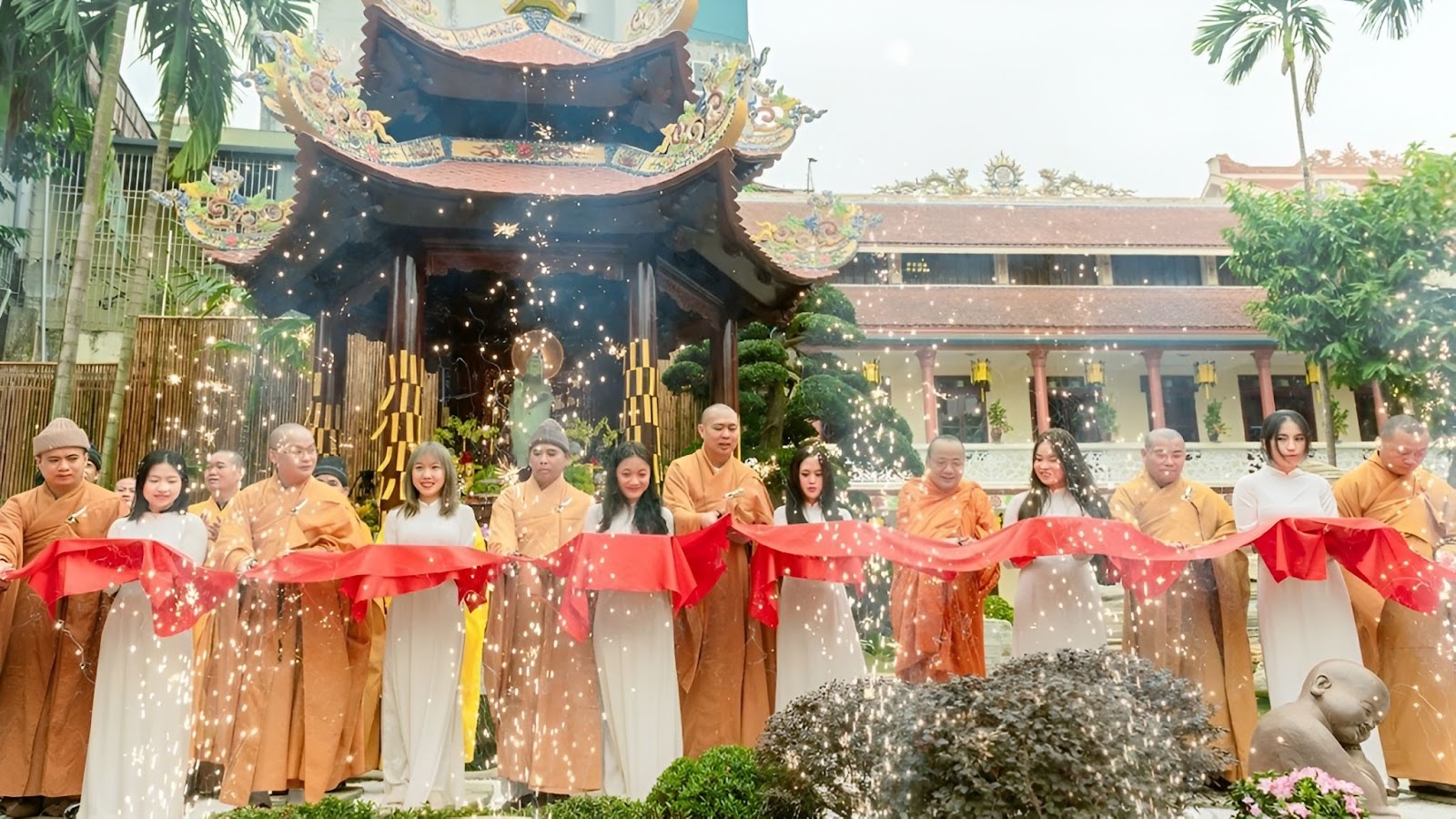
The ribbon-cutting ceremony at Thanh Ha Pagoda marks a significant event in a solemn Buddhist space. (Source: Collected)
Throughout various turbulent periods of history, Thanh Ha Pagoda was not just a place of religious practice but was also closely associated with social life. Many documents record that this place once served as a meeting point and a shelter for revolutionary cadres during the revolutionary period, contributing to the cause of fighting for the protection of the homeland. These very imprints have helped Thanh Ha Pagoda be classified as a historical – cultural relic, affirming its sustainable value in both spiritual and historical aspects.
3.2. Architecture of Thanh Ha Pagoda Thanh Hoa: Distinctive and Unique
The architecture of Thanh Ha Pagoda bears a strong traditional style, clearly influenced by the architectural art of the Nguyen Dynasty with a tight and harmonious layout. The overall structure of the pagoda is arranged along a vertical axis, creating a sense of solemnity and tranquility right from the entrance. The main components such as the Three-Buddha Hall, the Amitabha Hall, the Ancestor House, and the Four-Grace House are arranged symmetrically, reflecting Buddhist philosophy intertwined with the Vietnamese moral principle of "drinking water, remember the source."
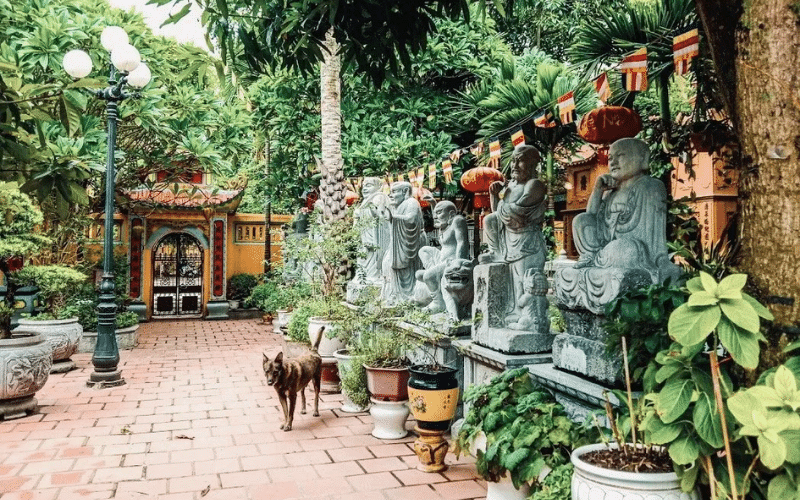
The architectural space of Thanh Ha Pagoda harmonizes with ancient stone statues and a serene green space. (Source: Collected)
Compared to many pagodas in the North, Thanh Ha Thanh Hoa Tet pagoda has its own characteristics in its worship space by harmoniously combining Buddhist elements and folk beliefs. The system of worship statues is arranged solemnly, with delicate but not elaborate carving lines, creating a sense of closeness and accessibility for Buddhists and visitors. It is this simplicity yet profoundness that creates the unique identity of Thanh Ha Pagoda, making this place an indispensable destination for the journey of spring travel and New Year's pagoda visits in Thanh Hoa.
4. Unmissable experiences at Thanh Ha Thanh Hoa Tet pagoda
4.1. Buddhist rituals, seeking blessings, and praying for peace at the beginning of the year
When visiting Thanh Ha Thanh Hoa Tet pagoda , visitors often begin by paying homage to Buddha in the main hall with simple offerings such as incense, fresh flowers, and ripe fruits. The act of offering incense is performed in a solemn atmosphere, expressing sincerity and praying for peace for oneself and family in the new year. According to custom, worshippers usually offer short prayers, focusing on good deeds and avoiding selfish requests.
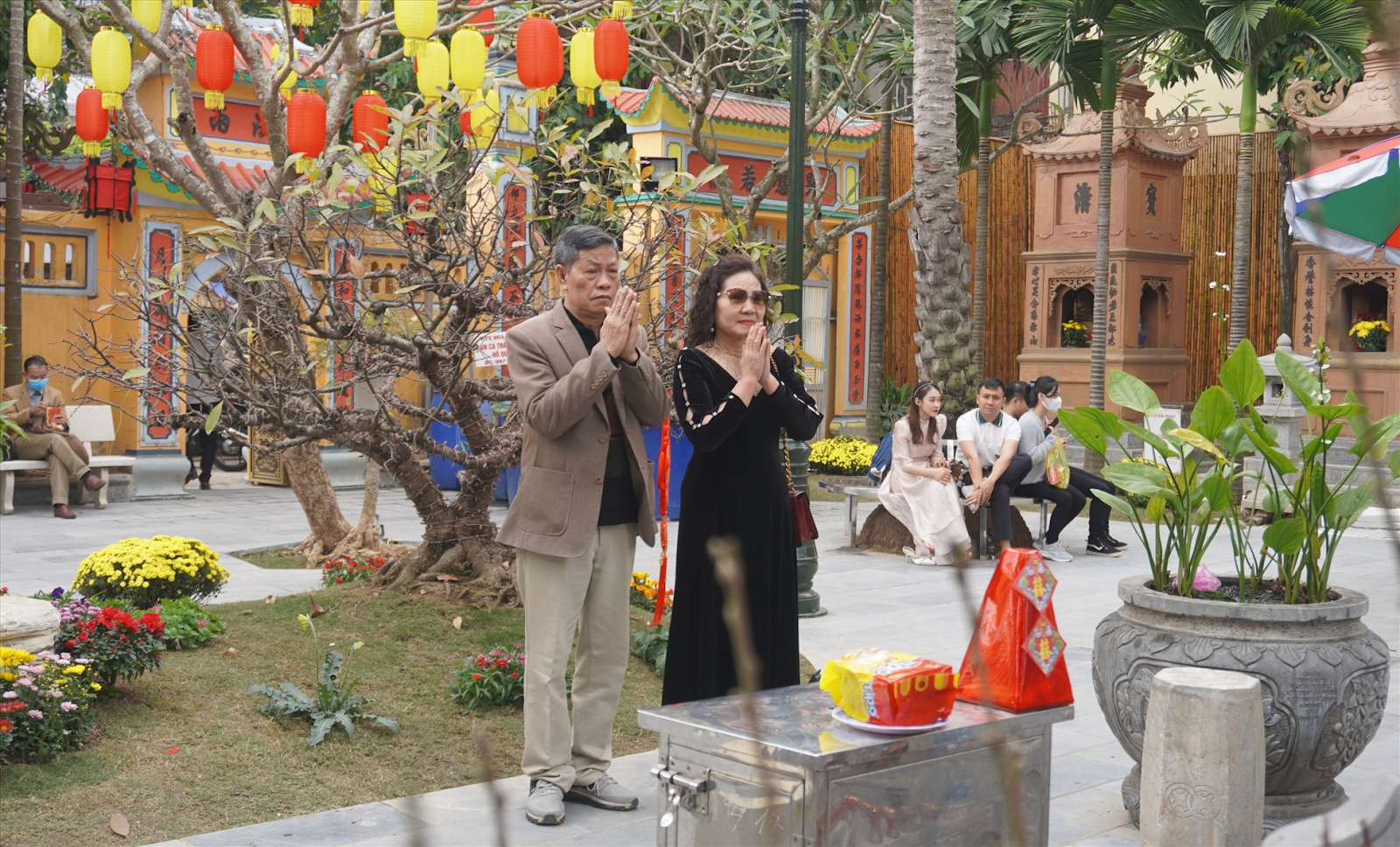
People devoutly offer incense to ask for blessings at Thanh Ha Pagoda, praying for peace, prosperity, and luck for their families. (Source: Collected)
The custom of asking for blessings and fortune-telling at pagodas at the beginning of the year carries a profound spiritual meaning, helping each person to self-reflect, orient themselves towards a year of virtuous living, living mindfully, and appreciating good values. This is not only a religious ritual but also an age-old cultural beauty deeply connected to the spiritual life of the people of Thanh Hoa.
4.2. Check-in ancient architecture, capture the vibrant spring atmosphere
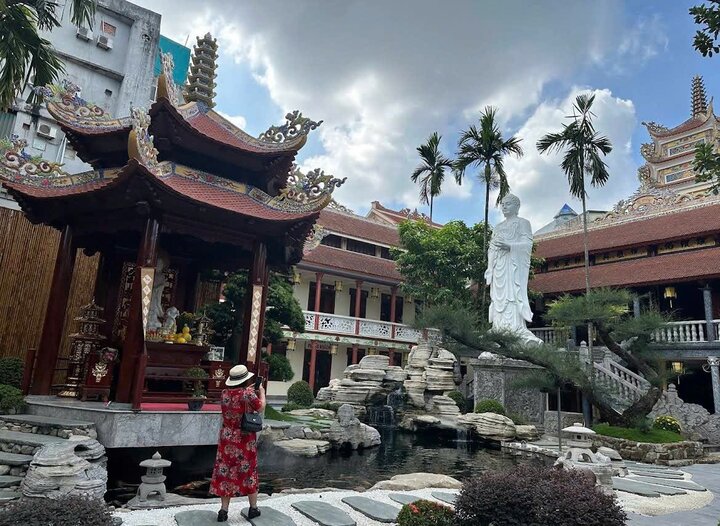
The ancient space of Thanh Ha Pagoda becomes especially vibrant during Tet holidays with colorful flowers, red couplets, and bustling crowds of spring travelers. Many visitors choose to capture their early-year moments in areas such as the Tam Quan gate, the pagoda courtyard, or the ancient corridors, which embody architectural beauty and the traditional spring atmosphere.
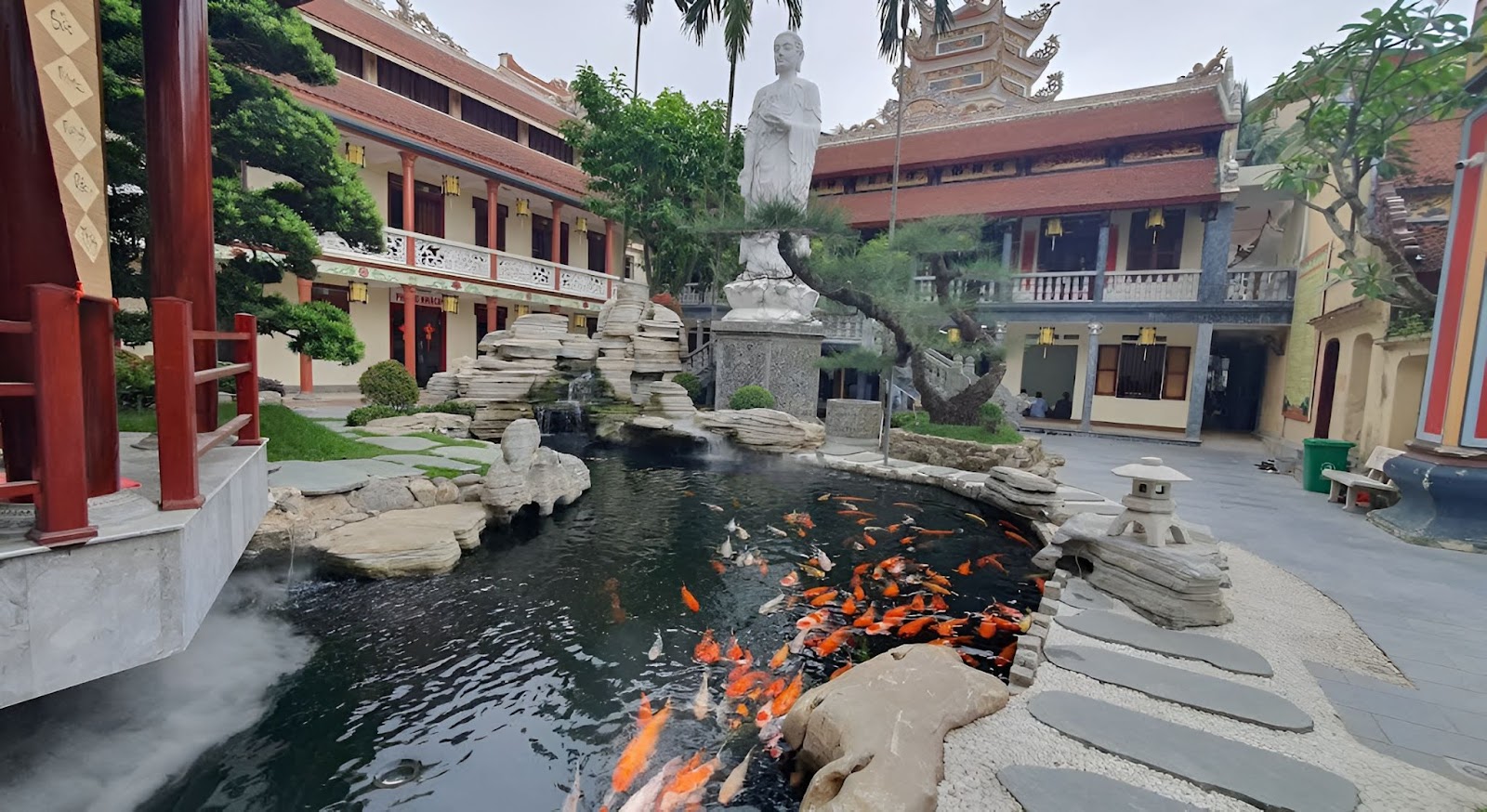
Check-in corner at Thanh Ha Pagoda with Koi pond, Buddha statue, and serene architectural space, attracting tourists. (Source: Collected)
When checking in at Thanh Ha Pagoda Thanh Hoa Tet, visitors should choose polite attire, with elegant colors, suitable for the spiritual space. Photography should be done gently, avoiding disturbance to those in prayer, contributing to preserving the solemnity and cultural beauty during the festival season.
4.3. Participating in charitable activities
Besides Buddhist rituals, Thanh Ha Pagoda Thanh Hoa Tet is also a place where many charitable activities with profound humanitarian meaning take place. At the beginning of the year, the pagoda often organizes or collaborates with programs to donate and support disadvantaged people, spreading the spirit of compassion and sharing in the community.
Participating in these activities helps visitors not only find peace for their souls but also contribute to connecting people with people, in line with the Buddhist spirit of "compassion – joy – equanimity" in the new spring.
5. Guide to traveling to Thanh Ha Pagoda Thanh Hoa Tet 2026
5.1. From Hanoi and Northern provinces
From Hanoi, visitors can choose various means of transport to reach Thanh Hoa city center. Buses are a popular option, departing from stations like Giap Bat and Nuoc Ngam with frequent services, taking an average of 3.5 to 4 hours. Ticket prices usually range from 150,000 to 250,000 VND depending on the type of bus and time, but during Tet, it is advisable to book tickets early to avoid sold-out situations.
If traveling by private car, the Hanoi – Ninh Binh – National Highway 1A or Mai Son – National Highway 45 expressways are convenient choices, covering a distance of about 155 km. The average travel time is 3 to 3.5 hours under favorable traffic conditions. Additionally, trains are also a safe and stable option, with North-South trains stopping at Thanh Hoa station, from where it is about 2 km to Thanh Ha Pagoda Thanh Hoa Tet.
5.2. Intra-provincial travel, from Thanh Hoa tourist attractions
From famous tourist spots like Sam Son, traveling to Thanh Ha Pagoda Thanh Hoa Tet is quite easy. The distance from Sam Son to Thanh Hoa city center is about 16–18 km, taking about 30–40 minutes by car via the coastal road or National Highway 47. Visitors can choose taxis, motorbikes, or private cars to be flexible with their time.
During peak Tet days, the number of people flocking to the pagoda is quite large, so visitors should pay attention to follow traffic direction guidance and park in designated areas around Ben Ngự street. Going early in the morning or choosing late afternoon hours will help reduce congestion, while also providing a more peaceful and complete pagoda visiting experience in the early spring atmosphere.
6. Tips for visiting Thanh Ha Pagoda Thanh Hoa Tet
6.1. Ideal times to visit, avoid crowds
According to local experience, the most pleasant and comfortable times to visit Thanh Ha Pagoda Thanh Hoa Tet are early morning, from around 6 AM to before 9 AM, or early afternoon. This is when the pagoda is still quiet, convenient for offering incense, praying to Buddha, and seeking blessings for the new year. The first 3 days of Tet are usually the busiest, so if you want to avoid crowds, you can choose to visit from the 4th day onwards or on weekdays. During peak days, ensuring the safety of personal belongings and health is also very important. Visitors should bring light items, pay attention to protecting personal assets, and limit standing for too long in crowded areas to avoid fatigue, especially for the elderly and young children.
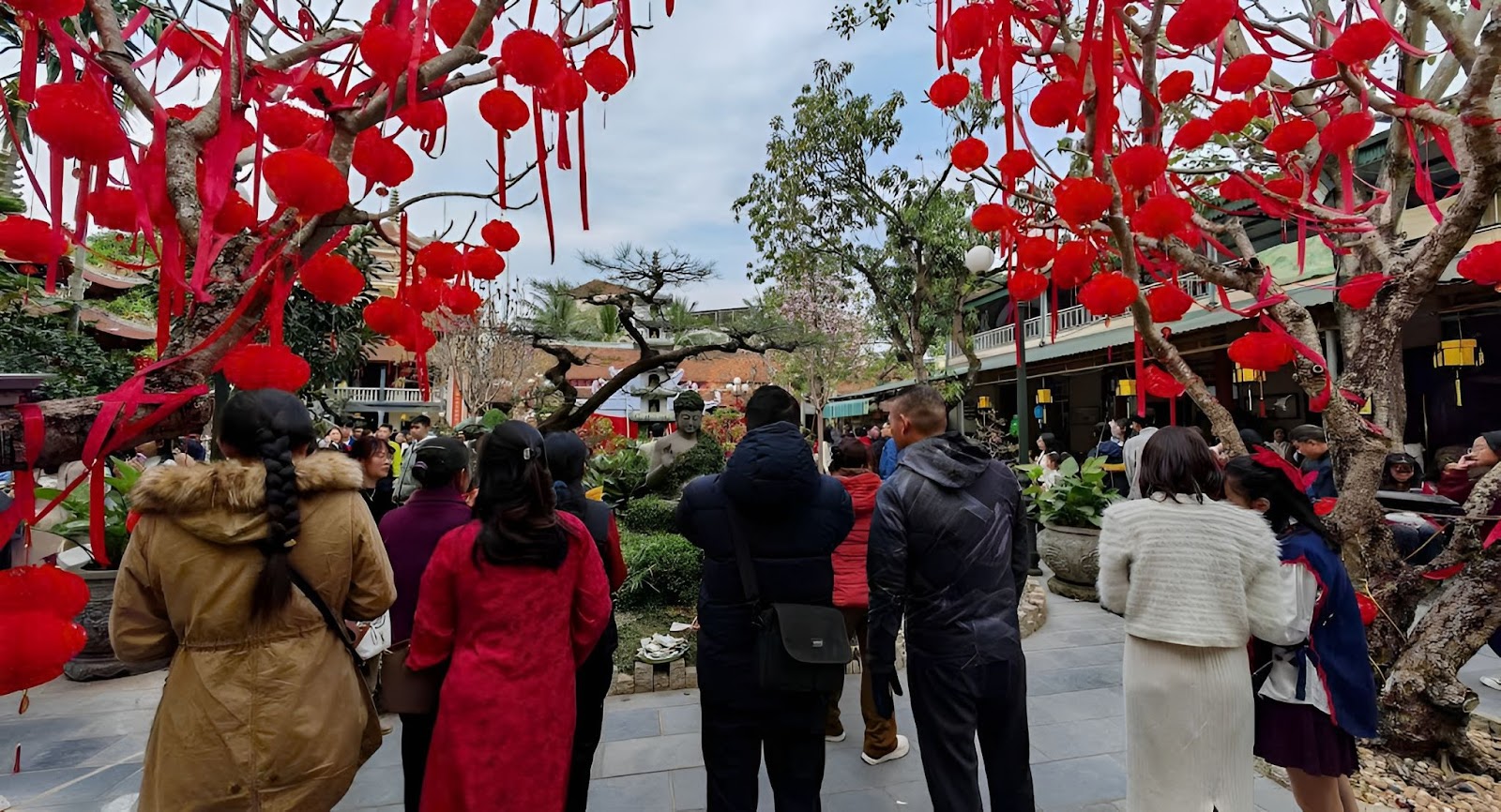
The atmosphere of visiting Thanh Ha pagoda in the morning is bustling with pilgrims and the red color of lanterns. (Source: Collected)
6.2. Preparation of items and offerings for incense burning
Offerings for incense burning at Thanh Ha Pagoda Thanh Hoa Tet are usually prepared simply but solemnly, showing reverence. Common offerings include incense, fresh flowers, sweet fruits, traditional cakes and candies, avoiding savory offerings in accordance with Buddhist principles. When offering, visitors should arrange them neatly, burn incense moderately, and pray briefly, focusing on wishes for peace, health, and good deeds.
Some customs to note during Tet are not placing money offerings directly on the altar, not pushing when performing rituals, and maintaining a solemn attitude in the main hall area. These contribute to preserving the sacred space and the cultural beauty of pagoda visits at the beginning of the year.
6.3. Tourist attractions – culinary spots combined around the pagoda
After visiting Thanh Ha Pagoda Thanh Hoa Tet, visitors can combine enjoying local cuisine and visiting nearby spots in the provincial center. The Ben Ngự street area and adjacent streets have many eateries familiar to locals, serving Thanh region specialties such as banh cuon, bun cha tom, and nem chua.
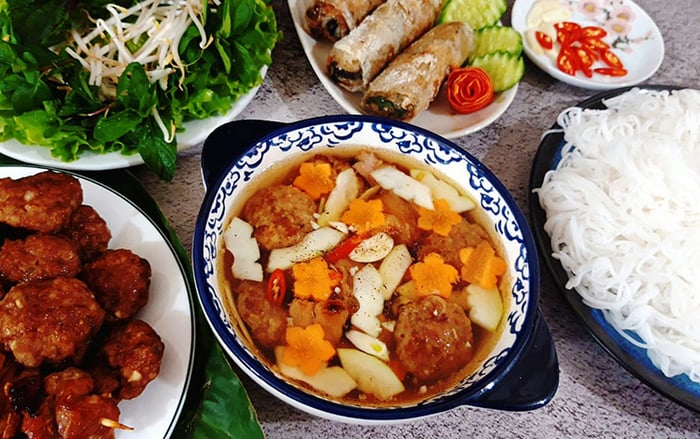
Enjoy hot Bun Cha Thanh Hoa after visiting Thanh Ha Pagoda, a perfect taste of local cuisine. (Source: Collected)
Besides, from Thanh Ha Pagoda, tourists can easily travel to other prominent attractions in Thanh Hoa such as Lam Son Square, Hoi An Park, or combine a spring tour to Sam Son if time permits. This convenience makes the early year pilgrimage not only spiritually meaningful but also a complete spring trip with many memorable experiences.
Before concluding the spring tour and Buddhist pilgrimage, visitors can spend more time visiting Sam Son Beach Square – currently the most vibrant rendezvous point for tourism in Thanh Hoa. As night falls, the square area becomes bustling with people strolling, playing, and checking in by the vast open sea space. The most attractive highlight is the modern water music shows combined with lights, creating a brilliant, vibrant scene every evening. This is an ideal choice to relax, feel the youthful rhythm of the coastal city, and end the year's trip with both lively and memorable experiences.
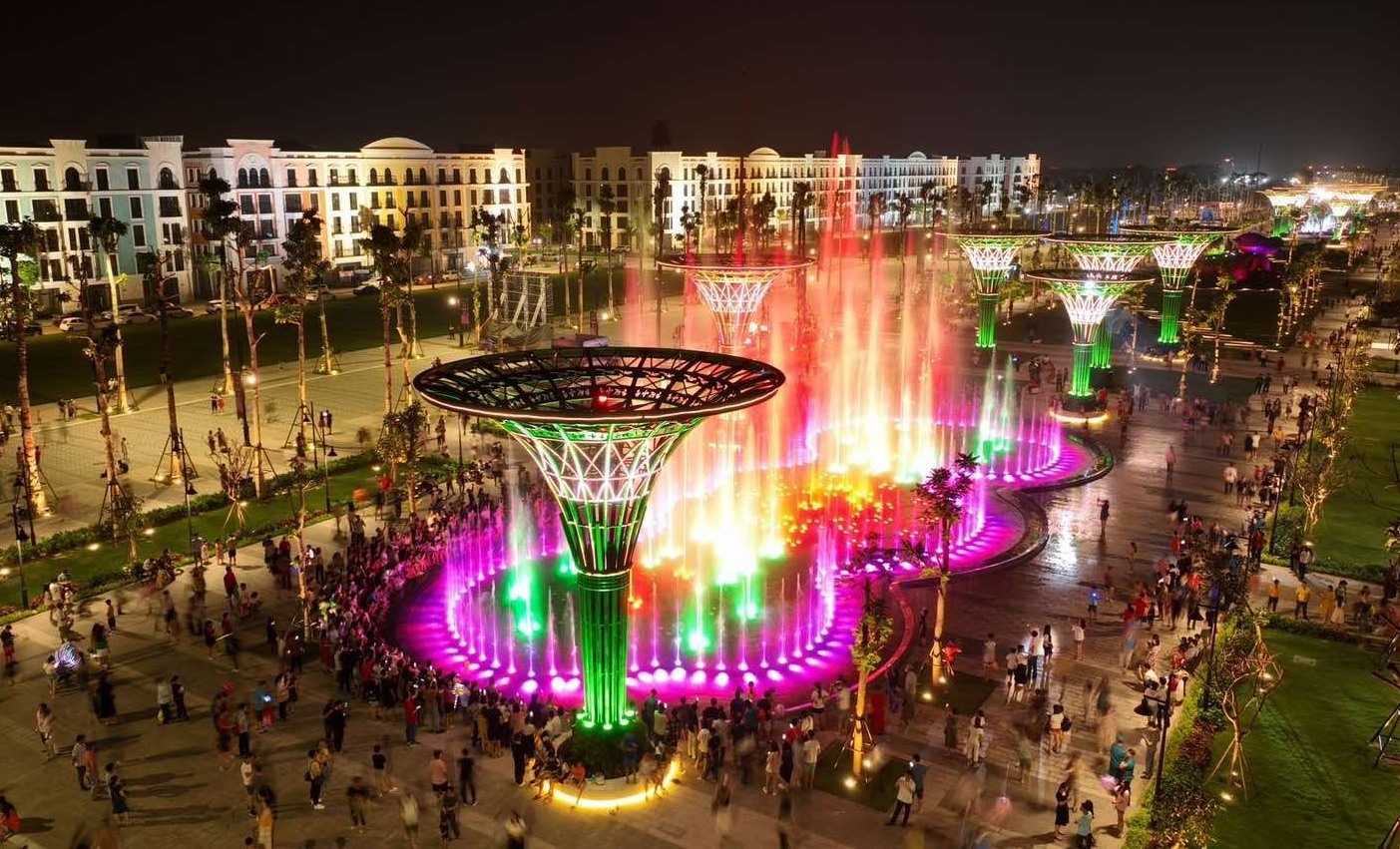
Sam Son Square is brilliant at night with a shimmering water music show, attracting many tourists for check-ins. (Source: Collected)
With a long history, convenient location, and solemn spiritual space, Thanh Ha Pagoda Thanh Hoa Tet is a meaningful destination for spring travel and Buddhist worship at the beginning of the year in Thanh Hoa. Not only does it help each person find peace, pray for peace and luck for the new year, but the pagoda also preserves cultural and religious values closely associated with community life through many generations. Whether you are a local or a visitor from afar, when visiting Thanh Ha Pagoda Thanh Hoa Tet 2026, you will clearly feel the traditional spring atmosphere, the harmony between past and present right in the heart of the city. Thorough preparation of time, offerings, and civilized behavior will make the trip complete, so that every spring, Thanh Ha Pagoda remains a sacred and memorable spiritual anchor.