















1. A brief overview of Duong Dinh Nghe Temple
1.1. Duong Dinh Nghe Temple is associated with the talented general who repelled the Nam Han army
Duong Dinh Nghe Temple is a place to commemorate the talented general, who greatly contributed to regaining national independence in the early 10th century. He was born in 874 in Giang village - Duong Xa, now Ham Rong ward, Thanh Hoa province. Even from a young age, Duong Dinh Nghe was known for his intelligence, courage, and great ambition to save the country. He once served the Khuc family, who re-established autonomy for the Vietnamese people after many years of occupation. Thanks to his talent and reputation, he was entrusted with many important responsibilities, contributing to maintaining the Tinh Hai Quan region during a period of great upheaval.
When the Nam Han dynasty invaded our country in 930, Duong Dinh Nghe recruited over three thousand soldiers from Thanh Hoa, marched north to repel the invaders. With his strategic talent and courageous spirit, he repeatedly defeated the Nam Han army three times, liberated Dai La citadel, and restored national autonomy. After the glorious victory, he proclaimed himself Tinh Hai Quan's Military Governor, continuing to build an independent government and care for the people's lives. From then on, Duong Dinh Nghe's name became associated with the early period of national autonomy after centuries of Northern domination.
However, his life ended tragically when he was betrayed and murdered by his subordinate Kieu Cong Tien in 937. His death was mourned by people nationwide, but Duong Dinh Nghe's loyal spirit and patriotism are forever honored. Posterity established Duong Dinh Nghe Temple in his hometown to remember the contributions of this national hero.
1.2. Historical significance of Duong Dinh Nghe Temple
Duong Dinh Nghe Temple is a place to honor a national hero with a proud spirit and indomitable will. Duong Dinh Nghe is revered by generations for his loyalty and righteousness, always prioritizing national interests. He is a symbol of the courage, intellect, and steadfast determination of the Vietnamese people in the early period of nation-building and defense. His name has become a source of pride for his homeland, Thanh Hoa, and an inspiration of resilient spirit for generations to come.
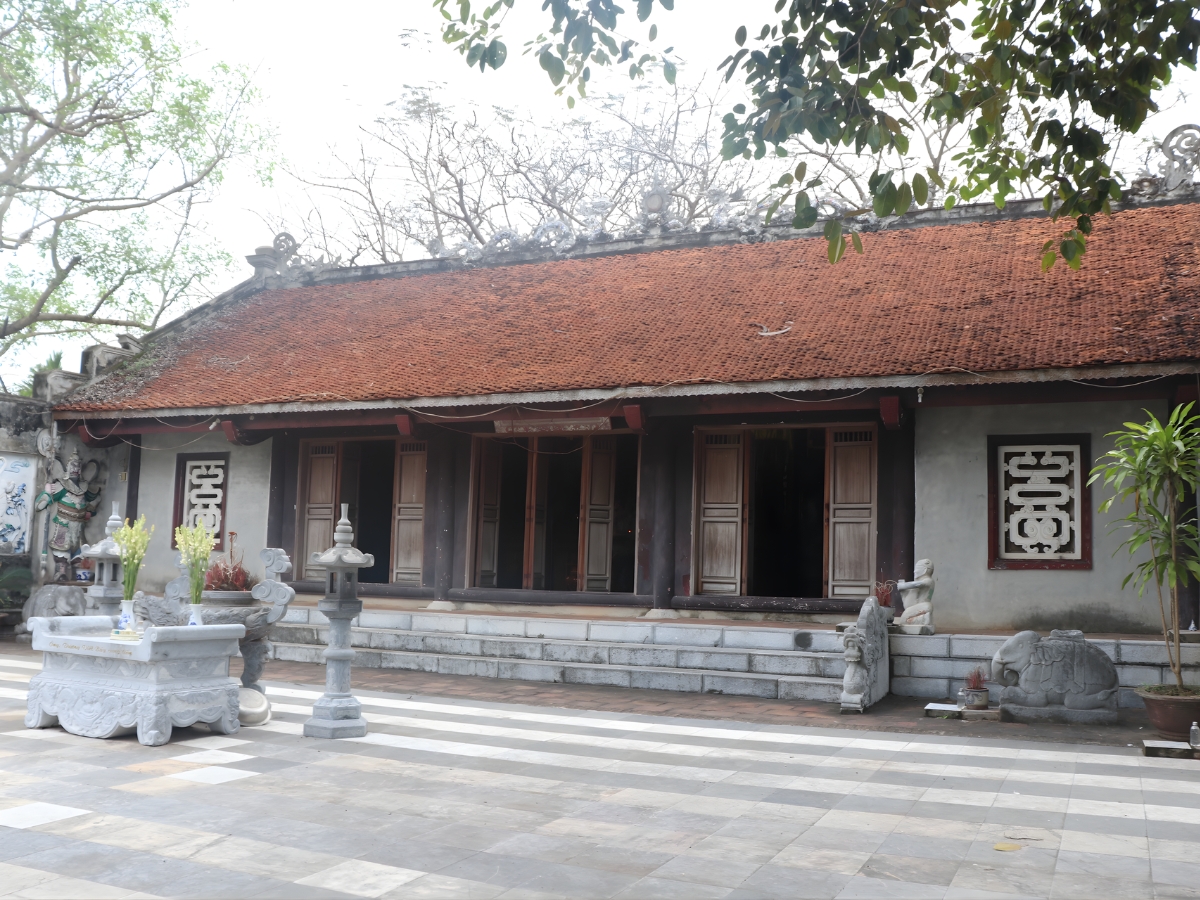
The Temple of Duong Dinh Nghe is associated with the talented general who repelled the Southern Han army. (Source: Collected)
In March 1996, the Temple of Duong Dinh Nghe was recognized by the State as a national historical and cultural relic. Not only a sacred place of worship, the temple also holds great value in educating the younger generation about traditions. Commemorative ceremonies and cultural and spiritual activities held annually here help foster patriotism, remind everyone of the principle "when drinking water, remember its source," and awaken national pride. The temple is therefore not only a sacred place to remember ancestors but also a cultural highlight, contributing to preserving the identity and historical traditions of the Thanh Hoa homeland.
2. Architecture of the Temple of Duong Dinh Nghe
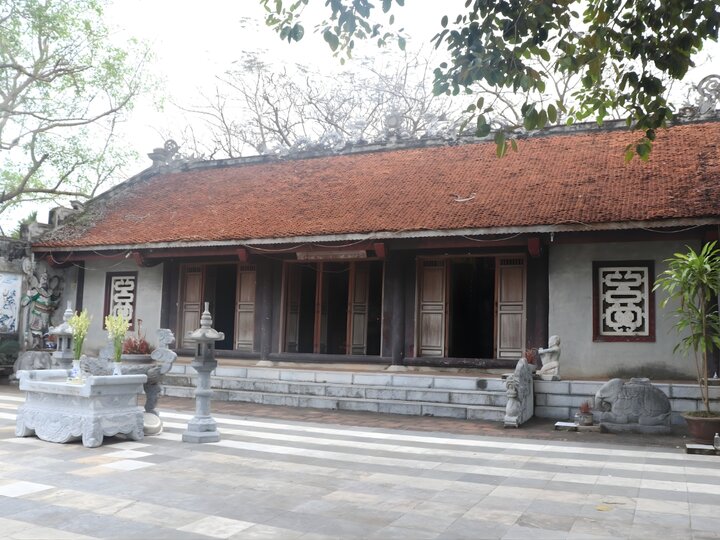
The Temple of Duong Dinh Nghe was built on the former land of the Duong family, a place associated with his childhood and life. According to the elders in the village, the temple was built in the traditional architectural style "thuong sang ha mo" (upper altar, lower tomb) – the upper part is the worship area, the lower part is the tomb of the talented general, showing a harmonious combination of belief and deep gratitude. This architectural style not only carries the characteristics of ancient Vietnamese culture but also expresses the deep respect of posterity for the one who contributed to defending the country.
After many renovations and repairs, the Temple of Duong Dinh Nghe still retains its ancient and majestic appearance. Within the temple grounds, many precious artifacts are still preserved, such as kneeling elephant statues, stone horses, a pair of stone attendants flanking the entrance, along with a stone stele inscribed with his merits. Every detail, every line bears the mark of time and shows the skill of ancient hands. Right next to the temple is the Phuc Hung Pagoda, built spaciously, creating a relic complex that is both sacred and harmonious, contributing to enhancing the solemnity and sacredness of the place worshipping the national hero Duong Dinh Nghe.
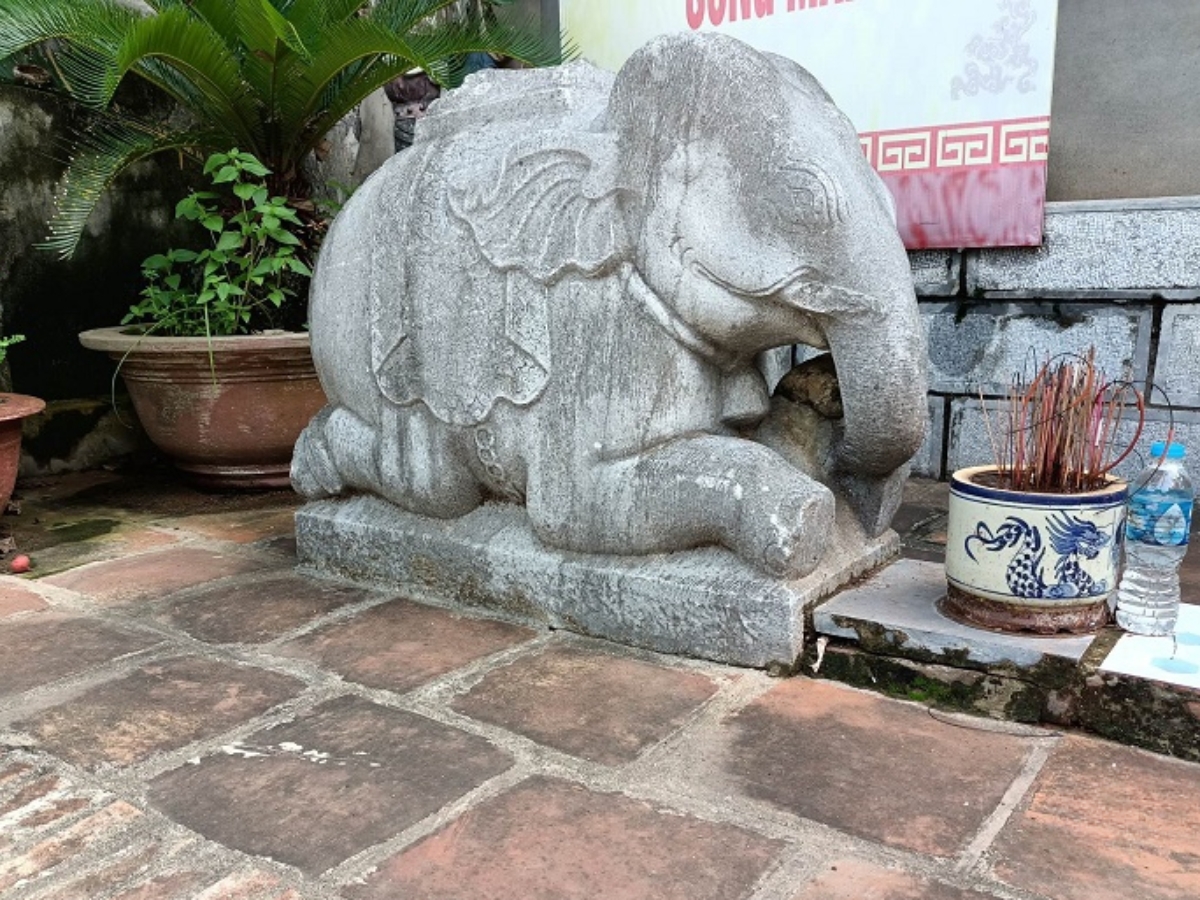
The kneeling elephant statue is still preserved at the Duong Dinh Nghe temple. (Source: Compilation)
3. Traditional Festival at Duong Dinh Nghe Temple
Duong Dinh Nghe Temple is an important spiritual and cultural address for the people of Thanh Hoa, gathering long-standing historical and cultural values. Annually, in mid-March of the lunar calendar, the traditional festival of Duong Xa village, Ham Rong ward, is solemnly held at the temple grounds. This is an occasion for the people to remember the merits of the national hero Duong Dinh Nghe, and to express their deep gratitude to the ancestors who contributed to building and defending the country.
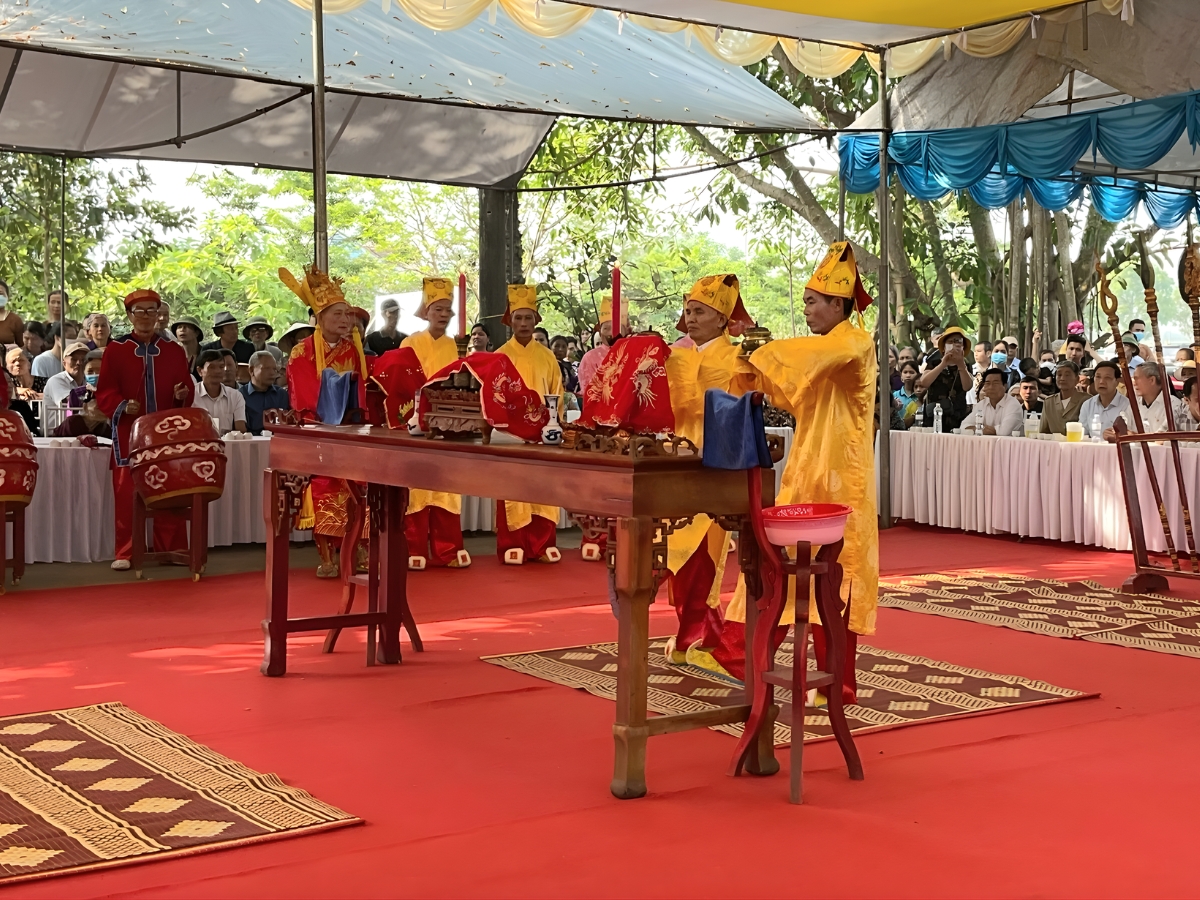
Festival commemorating the talented general Duong Dinh Nghe. (Source: Thanh Hoa City Electronic Information Portal)
Before the main ceremony, villagers eagerly prepared. They cleaned the premises, polished ritual objects, altars, couplets, and performed the “Moc Duc” ritual – bathing and purifying the idols to show reverence. The main ceremony took place from the 12th to the 15th of the third lunar month, which is also the death anniversary of the general Duong Dinh Nghe. The ritual was conducted solemnly with a team of 15 officiants, among whom the main officiant wore a yellow robe, a ceremonial hat, and red shoes, two assistants (Tay Xuong and Dong Xuong) along with other officiants wore blue ceremonial robes. In that reverent atmosphere, the prayer was read aloud, recalling the life and merits of the national hero, making the festival atmosphere more sacred and moving.
Following the solemn ceremony was a vibrant and lively festival, with many traditional folk games such as human chess, cockfighting, blindfolded duck catching, tug of war… creating a joyful atmosphere that fostered community cohesion. The festival at the Temple of Duong Dinh Nghe is not only an occasion to commemorate the merits of the talented general but also a vivid expression of solidarity, national pride, and the cultural beauty of the people of Thanh Hoa region preserved and promoted through generations.
4. Experience when visiting the Temple of Duong Dinh Nghe
4.1. Attire, customs, and notes for visiting the temple
When visiting the Temple of Duong Dinh Nghe, visitors should prepare neat and polite attire. As this is a sacred place, overly short, revealing, or offensive clothing is considered inappropriate. Visitors should choose long pants, sleeved shirts, closed-toe shoes or slippers, and avoid wearing overly flashy or attention-grabbing outfits when entering the worship area. Furthermore, when performing rituals, visitors must maintain a solemn attitude, speak softly, and refrain from laughing or taking photos indiscriminately in the main worship area.
According to local folk customs, those who come to offer sacrifices at the Temple of Duong Dinh Nghe usually bring incense, flowers, betel leaves and areca nuts, glutinous rice wine, and fruits/cakes,... to show reverence for their ancestors. People often come to pray for national peace, abundant harvests, and family well-being. When entering the temple, visitors must follow the designated paths, avoid crowding or blocking the altar. Maintaining a sincere, respectful, and gentle attitude is the most beautiful way to express gratitude to the national hero worshipped here.
4.2. Combining visits to famous tourist attractions in Thanh Hoa
After visiting the Temple of Duong Dinh Nghe, visitors can combine their trip with exploring many other famous tourist destinations in Thanh Hoa to make the journey more complete. The land of Thanh Hoa is not only rich in historical tradition but also possesses many relics and scenic spots with unique cultural values, associated with important periods of the Vietnamese nation.
Tay Giai Ancient House: This ancient house, over 200 years old, is located near the west gate of Ho Citadel and is considered one of the most beautiful ancient folk houses in Vietnam. With its sturdy ironwood structure, ancient yin-yang tiled roof, and exquisite carvings, this place offers a peaceful and rustic feeling, helping visitors clearly feel the life of the people in the past.
Lam Kinh National Historical Site: Located in Lam Son commune, Thanh Hoa province, Lam Kinh is the resting place of the kings of the Later Le Dynasty and also the cradle of the historical Lam Son Uprising. Visitors here can admire the ancient, solemn space along with harmonious and tranquil natural scenery.
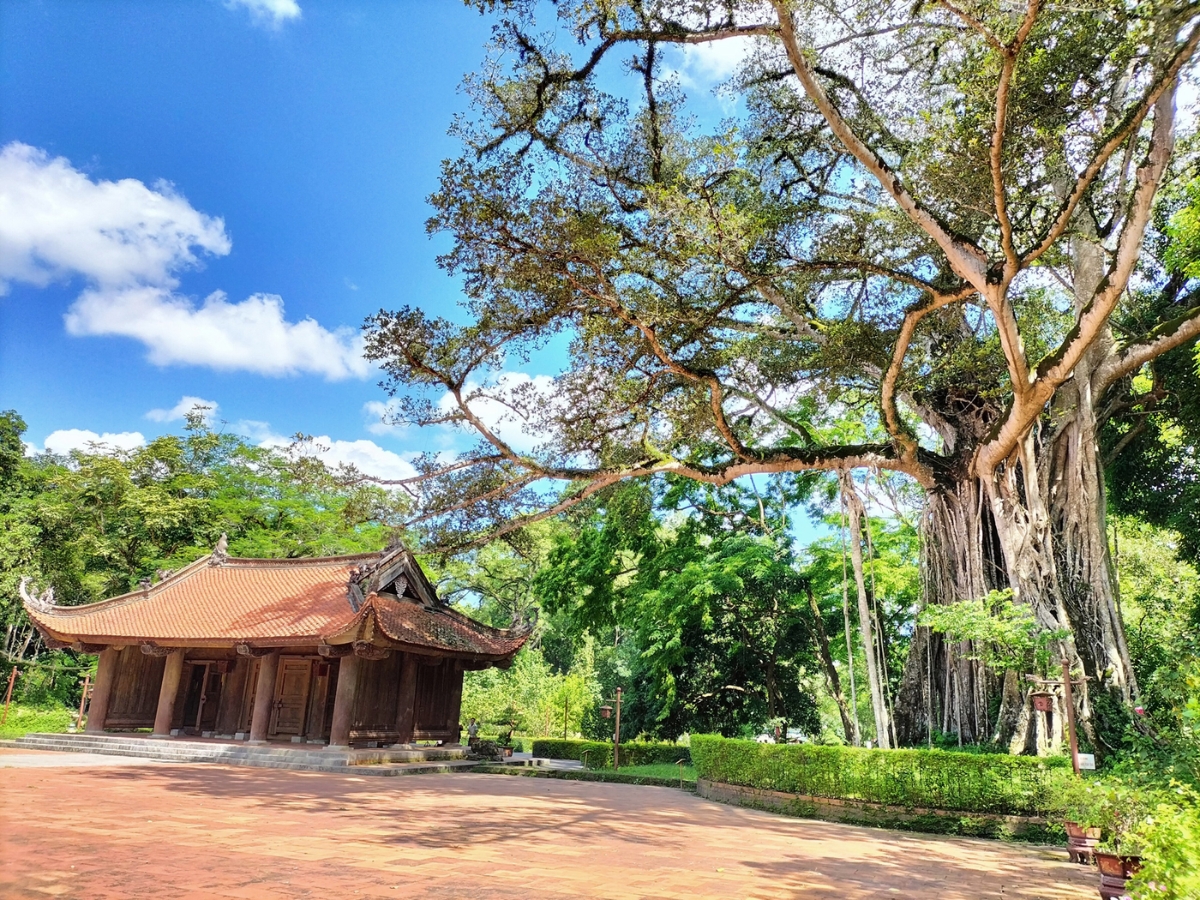
Combine sightseeing and worship at the Lam Kinh historical site. (Source: Collected)
Ho Citadel: A stone structure over 600 years old recognized by UNESCO as a World Cultural Heritage site in 2011. With its unique construction techniques and majestic scale, Ho Citadel is a testament to the talent, intellect, and foresight of ancient Vietnamese people.
Huyen Tich Am Tien: This is a new spiritual destination in Thanh Hoa currently under construction, promising to become an interesting stopover for tourists visiting the Thanh Hoa region in the near future.
The journey to the Temple of Duong Dinh Nghe is not only an occasion to remember the loyal national hero but also an opportunity for everyone to deeply feel the historical and cultural values of the Thanh Hoa homeland. Amidst the sacred and ancient space, visitors will find peace, gratitude, and pride in the tradition of nation-building and defense of their ancestors. If you have the chance to visit Thanh Hoa, don't forget to visit the Temple of Duong Dinh Nghe to make your journey of exploring Thanh Hoa more meaningful and complete.