
















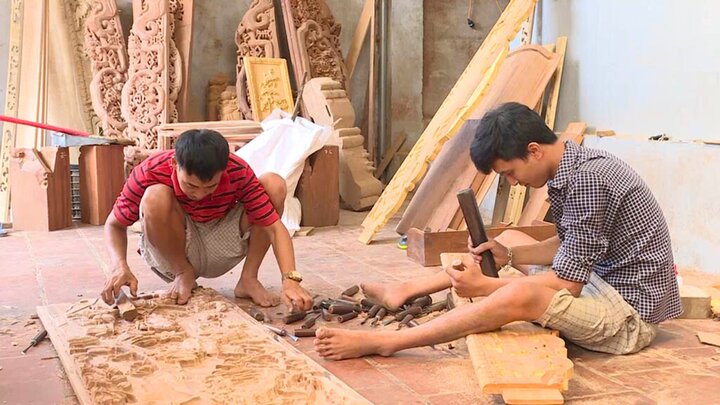
1. General introduction to Dat Tai carpentry village
Located in the Hoang Hoa region, Dat Tai carpentry village still retains the bustling sounds of carpentry tools, blending with the rhythm of life of generations of residents for over 500 years. This locality belongs to Hoang Hoa commune, Thanh Hoa province, a place that preserves a rich traditional rural cultural space.

Dat Tai carpentry village in Hoang Hoa commune is a place that preserves a rich traditional rural cultural space. (Source: Collected)
The point that creates the unique value for Dat Tai carpentry village is the traditional carpentry craft with a history of development over 500 years. From building communal houses, pagodas, temples, shrines, palaces to skilled carving techniques, the artisans of Dat Tai have built a sustainable reputation. The talented hands of the artisans not only contributed to building spiritual structures but also produced many interior products such as cabinets, beds, tables, and chairs with high quality.
The cultural and historical value of Dat Tai carpentry village has become the cradle for the development of carpentry in the North Central region, from there spreading to Ha Vu, Ha Thai villages and many neighboring areas. Architectural works bearing the mark of Dat Tai appear across the country, contributing to enriching the nation's cultural heritage.
2. History of formation and development of Dat Tai carpentry village
2.1. Dat Tai carpentry village, origin and historical imprints
The history of the formation of Dat Tai carpentry village originated from the steps of the first people exploring this land to find new territories. According to transmitted records, during the Ly dynasty, a group of residents working as fishermen followed the Tuan Ngu river, a branch of the Ma river, to this land. Noticing the low terrain and abundant aquatic resources here, they decided to stay, build a village named Ke Tre, later changed to Tre village, then Nac Tai Trang.

History and origin of Dat Tai carpentry village. (Source: Collected)
A major turning point in the history of Dat Tai carpentry village occurred when carpenters from Y Yen, Ninh Binh (former Nam Dinh) moved to the Thanh Hoa region. Upon arriving at Nac Tai Trang and recognizing the advantages of this land, the leader decided to settle down permanently, build a family, and teach carpentry to the local people. From this cultural fusion, Nac Tai Trang became Dat Tai and gradually became famous as a center of exquisite carpentry in the Thanh Hoa region.
The spread of carpentry from Dat Tai to Ha Vu, Ha Thai, and neighboring villages occurred through marriages, trade, and apprenticeships. The artisans married locals and diligently passed down techniques to generations of local people, contributing to the formation of a widely developed carpentry community.
2.2. Ups and downs and the resilience of the traditional carpentry craft
Carpentry in Dat Tai carpentry village has gone through many turbulent periods along with the nation's history. There were periods when, for many objective reasons, the village's traditional craft developed slowly, and the number of carpenters decreased significantly. However, passion for the craft and strong attachment kept the people of Dat Tai connected to their homeland's traditions.
The most significant changes are reflected in specific figures: in 2005, the village had about 200 people involved in carpentry; by 2014, this number increased to over 450 workers and 200 households with workshops, and the average income from the craft also improved.
The core factor preserving tradition in Dat Tai carpentry village lies in the pride in the craft, perseverance, and community solidarity. Carpentry is not just a livelihood but also a characteristic feature of cultural life, a source of pride for each family and lineage. Despite many changes, the carpentry craft retains its unique characteristics thanks to the creativity and passion for the craft of the village's generations of artisans.
3. Characteristics of the carpentry craft and outstanding products of Dat Tai carpentry village
3.1. Crafting techniques and unique carving art
Carpentry in Dat Tai carpentry village requires artisans to be diligent and meticulous, with creativity and deep aesthetic appreciation, evident in the intricate carvings. Dat Tai carpenters are artisans, skilled in carving ceremonial doors and horizontal panels, and the unique "dragon, unicorn, turtle, phoenix" carving art.
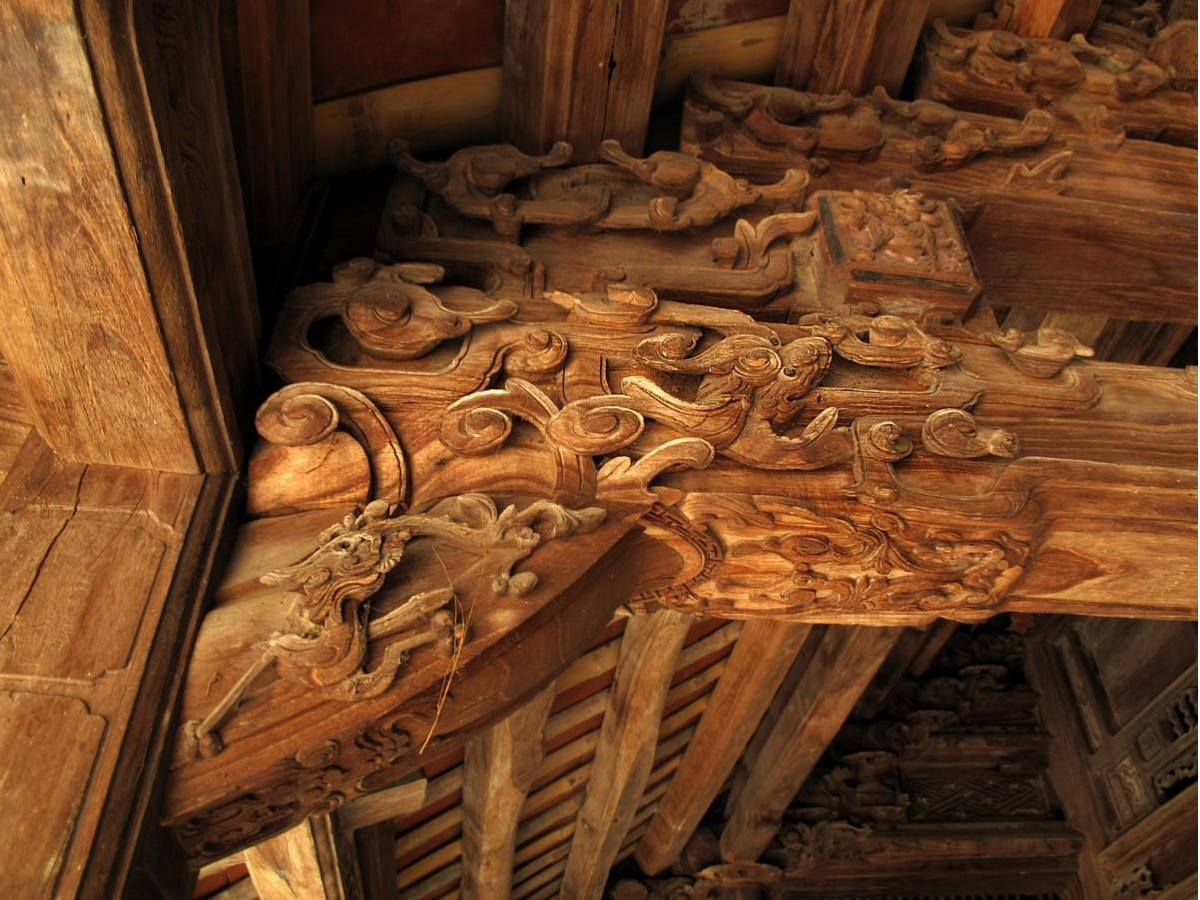
The greatest strength of the Dat Tai carpentry village is the technique of constructing structures such as communal houses, pagodas, temples, shrines, and palaces in the capital. (Source: Collected)
The greatest strength of the Dat Tai carpentry village is the technique of constructing structures such as communal houses, pagodas, temples, shrines, and palaces in the capital. In addition, artisans also intricately craft household furniture such as cabinets, beds, tables, and chairs with a high-quality finish. In particular, the art of carving "long ly quy phượng" has become a unique signature, reflecting the craftsmanship as well as the aesthetic sense of the artisans here.
To meet modern demands, many families in the village have boldly invested in artistic carving machines costing from 400 million VND to 500 million VND. The combination of traditional techniques and modern technology helps the products of the Dat Tai carpentry village both preserve traditional values and meet contemporary tastes.
3.2. Notable structures bearing the Dat Tai imprint
The imprint of the artisans from the Dat Tai carpentry village is present in many notable architectural works across the country. Tra Co Temple in Quang Ninh province is a prominent example. After completing the work, Dat Tai artisans left a horizontal lacquered board inscribed with four ancient characters "Nam - Son - Tinh - Tho", signifying the wish for the temple to endure eternally through time.
In the capital Hanoi, the Vietnam Museum of Ethnology also bears the Dat Tai imprint through restoration work carried out by the team of artisan Le Van Phan. Phu Dien village communal house, with its magnificent and exquisite wood carvings, is also a work by artisans from Dat Tai.
The reputation of the artisans from the Dat Tai carpentry village is also demonstrated through a series of traditional wooden houses, hundreds of years old, which are still preserved in many villages in the Thanh Thanh countryside. Governor Vuong Duy Trinh of Thanh Hoa once left a pair of parallel sentences at the village literary hall, praising the talent and reputation of the Dat Tai people: "Thien tich thong minh Hoang Hoa duc/Thanh phu cong dung Dat Tai nang", as a testament to the prominence of the craft village.
4. Unique life, culture, and festivals at Dat Tai carpentry village
4.1. The carpentry craft in the community's consciousness
The people of the Dat Tai carpentry village are always proud that, whether men follow the craft or not, everyone must know how to use tools like chisels and carving tools. This demonstrates the deep connection of the carpentry craft to the village community, contributing to the formation of the local cultural identity.
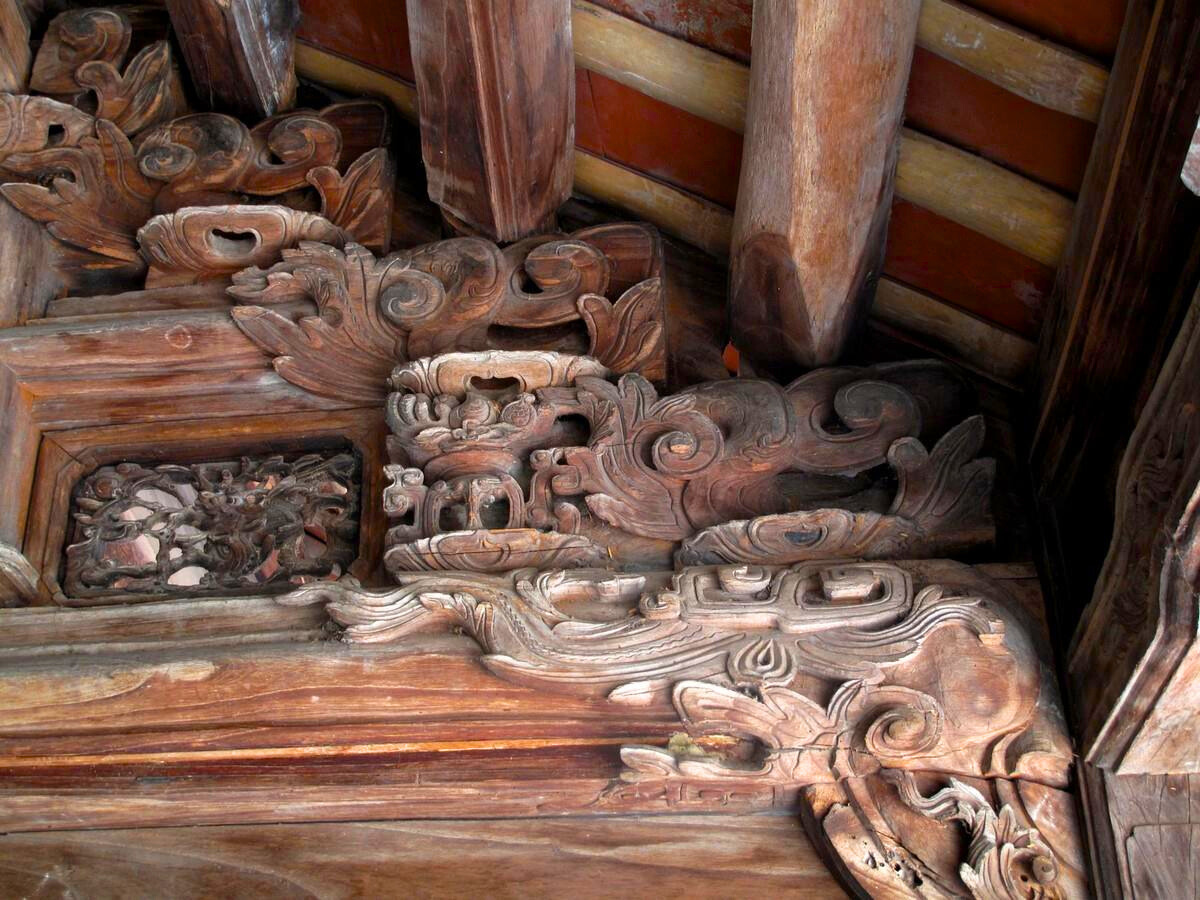
Carpentry always holds an important position in the economic and social life of Dat Tai village in particular and Hoang Hoa commune in general. (Source: Collected)
The tradition of learning a trade here is nurtured naturally within each family. Many children born into families with a carpentry tradition have been exposed to and learned from a young age, witnessing the diligence and skill of their ancestors day by day, creating a sustainable inheritance across generations.
Nowadays, at Dat Tai carpentry village, many households still stick to the carpentry trade, reflecting the close connection between the community and its long-standing tradition. Carpentry always holds an important position in the economic and social life of Dat Tai village in particular and Hoang Hoa commune in general, being the main developing industry and playing a crucial role in the locality's development.
4.2. Vat Cu Festival - A Prominent Cultural Feature of Dat Tai
Besides the long-standing carpentry tradition, Dat Tai carpentry village also preserves the culturally rich Vat Cu Festival. According to the elders, no one remembers the exact origin of the Vat Cu Festival, only knowing that this activity has become an indispensable part of the spiritual life of the village residents for centuries.
Legend has it that in the past, there were three lions that often played with spinning tops, creating a fun game called "hy cu" in the village garden. Based on this legend, the villagers together organize the Vat Cu Festival on the second day of the Lunar New Year each year.
The Vat Cu Festival carries spiritual significance, aiming for the wishes of national peace and prosperity, abundant harvests, and favorable business for carpenters. The rituals and games contribute to community bonding and increasingly attract many tourists to learn about and experience the unique traditional culture of the Hoang Hoa region.
5. Dat Tai Carpentry in Modern Times: Preservation, Development, and Experiential Tourism
5.1. Exploring Dat Tai Carpentry Village from a Cultural Tourism Perspective
Upon arriving at Dat Tai carpentry village, visitors will feel the vibrant atmosphere through the echoes of chiseling and wood sounds, both familiar and full of life, which has become a part of the local people's lives for generations. The aroma of wood and the lively conversations among artisans create a vibrant picture of the craft village.
Visitors also have the opportunity to visit active carpentry workshops, where many families have equipped modern machinery to improve product quality. Witnessing artisans create with sophisticated carving techniques, visitors will gain a deeper understanding of the traditional cultural values that the craft village is preserving.
Dat Tai carpentry village is also an ideal starting point to explore ancient architectural works built by the village's own artisans. In the past, the village had 4 communal houses, 3 shrines, 2 pagodas, 1 temple, and 1 Confucian temple, with each ward having a communal house including Hung, Tay, Dong, and Quan communal houses, each communal house having 5 to 7 bays, demonstrating the prosperity and talent of the traditional craft village.
5.2. Suggested Experiences for Visitors
When visiting Dat Tai carpentry village, visitors can register to participate in carpentry workshops directly taught by local artisans. Holding a chisel and hammer yourself to create small products will help you better feel the dexterity and perseverance that traditional crafts require.
The most suitable time to visit the carpentry village is on the second day of the Lunar New Year each year, when the Vat Cu Festival takes place bustlingly. This is an occasion for tourists to immerse themselves in the traditional festival atmosphere, learn about folk tales, and deeply experience the community bonding of the craft village residents.

Upon completion, Huyen Tich Am Tien promises to be a spiritual highlight of Thanh Hoa, creating a journey of discovery that is both familiar and novel. (Source: Collected)
Besides that, exploring ancient communal houses and pagodas built by craftsmen from Dat Tai carpentry village will open up new perspectives on the skill level and aesthetic sense of ancient artisans. Visitors can combine a trip to the carpentry village with nearby attractions to experience a complete and memorable cultural tourism journey.
Especially, in the coming time, the Huyen Tich Am Tien project, a new cultural destination currently under development, promises to offer visitors more attractive options when visiting this land. Upon completion, this place will contribute to connecting traditional craft villages with the unique cultural and spiritual space of Thanh Hoa, creating a journey of discovery that is both familiar and novel.
Dat Tai carpentry village is not only a place that preserves the essence of carpentry but also a symbol of creative spirit, resilience, and national pride. When visiting this place, you will clearly feel the value of traditional Vietnamese handicrafts through every chisel sound, every elaborate carving. Don't hesitate to share your experiences or plan with friends and family to explore this unique craft village!