
















1. Introduction to trekking Thanh Hoa – the new "trekking paradise" of the North
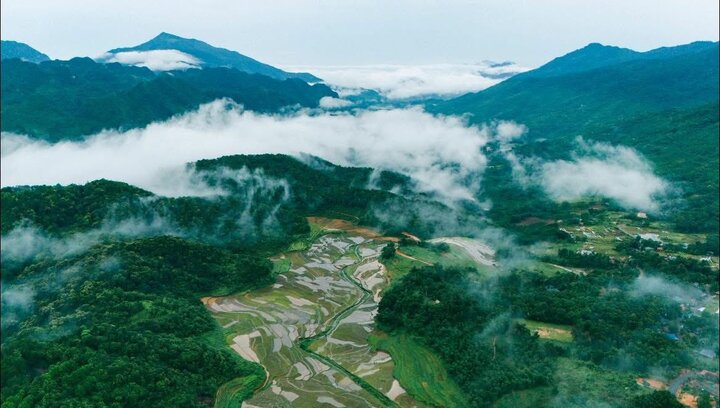
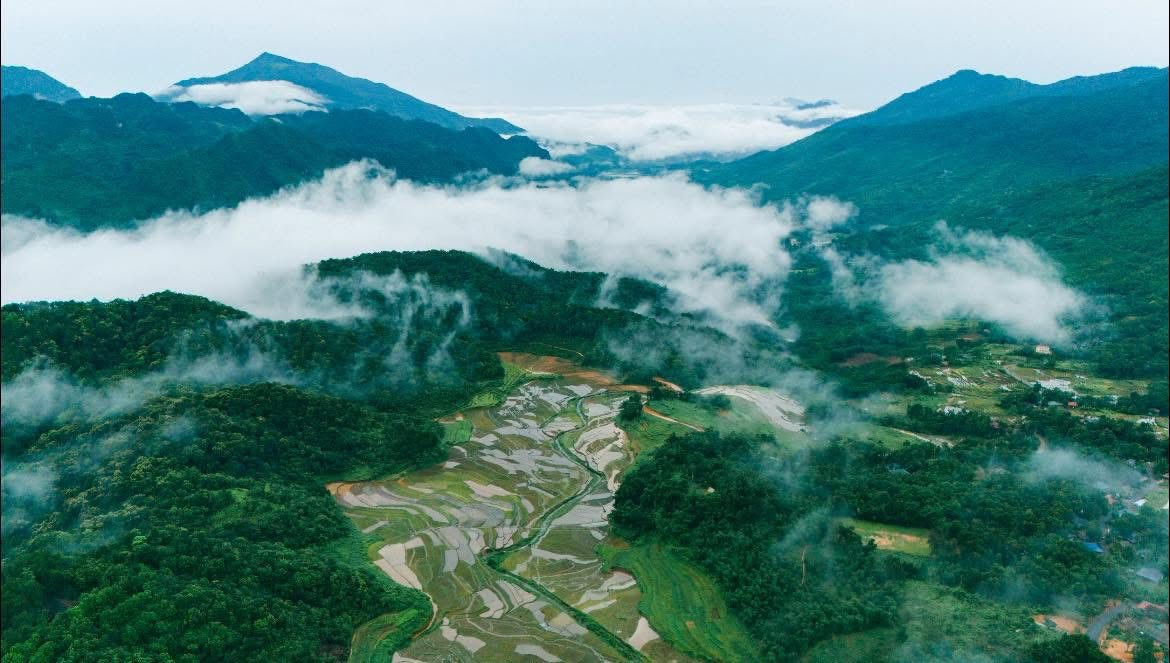
In recent years, trekking Thanh Hoa has emerged as an attractive destination for those passionate about conquering mountains and forests. The Department of Culture, Sports and Tourism of Thanh Hoa province has officially announced 12 forest trekking routes, spanning three (former) mountainous districts: Ba Thước, Quan Hoa, and Thuong Xuan. These routes not only challenge the endurance of trekking enthusiasts but also open up opportunities to explore pristine nature, unique ethnic cultures, and distinctive historical heritages.
Thanh Hoa's terrain is rich with peaks over 1,400m such as Pu Luong, Pu Hu, or Pu Gio, interspersed with dense primeval forests, majestic waterfalls, and lush terraced fields. Thai and Muong ethnic villages nestle in the valleys, creating a diverse ecosystem ideal for trekking Thanh Hoa. The mild climate year-round allows tourists to easily choose a suitable time to conquer each route.
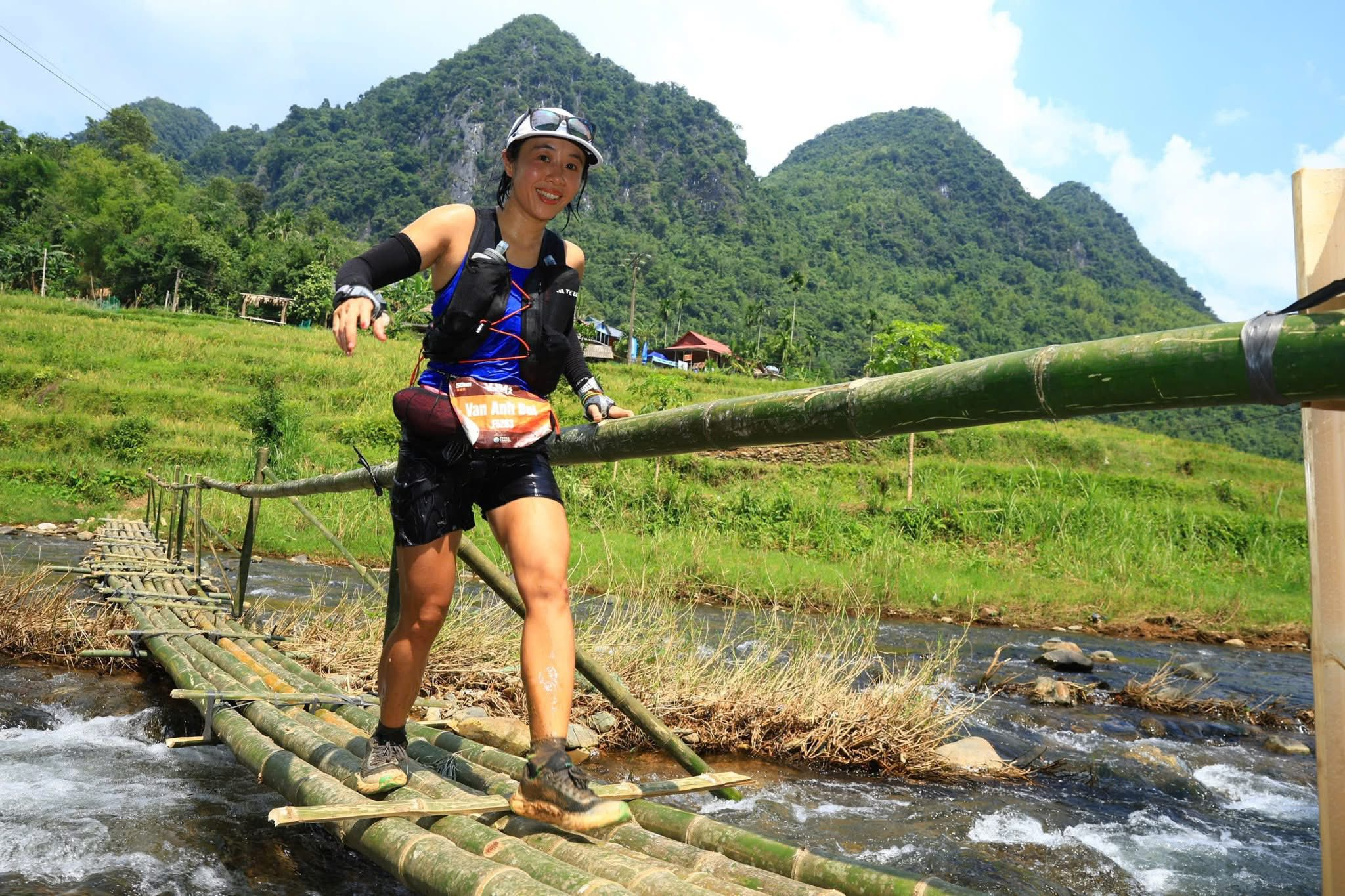
Moments captured at the VJM - Pu Luong Marathon in October 2025. (Source: Collected)
The Pu Luong Marathon event has significantly contributed to promoting the image of Thanh Hoa trekking to the sports and tourism community. Combined with the rapidly developing community tourism model, visitors not only conquer mountain peaks but also experience local life and culture through cozy homestays amidst the countryside. Participants are diverse, ranging from professional trekkers seeking challenges, adventurous young groups, to international guests wanting to explore this new and potential land.
2. List of 12 trekking routes announced by Thanh Hoa province
2.1. Ba Thuoc trekking route - the "green heart" of Thanh Hoa
2.1.1. Trekking Pu Luong Peak (1,700m): Conquer Thanh Hoa's rooftop, hunt clouds, watch the sunrise, and admire the ripe rice season
Pu Luong Peak, at 1,700m, is the "rooftop" of Thanh Hoa province, gathering all the elements that make every trekker's heart flutter. The journey to the summit takes you through dense primeval forests, challenging slopes that test endurance, and vast green valleys. Reaching the peak in the early morning, you will be mesmerized by the sea of clouds floating below and the brilliant sunrise that bathes the mountain layers in gold.
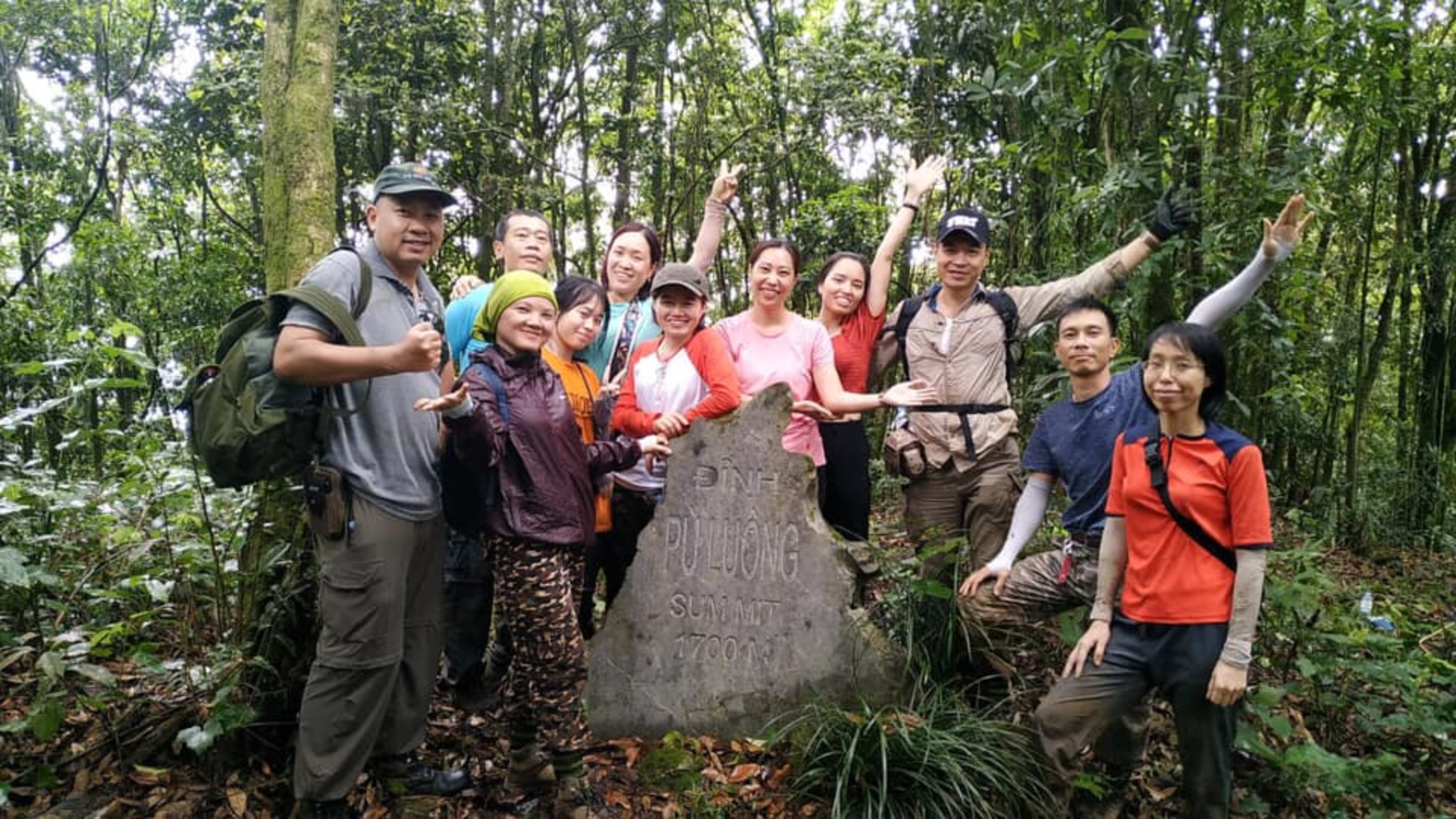
Conquering the roof of Thanh Hoa - a journey that trekkers cannot miss. (Source: Collected)
The ripe rice season from May to June or September to October, the terraced fields of the Thai and Muong ethnic villages turn golden, creating a magnificent natural landscape unmatched anywhere else. This Thanh Hoa trekking route is suitable for both beginners who want to challenge themselves and experienced trekkers seeking a complete experience amidst the Northwest mountains and forests.
2.1.2. Hon Con Soi Adventure Trekking: High difficulty, primeval forest, endurance challenge
If you want to challenge yourself at a higher difficulty level, Hon Con Soi is the choice for you. The arduous path with dense jungle and steep slopes requires strength and good movement techniques. The name "Hon Con Soi" (Wolf Rock) originates from the unique shape of the mountain seen from afar, evoking the image of a wolf raising its head.
After overcoming the most difficult sections, you will be rewarded with vast primeval forest landscapes, rare flora, and a true sense of conquest. This is a Thanh Hoa trekking route for those who love adventure and want to test their endurance amidst wild nature.
2.1.3. Pu Luong Peak – Hon Con Soi Trekking: Combined route with diverse terrain, wild flora and fauna experience
This combined route is perfect for long trips. You will conquer the two most famous peaks in Ba Thuoc, exploring diverse terrain from primeval forests, deep valleys to hidden Thai ethnic villages amidst the mountains. Throughout the journey, rich flora and fauna will continuously appear, from rare bird species to ancient trees hundreds of years old.
This Thanh Hoa trekking experience usually lasts from 2 to 3 days, allowing you to stay overnight in the villages, interact with local people, and gain a deeper understanding of the unique culture of the Northwest region. This is a challenging but also emotional route, leaving an unforgettable impression on every trekker.
2.1.4. Pu Luong Heritage Route (Inter-district Ba Thuoc – Quan Hoa): Explore Kho Muong, Bat Cave, Hieu Village, Hieu Waterfall; 2-3 day tour
This inter-district Thanh Hoa trekking route connects Ba Thuoc and Quan Hoa, opening up a journey to fully explore the Pu Luong ecosystem. You will visit Kho Muong Village with its traditional stilt houses, Bat Cave where thousands of bats live, the peaceful Hieu Village by a clear stream, and the majestic Hieu Waterfall amidst the ancient forest.
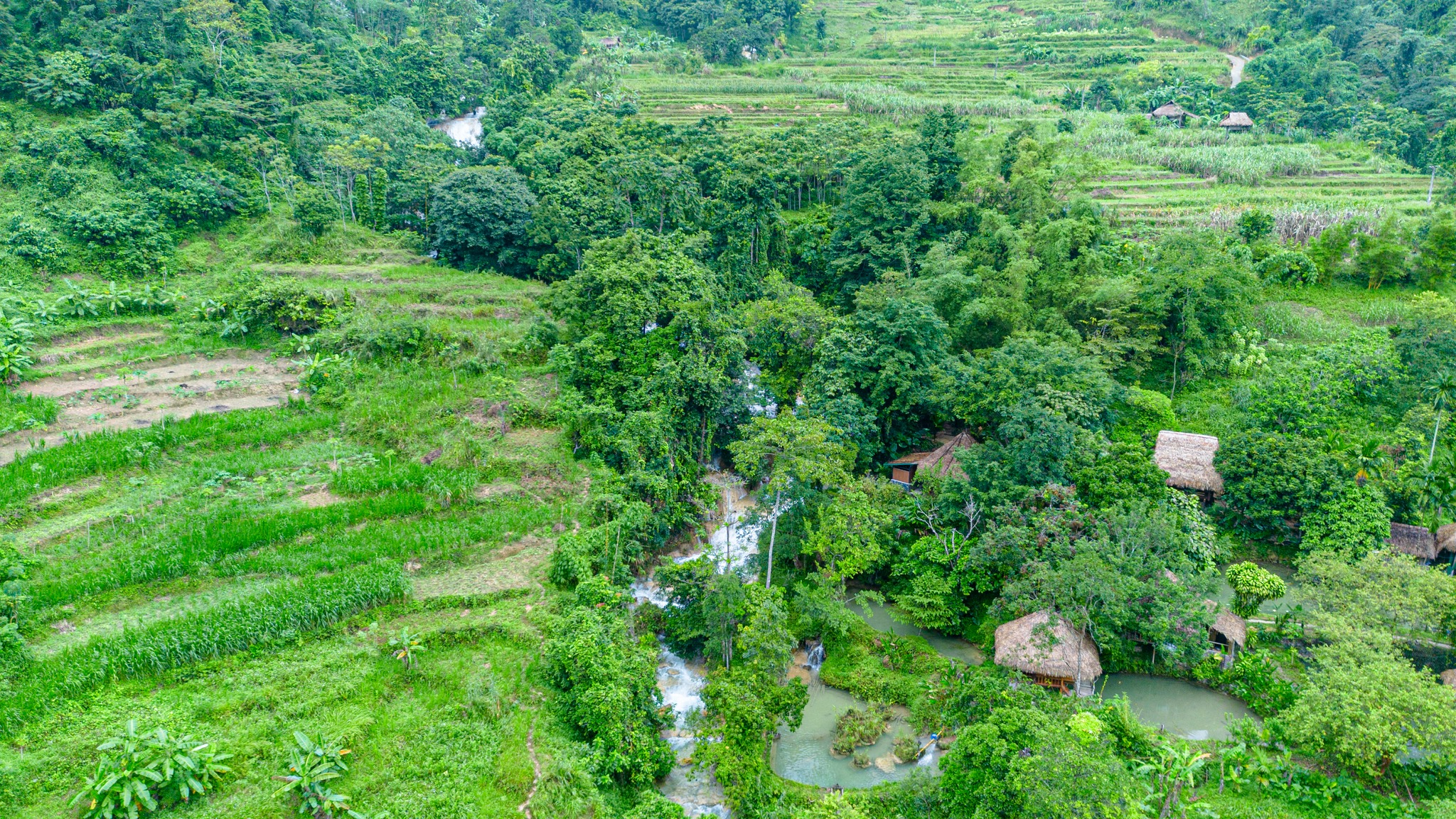
Hieu Waterfall winds through majestic limestone mountains. (Source: Collected)
Each stop is a unique story of history, culture, and nature. A 2 to 3-day tour allows you to immerse yourself in the slow pace of village life, savor rustic local dishes, and listen to traditional stories from the village elders. This is a Thanh Hoa trekking experience that perfectly combines conquering nature with exploring ethnic culture.
2.2. Quan Hoa Trekking Route - "Kingdom of Heritage Trees, Rare Forests"
2.2.1. Trekking Pu Hu Peak (1,440m): Trekking through forests to hunt for mountain scenery and check-in with rare animal species
Pu Hu Peak, at 1,440m, is one of the most prominent mountains in Quan Hoa, attracting trekking enthusiasts who want to conquer significant heights while ensuring safety. The path winds through dense primeval forests, home to many rare animal species such as langurs, monkeys, and birds characteristic of the northern mountainous region.
From Pu Hu Peak, the view encompasses the majestic mountain range stretching to the horizon. This is also an ideal spot for sunrise or sunset photography, when natural light bathes layers of clouds and mountains in gold. This Thanh Hoa trekking route is suitable for those with good physical strength and a desire to experience wild nature in an intact environment.
2.2.2. Trekking to Heritage Green Chò Trees: Admiring ancient heritage trees in the wild nature
The cluster of 3 Green Chò trees, over 500 years old, in the Pu Luong Nature Reserve has been officially recognized as a Vietnamese heritage tree. The Thanh Hoa trekking journey to these ancient trees is a deeply moving experience, as you stand before massive trunks reaching high into the vast forest.
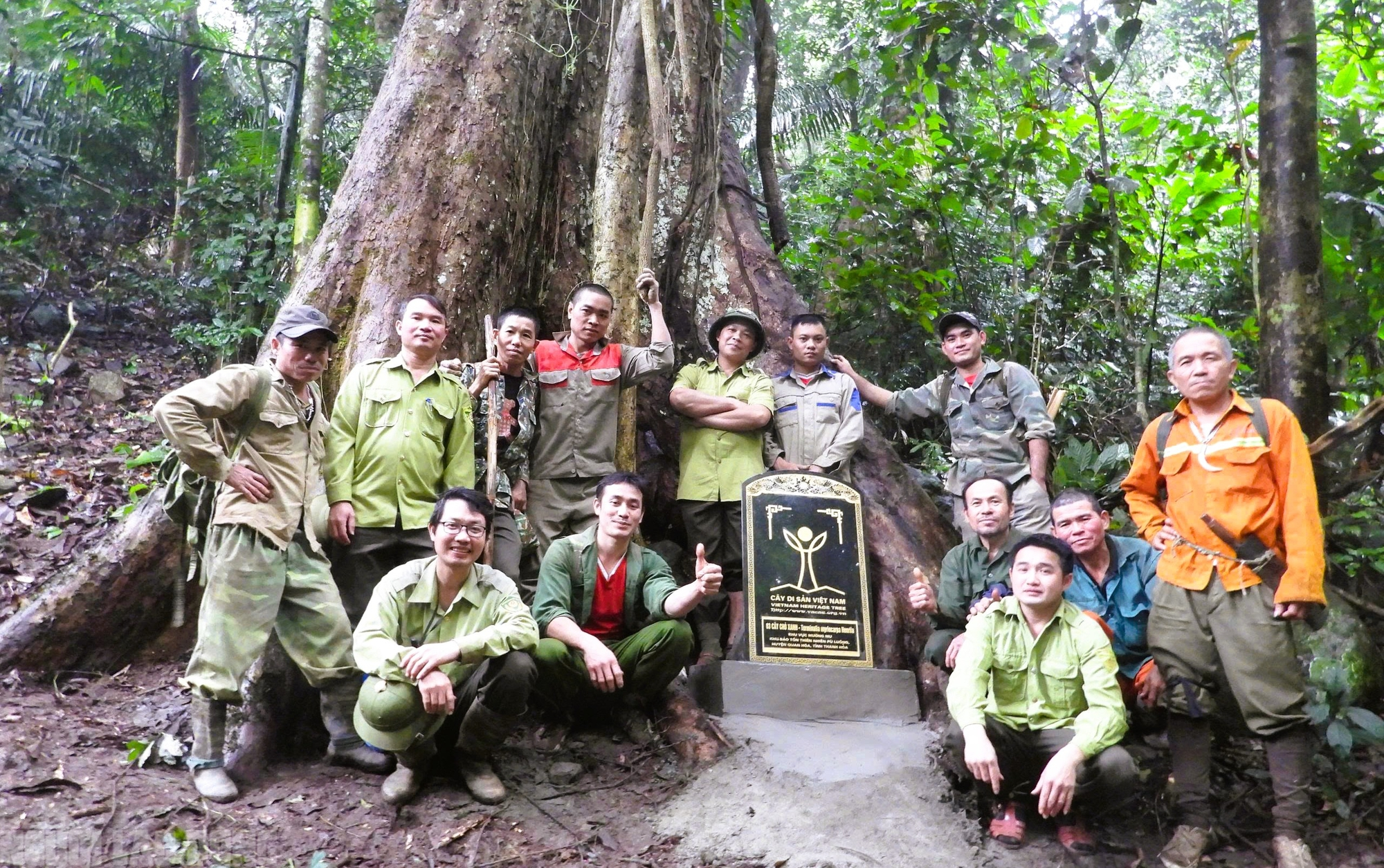
Standing under the canopy of the Cho Xanh tree, recognized as a heritage tree – a historical witness. (Source: Collected)
The path leading to the heritage tree winds through a diverse tropical ecosystem, where fresh air and the melodious chirping of birds echo throughout the deep forest. Many visitors share a feeling of being lost in a fairy tale world when standing under the dense foliage of ancient Cho Xanh trees. This is a short route, suitable for those who want to combine conquering nature with exploring precious ecological heritage.
2.2.3. Trekking Pu Hu Peak – Cho Xanh Heritage Tree: Complete Challenge, Immerse in the Great Forest Nature
The combined route of Pu Hu Peak and the Cho Xanh heritage tree is a challenging multi-day journey, designed for trekkers who want to fully experience the beauty of Quan Hoa's primeval forest. You will traverse diverse terrain from high mountain peaks to dense forests, observe rare animals in their natural environment, and admire ancient trees hundreds of years old.
This Thanh Hoa trekking experience typically lasts 2 days. You will camp or stay with local villagers, enjoying simple yet authentic mountain cuisine. This is an ideal choice for those who want to completely immerse themselves in the Great Forest nature, escape daily life, and find inner balance.
2.3. Thuong Xuan Trekking Route - "Primeval Forest, Relics, Rare Animals"
2.3.1. Trekking Pu Gio Peak (1,600m): Cloud Hunting Route, Camping in the Forest
Pu Gio Peak, standing at 1,600m, is one of the most attractive Thanh Hoa trekking routes in Thuong Xuan. The ascent takes you through dense primeval forests, winding small streams, and natural waterfalls hidden deep within the woods. The ideal time to conquer Pu Gio is during the dry season from November to April, when thick seas of clouds blanket the foothills, creating a surreal landscape.
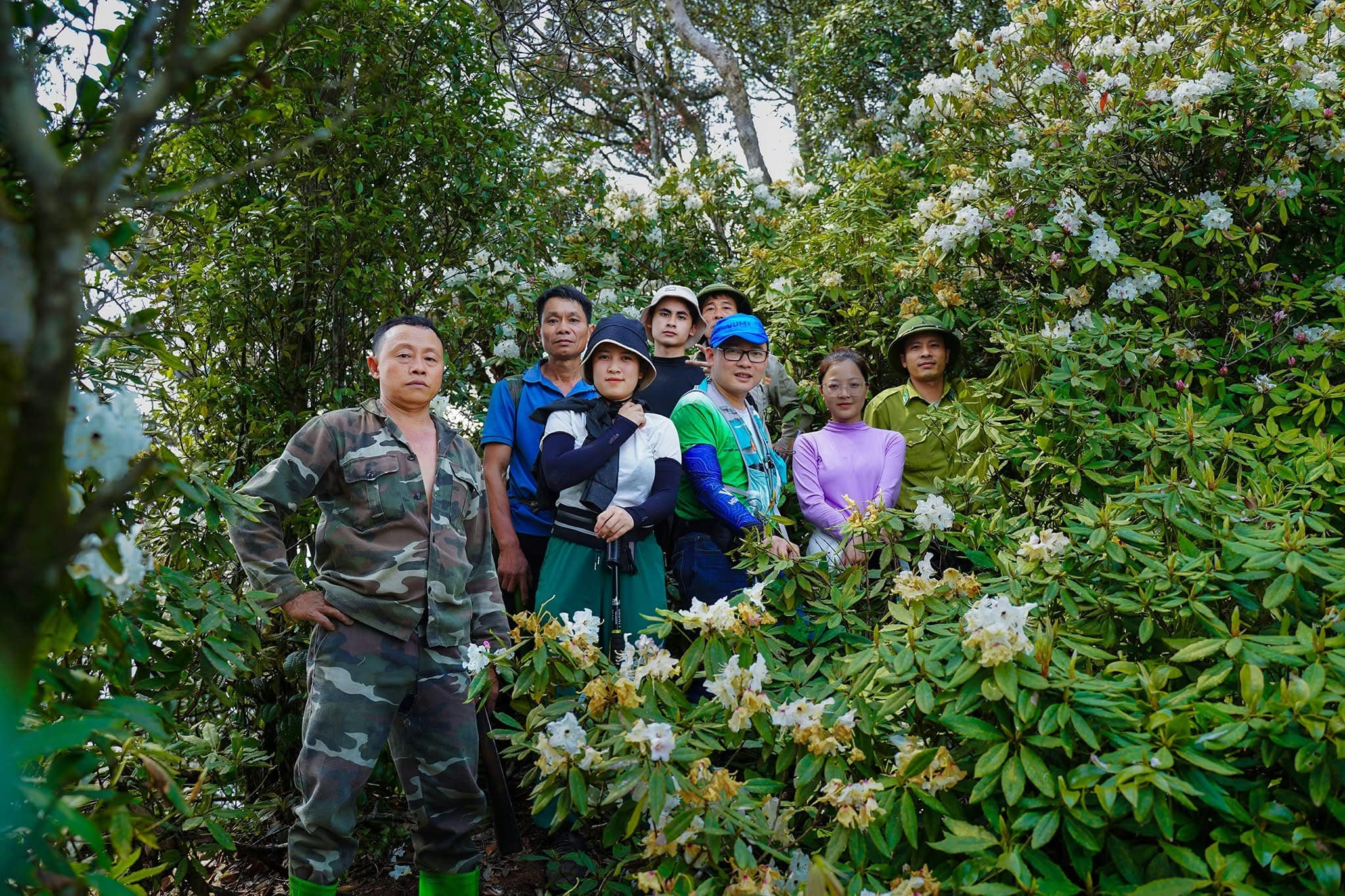
Rhododendron flower season on Pu Gio peak. (Source: Collected)
Many trekking groups choose to camp overnight on the summit or at resting points in the forest, to enjoy the starry sky and listen to the sounds of the forest at night. This is an unforgettable experience, bringing a sense of peace and deep connection with nature. This route is suitable for experienced trekking enthusiasts, ready to face arduous paths but rewarded accordingly.
2.3.2. Trekking to see heritage Po Mu and Sa Mu trees in Xuan Lien: 1,500-year-old ancient trees, challenging old-growth forest terrain
Xuan Lien Nature Reserve (officially became Xuan Lien National Park in early 20225) is famous for its largest cluster of Po Mu and Sa Mu trees in the North Central region, including trees nearly 1,500 years old and 2 trees over 1,000 years old recognized as Vietnamese heritage trees. The journey of trekking Thanh Hoa deep into Xuan Lien forest requires endurance and perseverance, but the moment of standing before the giant ancient trees will make all efforts worthwhile.
The old-growth forest terrain is challenging with many steep sections, stream crossings, and dense vegetation. The flora and fauna here are extremely rich; you might encounter grey langurs, white-cheeked gibbons, or rare bird species. This is a route for trekkers who love exploring ecological heritage and are ready to face great challenges.
2.3.3. Trekking to see grey langurs and white-cheeked gibbons: Exploring rare animals in a pristine environment
The primeval forest of Thuong Xuan is home to grey langurs and white-cheeked gibbons, two rare and strictly protected animal species. This Thanh Hoa trekking route offers a rare opportunity to observe these animals in their natural habitat, not confined by cages or fences.
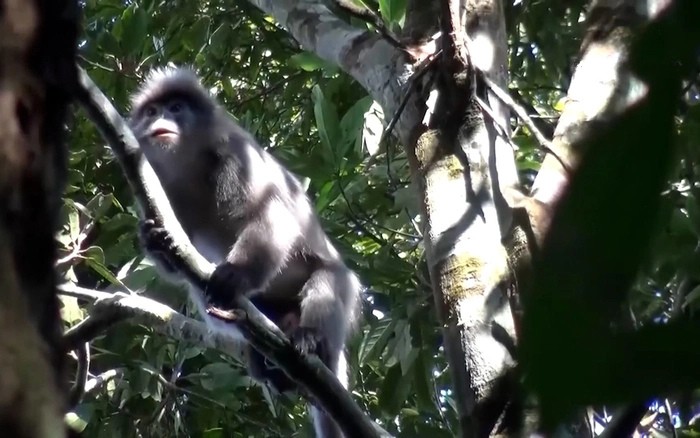
Combining langur watching on the trekking route of Xuan Lien National Park. (Source: Collected)
The journey usually begins early in the morning, when troops of langurs and gibbons are actively searching for food. Led by an experienced local guide, you will move gently, maintaining a safe distance to avoid disturbing the animals. The calls of langurs echoing through the deep forest are unforgettable sounds, evoking a strong sense of wonder at the magic of wild nature.
2.3.4. Trekking to see langurs – visit heritage trees pơ mu, sa mu: An interesting experience for nature lovers
Combining grey langur and white-cheeked gibbon watching with visits to heritage pơ mu and sa mu trees, this Thanh Hoa trekking route is a perfect choice for those who want to fully experience the nature of Thuong Xuan. You will have the opportunity to observe rare animals in the morning, then continue deeper into the forest to admire ancient trees thousands of years old.
The journey usually lasts from 1 to 2 days, depending on the pace and the group's wishes. This is a suitable experience for nature lovers who want to combine animal exploration with ecological heritage in a single trip. Many trekkers share that this route brings the most emotions, as they witness the vibrancy of the primeval forest firsthand.
2.3.5. Trekking Pu Xeo – 7-Tier Waterfall – Lung Nhai Oath Historical Site: A route combining nature, history, and culture
This Thanh Hoa trekking route is a unique combination of conquering Pu Xeo peak, exploring the majestic 7-Tier Waterfall, and learning about the Lung Nhai Oath historical site. Pu Xeo peak offers panoramic views, where you can see the Truong Son mountain range stretching to the horizon.
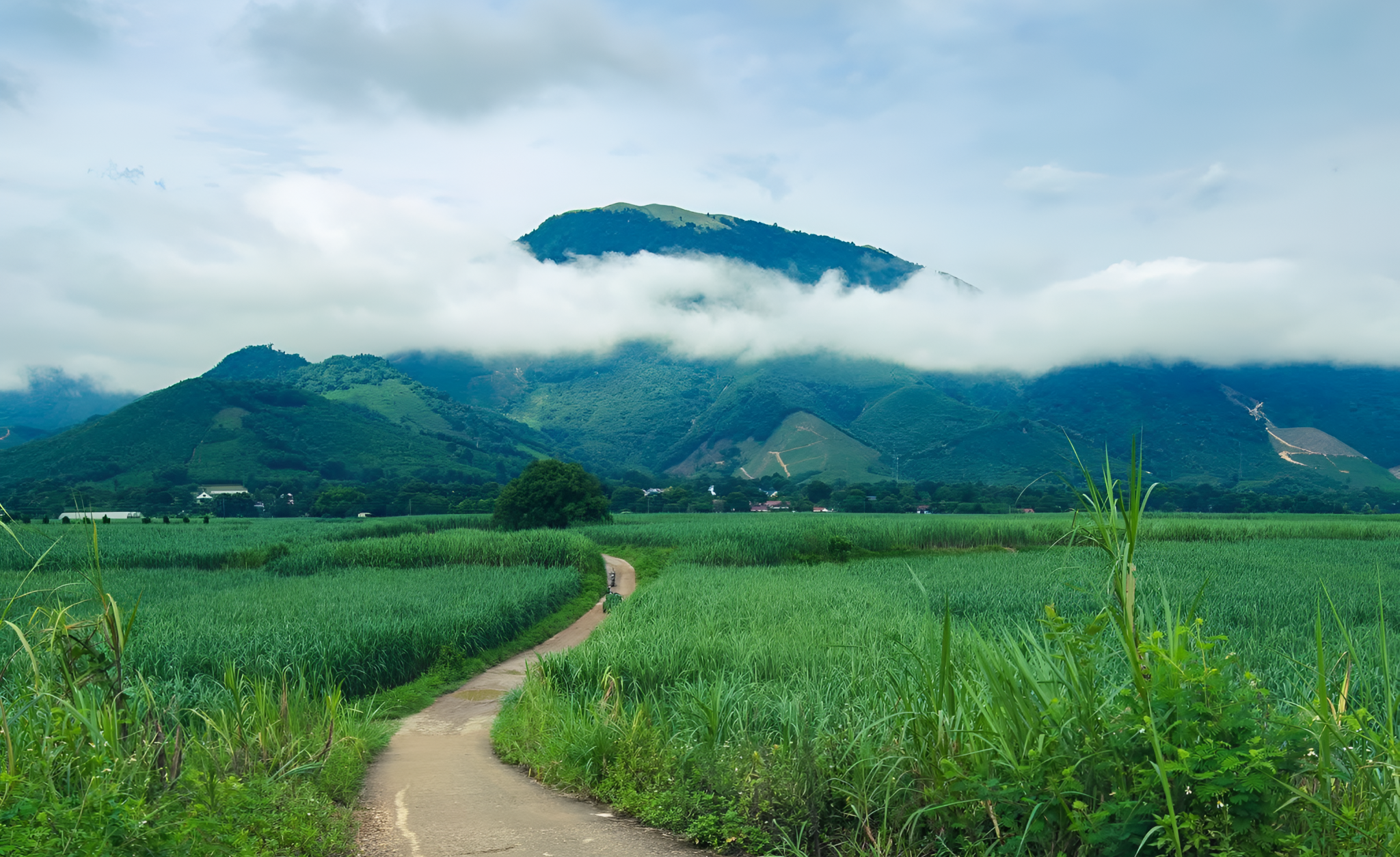
Pu Xeo offers an authentic trekking experience amidst mountains and forests. (Source: Collected)
The 7-tiered waterfall, with water cascading from above, creates echoing sounds amidst the ancient forest, serving as an ideal spot for rest and photography. Following this, the historical site of the Lung Nhai Oath Ceremony evokes stories of national history, where leaders of ethnic minorities once gathered to discuss the future of this land. This is a multi-day route, suitable for those who desire a multi-faceted experience encompassing nature, history, and culture, but it is also crucial to inquire thoroughly with locals as there have been instances of tourists getting lost while traversing this path.
3. Ideal Time for Trekking Thanh Hoa
Trekking Thanh Hoa is most beautiful during the rice harvest season, which falls around May to June and September to October annually. This is when the terraced fields in Pu Luong and the highland villages turn into a golden hue, creating an impressive natural landscape, perfect for photography enthusiasts and those exploring local culture. The weather during this period is quite pleasant, with mild sunshine during the day, fresh air, and abundant waterfall flow after the rainy season, making the forest scenery more vibrant. However, trekkers should still monitor weather forecasts as short rain showers may occur towards the end of the season.
Additionally, the dry season from November to April is also considered a favorable time for trekking Thanh Hoa, especially for mountain climbing and cloud hunting. The cool, less rainy weather makes travel safer and easier, ideal for conquering high peaks like Pu Luong, Pu Hu, or Pu Gio. In the early mornings, sea of clouds often appears densely, offering a majestic panorama and a deeply emotional sense of achievement. Many choose to camp overnight during this period to enjoy the starry sky and the absolute tranquility of the mountains, though warm clothing is necessary as nighttime temperatures can drop significantly.
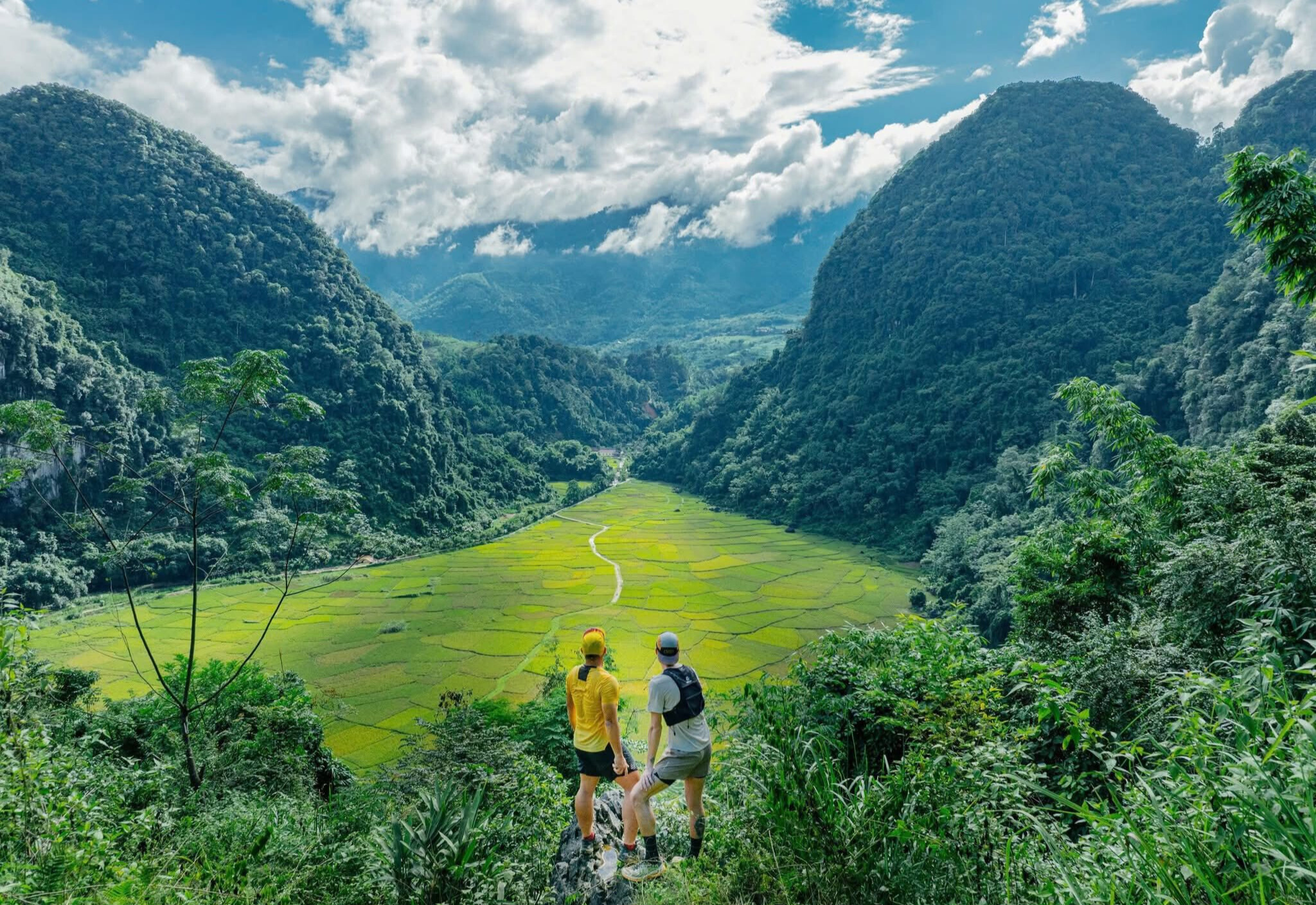
The dry season is the most suitable time for mountain climbing and cloud hunting. (Source: Collected)
Conversely, the period from July to September often experiences heavy rain, posing many risks for trekking in Thanh Hoa due to slippery forest paths, landslides, and flash floods. If you must travel during this time, be well-prepared with non-slip shoes, raincoats, long pants, and items to prevent leeches. Checking the weather before the trip and consulting local guides is mandatory, as they understand the terrain and have experience handling unexpected situations. Regardless of the chosen time, safety should always be the top priority to ensure a complete and memorable trekking journey.
4. Transportation Guide – Conquering Thanh Hoa Trekking Most Conveniently
4.1. How to Travel from Hanoi/Ho Chi Minh City, Thanh Hoa City to Trekking Spots: Bus, Self-Driving, Motorbike
From Hanoi, you can travel to Thanh Hoa City by bus, train, or self-drive car. The distance is about 150 km, taking approximately 3 hours by car. Sleeper buses depart from bus stations like My Dinh and Giap Bat, with ticket prices ranging from 150,000 to 200,000 VND per person. If traveling from Ho Chi Minh City, you can fly to Tho Xuan Airport (Thanh Hoa) or fly to Hanoi and then travel by bus.
From Thanh Hoa City, the trekking spots in Thanh Hoa in Ba Thuoc, Quan Hoa, and Thuong Xuan districts are about 130 km northwest. You can rent a motorbike for self-exploration at a cost of about 150,000 to 200,000 VND per day, or rent a 7-seater self-drive car for 1,200,000 to 1,500,000 VND per day. The roads are quite beautiful, with many winding paths through mountains, creating an interesting experience for adventure lovers.
4.2. Intra-provincial Travel: Taxi, Contract Car, Motorbike Rental from Town to Trailhead
After arriving at towns like Canh Nang (Ba Thuoc), Hoi Xuan (Quan Hoa), or Thuong Xuan, you need to travel further to the trail starting points. Taxis and contract cars are popular choices, especially for groups, with prices ranging from 500,000 to 800,000 VND for the entire trip depending on the distance. Many homestays and local households also offer shuttle services at reasonable prices.
Renting a motorbike from town is also a flexible option, allowing you to freely explore surrounding villages. However, be aware that dirt roads and mountain paths can be difficult to navigate, requiring good riding skills. Always check the vehicle's condition before accepting it and carry a map or GPS to avoid getting lost.
4.3. Suggested Reputable Car Rental and Tour Agencies in Thanh Hoa – Check Trekking Tour Departure Schedule
The Department of Culture, Sports and Tourism of Thanh Hoa has collaborated with many local tourism units to organize professional trekking tours in Thanh Hoa. You can contact major homestays in Pu Luong, such as Pu Luong Retreat, Pu Luong Eco Garden, or community-based tourism units in Ba Thuoc and Quan Hoa directly to book all-inclusive tours.
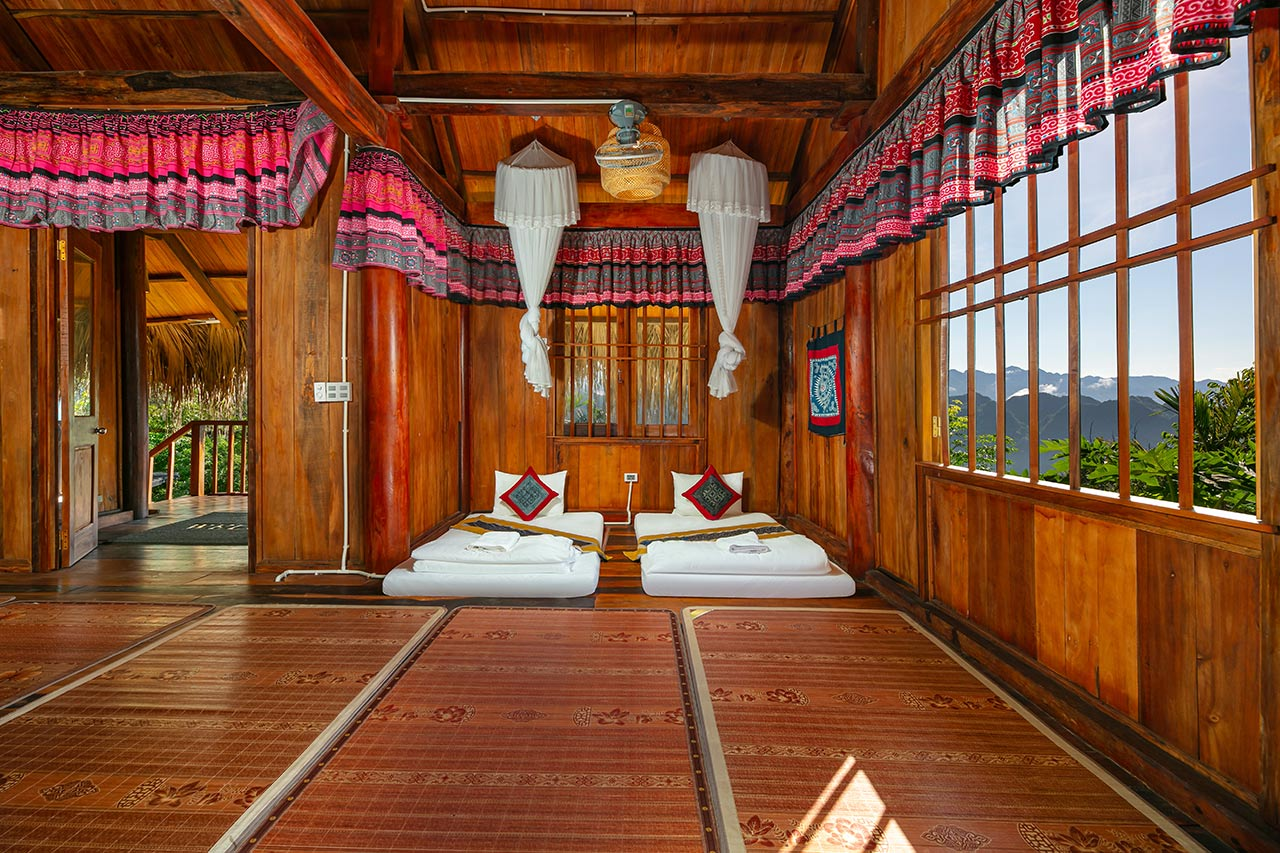
The Pù Luông Bocbandi Retreat space has a unique imprint. (Source: Collected)
Tours often include guides, meals, accommodation, and transportation, with prices ranging from 1,500,000 to 3,000,000 VND per person depending on the length and difficulty of the route. Check the departure schedule in advance as some tours only open when there are enough participants. Booking tours through reputable providers will give you more peace of mind regarding service quality and safety throughout the journey.
5. Thanh Hoa trekking experience: safe and complete
5.1. Physical preparation – personal equipment (shoes, raincoats, water, GPS, leech repellent…)
Physical fitness is the most important factor when participating in trekking in Thanh Hoa. Before departing, spend at least 2 to 3 weeks training by running, climbing stairs, or hiking. This helps your body gradually adapt to high exertion and reduces the risk of injury.
Personal equipment needs to be prepared carefully: trekking shoes with non-slip soles, moisture-wicking long socks, a waterproof raincoat or windbreaker, a 30 to 40-liter backpack, sufficient drinking water (at least 2 liters per person), a flashlight or headlamp, a first-aid kit, sunscreen, and a GPS device or a phone with an offline map application. Gloves and specialized long pants help protect against leeches when you have to go through dense forest or grass.
5.2. Always stay with the group, accompanied by a local guide or professional tour
Absolutely do not go alone when participating in trekking in Thanh Hoa, especially on difficult and remote routes. Local guides understand the terrain well, know how to respond to emergencies, and can help you avoid potential dangers such as poisonous plants, wild animals, or wrong paths.
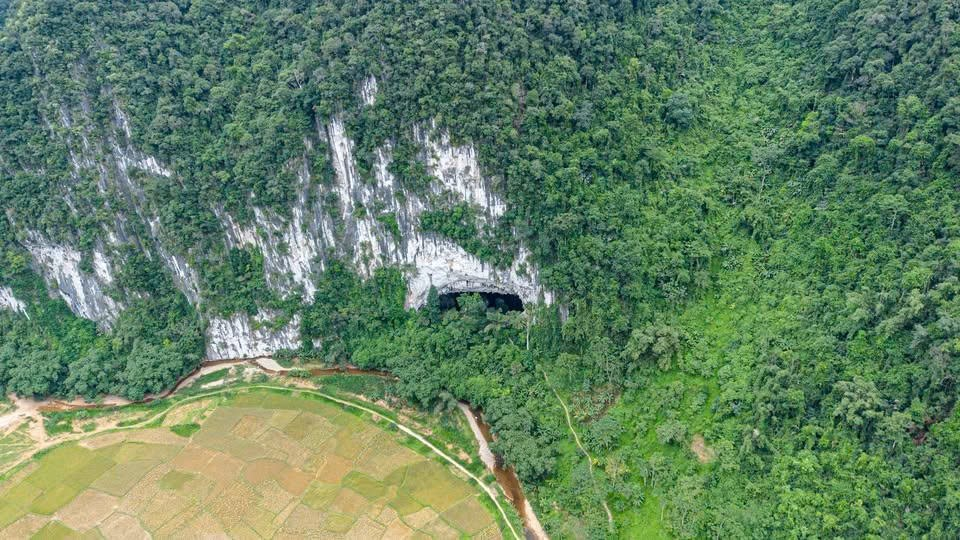
Ba Thuoc Bat Cave – a natural wonder hidden in the primeval forest. (Source: Collected)
Going with a group or booking a professional tour not only ensures safety but also helps you gain companions, share experiences, and support each other throughout the journey. Many trekkers share that the relationships formed during the trip are among the most beautiful memories they bring back.
5.3. Notes on animals, poisonous plants – respecting local cultural identity
Thanh Hoa's primeval forest is home to many wild animals, including some dangerous species like venomous snakes and forest bees. Always walk in the middle of the trail, do not reach into rock crevices or hollows, and avoid excessive noise to not make wild animals feel threatened.
When passing through ethnic minority villages, respect local culture and customs. Ask for permission before taking photos of residents, do not enter restricted areas such as ancestral houses or sacred areas. Buy souvenirs at fair prices, do not bargain excessively. An attitude of respect will not only lead to a warm welcome but also contribute to preserving the precious traditional culture of this land.
6. Experiencing local culture and cuisine when trekking Thanh Hoa
6.1. Sleeping in homestays amidst Thai villages, cultural exchange, trying farming
One of the most memorable experiences when participating in trekking Thanh Hoa is staying overnight in a homestay amidst Thai ethnic villages. Traditional stilt houses with thatched roofs, warm wooden floors, and airy spaces offer a rare sense of peace. At night, you can sit around the fire, listen to folk tales from the village elders, or enjoy a cup of 'ruou can' (fermented rice wine) with the hosts.
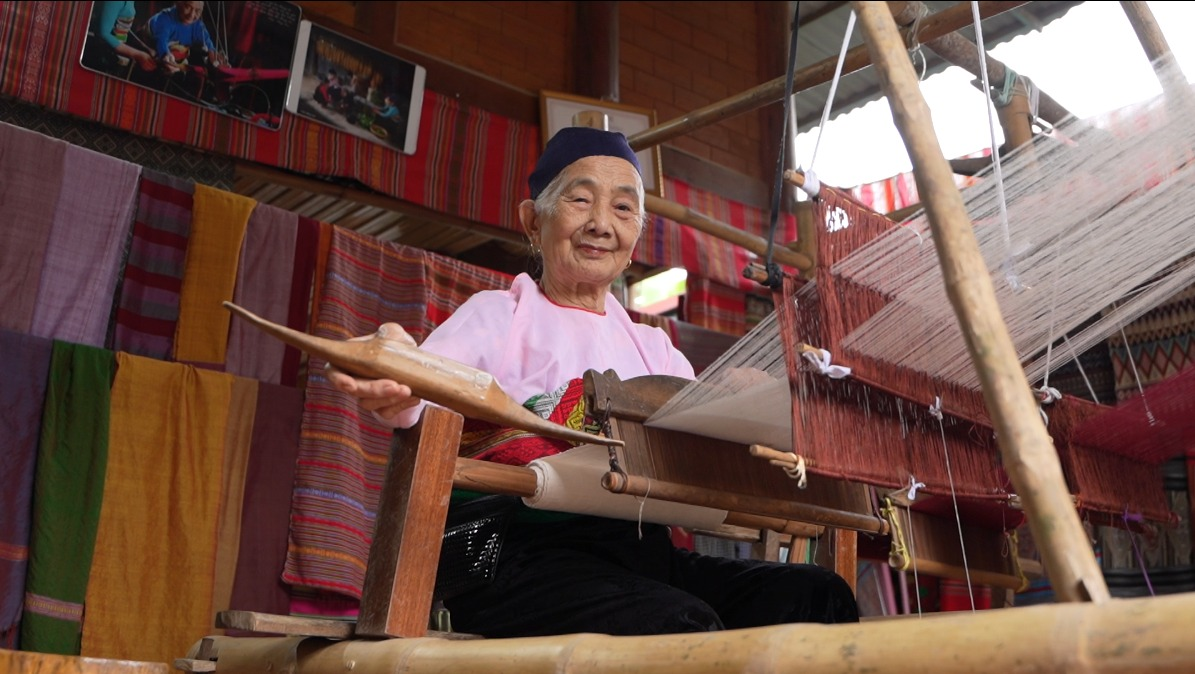
The journey is not just about mountains, but also about people and countless interesting experiences. (Source: Collected)
Many homestays also organize experiential activities such as trying farming, learning to weave brocade, making com lam (bamboo-tube rice), or participating in traditional dances. This is a precious opportunity to gain a deeper understanding of the local people's lives and culture, while creating unforgettable memories during the journey to explore the Northwest mountains.
6.2. Must-try specialties: Com lam, bitter leaf soup, free-range pork, Co Lung duck, five-colored sticky rice, rice wine
Cuisine is an indispensable part of the Thanh Hoa trekking experience. Com lam, grilled in bamboo tubes, with its chewy, fragrant taste mixed with the scent of fresh bamboo, is a traditional dish associated with the lives of mountain people. Bitter leaf soup, although having a bitter taste at first, is refreshing and helps cool down after a tiring day of climbing.
Free-range pork is raised naturally on the mountains; its meat is firm and delicious, often prepared as grilled or boiled dishes served with chili salt. Co Lung duck is a famous specialty, with fragrant, non-fishy meat, loved by many diners. Five-colored sticky rice with vibrant colors from natural forest leaves is not only beautiful but also nutritious. And don't forget to try rice wine, a traditional drink consumed through bamboo tubes, associated with the cultural exchange of the Thai people.
6.3. Notes on hygiene, food safety, and choosing suitable homestays
During the Thanh Hoa trekking journey, eating and resting in local villages is a very memorable experience. However, visitors also need to pay attention to hygiene and food safety. It is advisable to prioritize reputable homestays, recommended by local tourism units, or those that have received many positive feedback from previous travelers. When dining, observe the preparation area and prioritize using boiled water or bottled water to minimize digestive issues throughout the trip.
If you have a sensitive stomach, food allergies, or are not accustomed to some of the region's specialty dishes, proactively communicate with the host beforehand to have suitable meals prepared. Bringing some basic medications such as digestive aids, probiotics, or anti-allergy medication is also essential when trekking in mountainous areas. At the same time, respect the living habits and cooking methods of the local people, as highland cuisine has its own unique, rustic character, but contains many valuable cultural aspects.

Sam Son beach square is vibrant, an ideal connection point after a trip to the mountains and forests. (Source: Collected)
After a trekking journey through the Thanh Hoa mountains and forests, tourists can spend more time visiting the Sam Son beach square to relax and feel the vibrant rhythm of the coastal city. The spacious and airy square is an ideal place for a leisurely walk and taking souvenir photos after a long trip. As night falls, the water music area becomes a highlight with lively light and music performances, attracting a large number of locals and tourists every evening. The bustling and cheerful atmosphere here provides a perfect sense of balance, making the Thanh Hoa trekking trip not just about exploring nature but also more complete with entertainment and relaxation experiences by the sea.
Thanh Hoa trekking is gradually becoming an attractive choice for those who love exploring nature and experiencing village life. With a diverse system of routes, pristine mountain and forest landscapes, and the sincerity and hospitality of the local people, this land promises to bring emotionally rich journeys and unforgettable memories. Just prepare well in terms of physical strength, knowledge, and luggage, and you are ready to start your Thanh Hoa trekking journey and conquer the wild beauty of Thanh Hoa's mountains and forests.