















1. About Vom Pagoda Thanh Hoa
1.1. Geographical location and history of formation of Vom Pagoda
Vom Pagoda is located at the foot of Ban A mountain, Dong Tien ward, Thanh Hoa province. This place was once part of Tu Pho citadel during the Northern domination period and was also the administrative center of Duong Xa, Ai Chau land, and Thanh Hoa through many feudal dynasties. This is also the area bordering Nga Ba Dau, where the Ma River and Chu River converge before flowing into the sea. These factors have given the pagoda a rich history as well as a majestic and beautiful landscape and terrain.
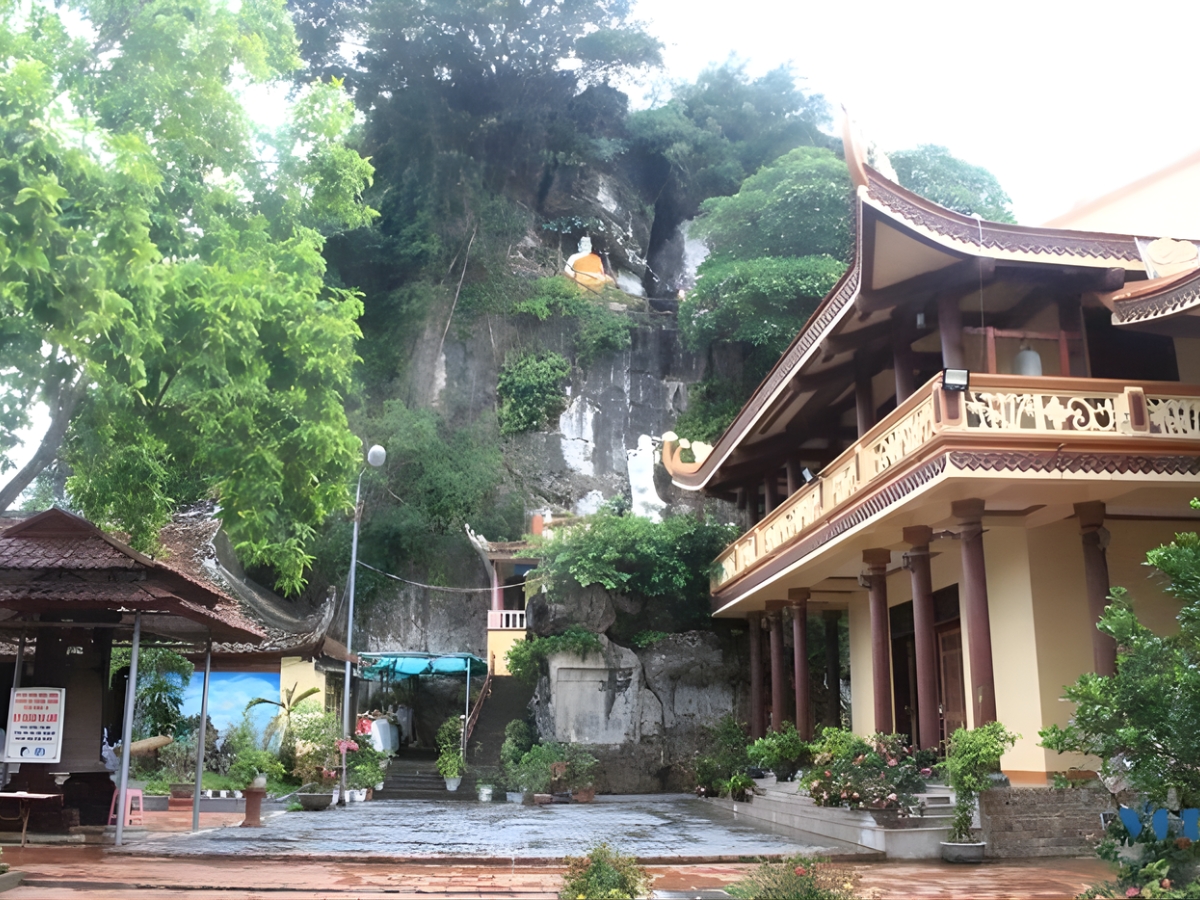
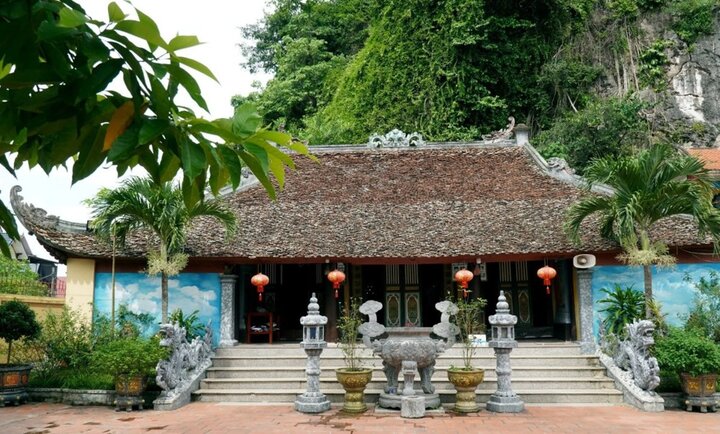
Vom Pagoda is located at the foot of Ban A mountain in Thanh Hoa province. (Source: Dong Tien Ward People's Committee)
Vom Pagoda is also known by its Sino-Vietnamese names Dai Khanh Tu and Dai Hung Tu, two appellations that clearly reflect the Buddhist spirit and the meaning of harmony between wisdom and compassion. According to ancient documents such as Dai Nam Nhat Thong Chi and Hoang Viet Nhat Thong Du Dia Chi, the pagoda dates back to the Tran dynasty, and is considered one of the oldest Buddhist centers in the Thanh Hoa region, a place that has witnessed many historical changes and the prosperity of the Lam Te Zen sect.
1.2. Reasons why Vom Pagoda is an attractive tourist destination
With its rare "sitting on a mountain, facing the water" terrain, Vom Pagoda leans against the majestic Ban A mountain range and faces the gentle Ma River, creating a harmonious feng shui picture between heaven, earth, and people. Seen from afar, the pagoda seems to hide amidst lush green trees, its moss-covered tiled roof peeking through the early morning mist, evoking a sense of purity and solemnity. The space here is a blend of nature and spirituality, making every pilgrimage step light and peaceful.
The architecture of Vom Pagoda bears the strong imprint of Vietnamese tradition, a sophisticated combination of stone, wood, and tiles, clearly expressed through intricate carvings, delicate patterns, and ancient Buddha statues of profound artistic value. The statues in the pagoda are all meticulously crafted, reflecting the sculptural style of the Tran and Le Trung Hung dynasties. Each shrine, curved roof, and pillar exudes a majestic yet approachable aura, harmonizing with the surrounding nature.
Not only possessing artistic and historical value, Vom Pagoda is also a pure spiritual sanctuary, where visitors come to worship, pray for blessings, peace, and find tranquility amidst the meditative space. The ringing of the pagoda bell blends with the sound of the wind and forest birds, creating a clear melody that brings peace to the soul. Whether visited in the vibrant spring or the serene autumn days, Vom Pagoda retains its simple and sacred charm.
1.3. Experiencing the historical, cultural, and spiritual values of Vom Pagoda
Through many centuries, Vom Pagoda remains a center for the transmission of the Lam Te Zen sect, associated with the Le Trung Hung period – a time when Buddhism flourished in Thanh Hoa. Many famous monks practiced here, leaving a deep mark on the history of Vietnamese Buddhism.
Besides its religious value, the pagoda is also a typical cultural and artistic symbol of the region, blending nature, architecture, and landscape. With its picturesque natural beauty, tranquil atmosphere, and fresh air, Vom Pagoda becomes an ideal destination for tourists who wish to combine worship, meditation, and relaxation in their journey to explore Thanh Hoa.
2. Admiring the ancient architectural and artistic beauty at Vom Pagoda
Over time, along with historical upheavals, wars, and harsh weather, Vom Pagoda is no longer completely intact. However, the architectural remnants from the Tran, Early Le, and Nguyen dynasties, and especially the tomb towers from the Le Trung Hung period, allow us to partially understand the scale, grand architecture, and the hidden values of the pagoda in many aspects.
2.1. Discovering the unique structure of wood and stone in Vom Pagoda's space
Passing through the ancient Tam Quan gate, visitors will cross a curved bridge spanning a poetic crescent-shaped lake, then enter a spacious courtyard leading to the main hall of Vom Pagoda. The entire pagoda is built with 40 large, sturdy wooden pillars, on which ancient Han characters are still deeply carved. According to surveys, these characters are "inscriptions" recording the merits of the people who contributed to the pagoda's restoration during the major renovation in the 3rd year of Dong Khanh (1887).
The pagoda is built leaning against the mountainside, using the rock face as its wall, creating a sense of harmony between the man-made structure and nature. The pagoda's roof is softly curved in the traditional boat-prow shape, appearing from afar like a boat cutting through waves in the sea and sky, evoking a sense of gracefulness and buoyancy. The truss and beam structure is a sophisticated combination of king posts, tie beams, and purlins, forming a sturdy frame that supports the entire roof. The ridge decorations feature moon faces, while the carvings on the upper and lower purlins and the eaves of the pagoda bear the artistic style of the Le Trung Hung period, both ancient and exquisite.
2.2. A "one-of-a-kind" Buddha statue
The most special feature within the space of Vom Pagoda is the statue of Amitabha Buddha, carved directly into the mountain rock behind the inner sanctuary. The statue is approximately 6 meters high and 3.1 meters wide, making it the largest ancient bas-relief discovered in Thanh Hoa and even in Vietnam. Ancient artisans skillfully chose a stable mountain location to carve the statue, using exquisite stone carving techniques to depict every detail, from the folds of the robe, the posture, to the benevolent gaze of the Buddha. This is considered a precious treasure, affirming the stature and unique value of Vom Pagoda in Vietnamese Buddhist art.
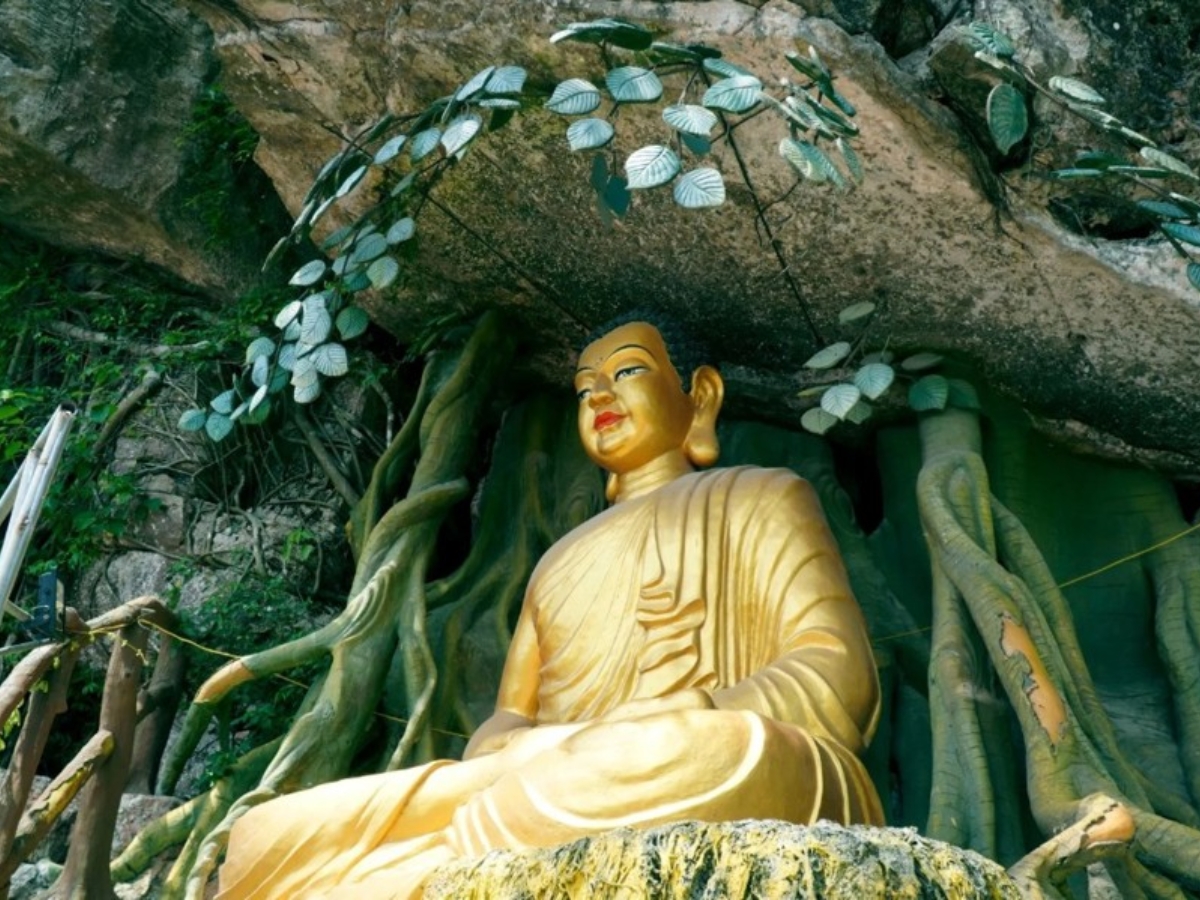
Admire the unique statue at Chua Vom. (Source: Collected)
2.3. Traditional Sculptural Works and Wood Carvings
The decorative details in Chua Vom are a delicate blend of wood and stone art. Motifs of lotus flowers, floral vines, dragons, phoenixes, swirling clouds, or images of turtles holding lotus flowers are meticulously carved on the wooden panels, beams, and eaves of the pagoda, bearing the strong style of the Le Trung Hung period. Each line expresses the talented hands and devout faith of the ancient artisans, contributing to the ancient, elegant beauty of the pagoda.
Outside the main hall, to the right, are the remnants of the nine-story Pho Minh tower. This is where the relics of the monk Pho Duong Thong Tue are enshrined, built in the year Tan Suu (1900) during the reign of King Thanh Thai. To the left rear of the pagoda are two small stone towers leaning against the cliff face, with lotus flower carvings on top and ancient Han characters inscribed on their bodies. These structures not only add artistic value to Chua Vom but also affirm the rich history and deep Buddhist culture of the Thanh Hoa region.
3. Convenient Travel Guide to Chua Vom
Departing from Hanoi:
From Hanoi, visitors can choose various means of transport to reach Chua Vom such as train, bus, or personal vehicle. The distance is about 150 km, with an average travel time of 3 to 3.5 hours. If traveling by car or motorbike, visitors can take the Hanoi – Ninh Binh expressway, then turn onto National Highway 1A towards Thanh Hoa, and continue for about 5 km in the direction of Dong Tien ward to reach the relic site. For trains, all North-South express trains stop at Thanh Hoa station; visitors can choose to travel by taxi or ride-hailing service to get to the pagoda.
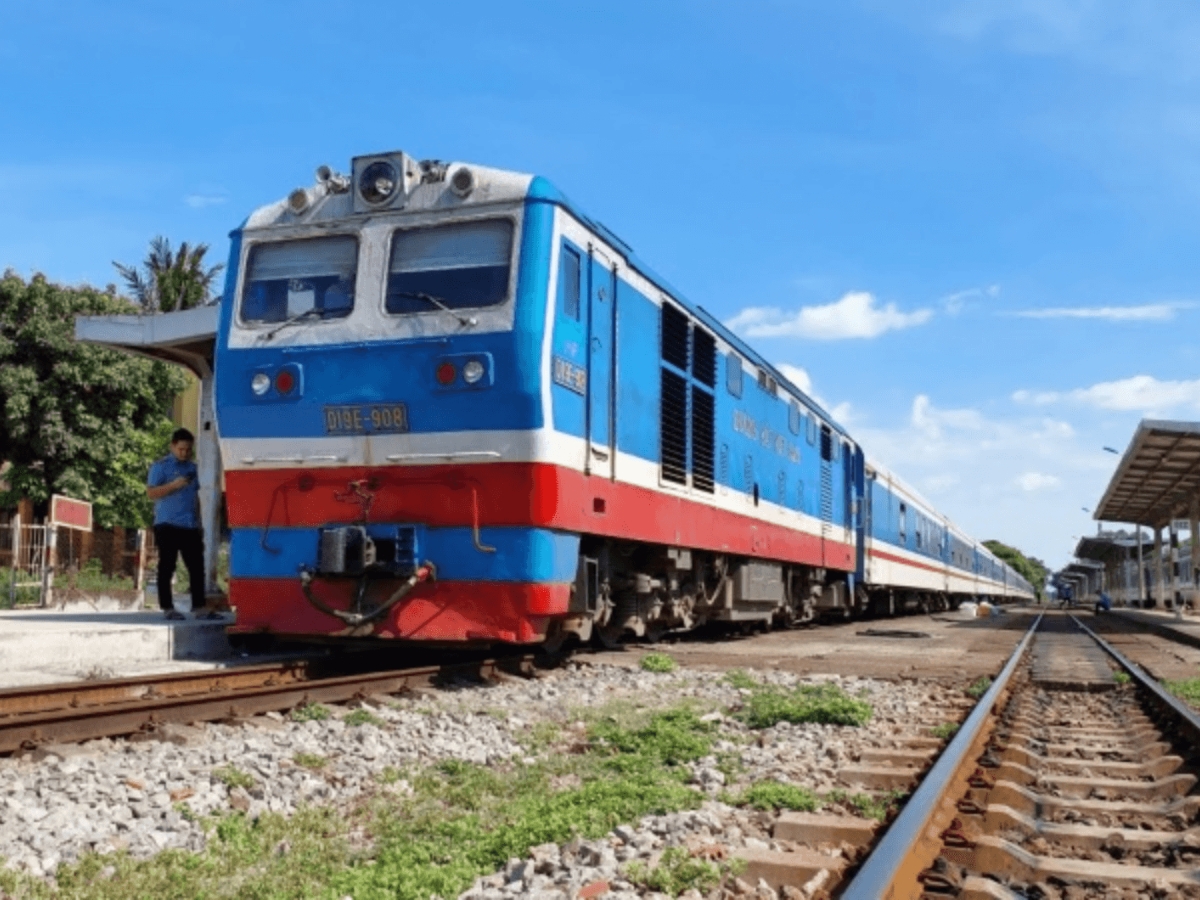
Traveling by North-South train is both safe and economical. (Source: Collected)
Starting from Ho Chi Minh City and Southern provinces:
For tourists in Ho Chi Minh City or southern provinces, the most convenient means is by plane. Tourists can fly to Tho Xuan Airport (Thanh Hoa), then continue by taxi or car to the center of Thanh Hoa city, a distance of about 45 km to reach Vom Pagoda.
Getting around Thanh Hoa city to Vom Pagoda:
Upon arrival in Thanh Hoa, tourists can reach Vom Pagoda by taxi, ride-hailing service, or bicycle to enjoy the fresh air of the suburban area. The road to the pagoda is flat and easy to find, very convenient for both pilgrims and tourists who love exploring. With its peaceful scenery, green fields, and winding roads around the mountain, the journey to Vom Pagoda is not just a pilgrimage but also a relaxing experience, allowing tourists to fully appreciate the simple beauty of Thanh Hoa.
4. Suggested Itinerary for Experiencing Vom Pagoda Thanh Hoa
4.1. A Journey of Contemplation, Living Slowly Amidst Nature
Tourists can start their morning journey by strolling through the ancient Tam Quan gate, admiring the tranquil crescent moon lake reflecting the pagoda's shadow. Upon entering the main hall, take some time to calm your mind, offer incense to Buddha, and pay homage to the Amitabha statue carved directly into the mountainside. Photography enthusiasts can capture moments of early sunlight filtering through the curved tiled roofs, or the majestic scenery amidst the Bàn A mountains. Every photo spot, from the curved stone bridge to the intricately carved wooden pillars, possesses a rare ancient and serene beauty.
4.2. Combined Activities Exploring the Ecosystem Around Vom Pagoda
After worshiping and exploring the sacred space, tourists can combine visits to other famous spiritual tourist destinations in Thanh Hoa such as Song Son Temple, Phu Na, or Huyen Tich Am Tien – currently under construction, promising to become a new spiritual destination in the future. Additionally, the journey can extend to Sam Son beach square, where tourists can enjoy the fresh sea air, participate in entertainment activities, or visit villages along the Ma River to savor local cuisine.
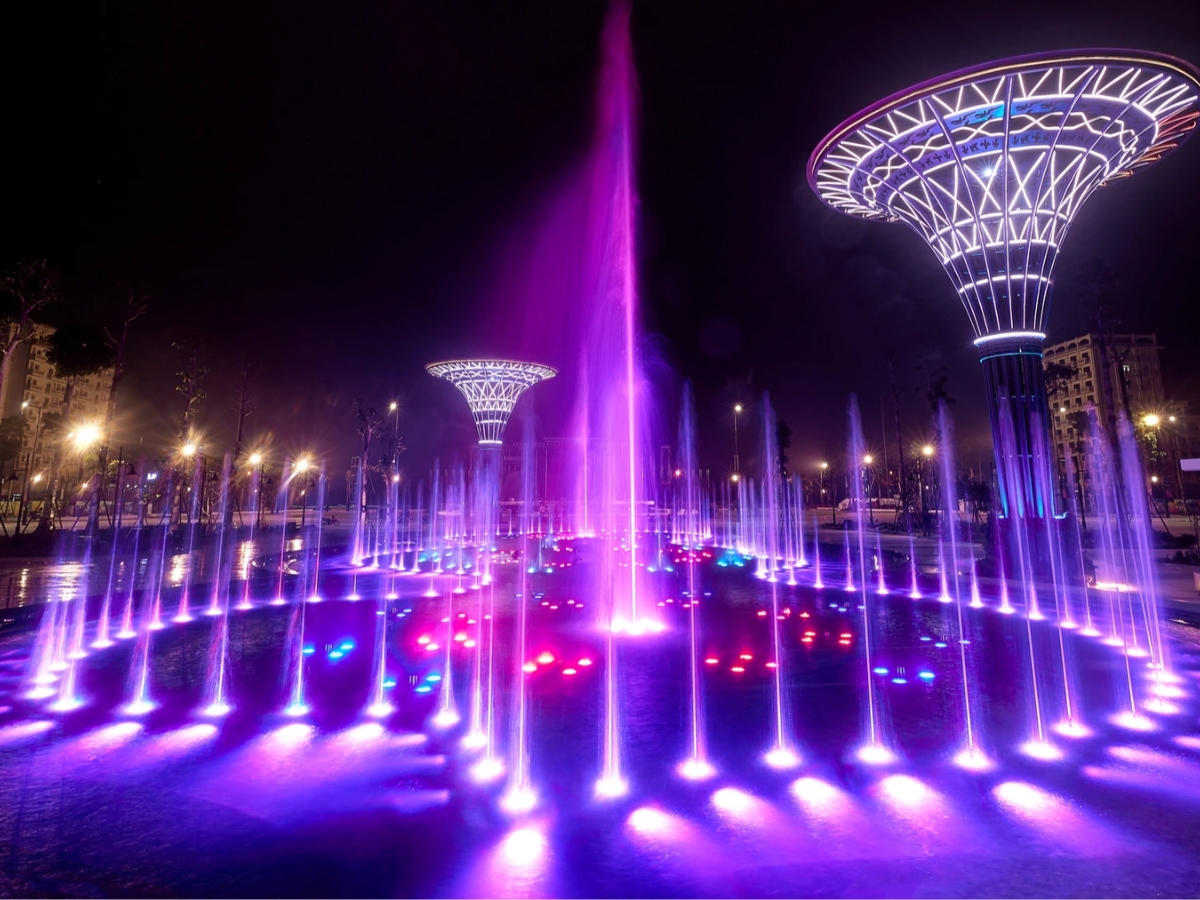
Water music performance at Sam Son beach square. (Source: Thanh Nien Newspaper)
Don't forget to stop by and enjoy local specialties with Thanh Hoa flavors such as nem chua, che lam, Tu Tru banh gai, or a heartwarming bowl of bitter leaf soup. Amidst the echoing temple bells and picturesque natural scenery, a trip to Vom Pagoda will be a journey that perfectly combines spirituality, culture, and nature, helping visitors find peace in modern life.
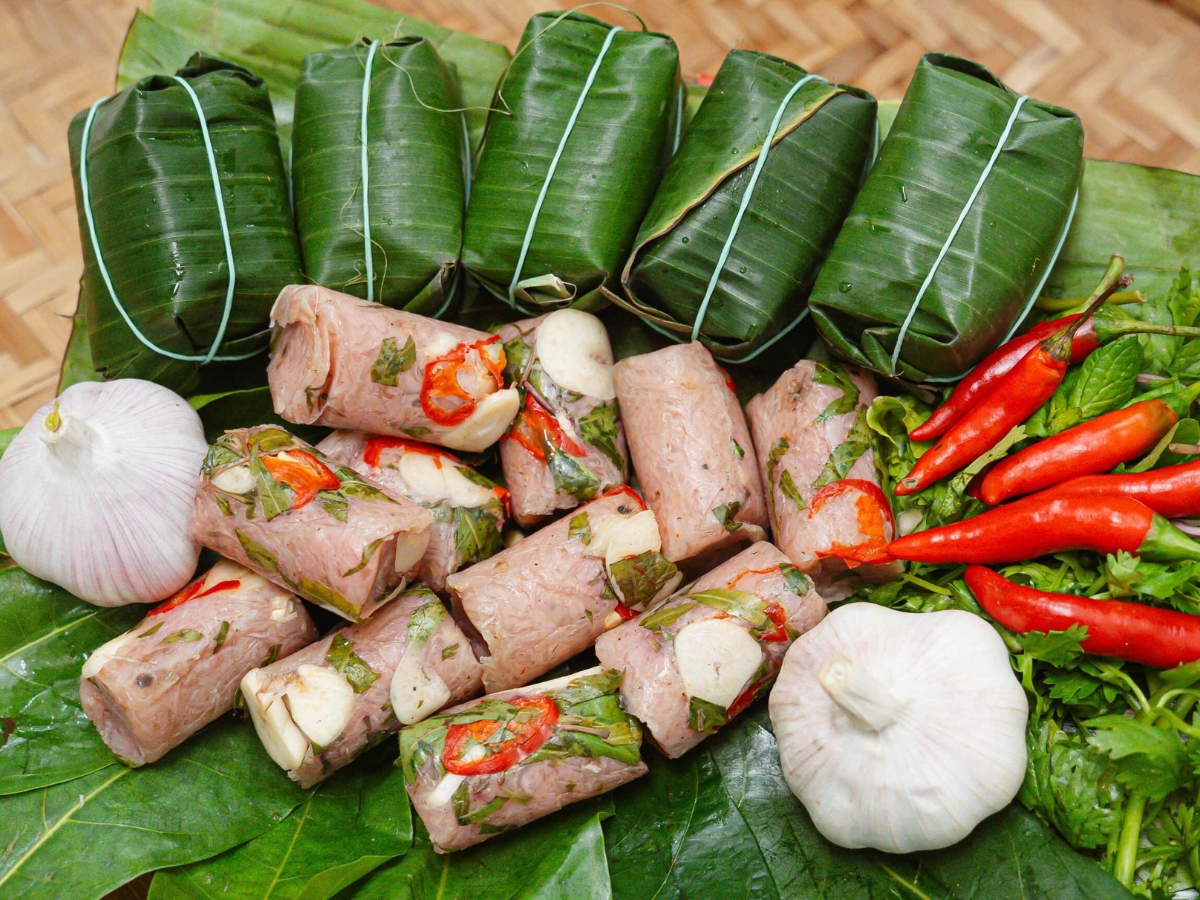
Enjoy the specialty of Thanh Hoa fermented pork roll. (Source: Collected)
The journey to find Vom Pagoda is a journey back to spiritual roots, where the temple bells blend with the mountain winds and the gentle Ma River, creating a serene and peaceful meditation space. Amidst the ancient beauty of the pagoda, visitors will feel the harmony between heaven, earth, and the human heart. If you have the chance to visit Thanh Hoa, take a moment to contemplate and admire Vom Pagoda to fully appreciate its beauty.