
















1. General Introduction to Nui Bang Trinh
1.1. Geographical Location and How to Identify Nui Bang Trinh
Nui Bang Trinh is located in Nam Bang 1 village, Thieu Hop commune, Thieu Hoa district, Thanh Hoa province (now belonging to Nam Bang village, Thieu Quang commune). This mountain belongs to the ancient Bang Trinh village of the former Thuy Nguyen district, lying in a picturesque land shaped by rivers and mountains in the heart of the Ma and Chu river delta. This special location helps Nui Bang Trinh become the focal point of the famous Ban A Son scenic relic complex of Thanh Hoa.
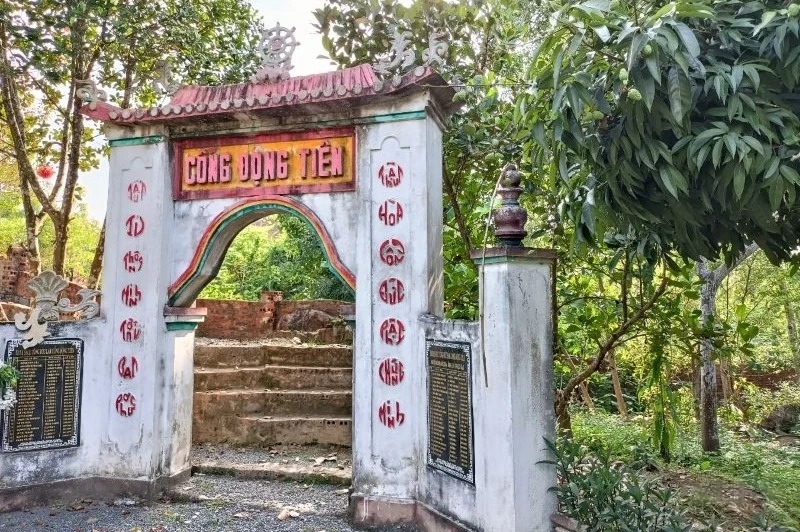
The Fairy Cave Gate is located at the foot of Mount Bang Trinh. (Source: Collected)
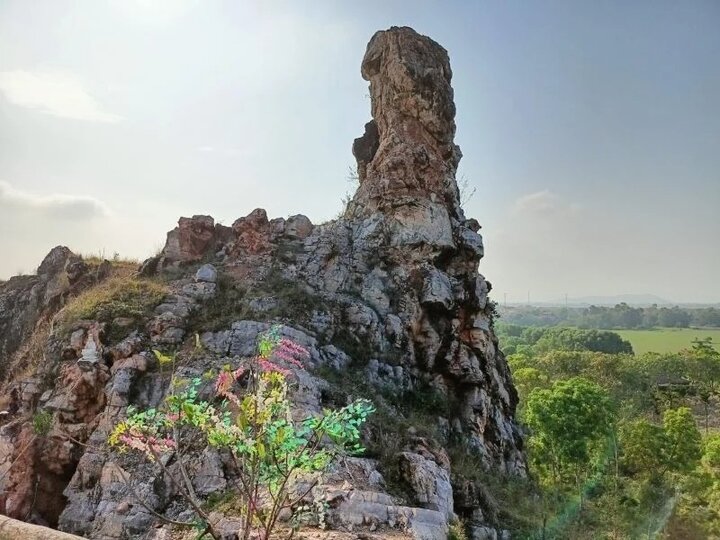
Visitors can easily identify Mount Bang Trinh thanks to its prominent rock formations with vibrant colors, completely different from the surrounding plain landscape. The mountain harmoniously blends with Mount Vom (also called Mount Ban A) in Dong Tien ward (formerly Thieu Khanh), creating a vivid natural picture in the lower reaches of the Chu River. Looking from afar, visitors will see large rocks piled on top of each other like natural sculptures, bearing the deep imprint of time and history.
1.2. Why is Mount Bang Trinh a prominent destination?
The most special point that makes Mount Bang Trinh an attractive destination is the perfect combination of unique natural scenery, deep historical and cultural values, and a serene spiritual space. The multi-colored rock formations with strange shapes create a rare highlight in the delta region, leaving anyone who sets foot here in awe of its natural beauty.
Furthermore, Mount Bang Trinh is also a living testament to the heroic pages of history during the time of the Two Trung Sisters fighting against the Eastern Han invaders in 43 AD, along with the fierce decisive battles between the Mac and Trinh armies in the 16th century. Thai Binh Pagoda at the foot of the mountain offers a profound spiritual experience, where visitors can find themselves amidst a tranquil space. All these factors have helped Mount Bang Trinh be visited and recognized by ancient kings and scholars as one of the Ban A Mountain Ten Scenic Spots, an important historical site of Thanh Hoa.
2. History and cultural values of Mount Bang Trinh
2.1. The role of Mount Bang Trinh in Vietnamese history
The land of Mount Bang Trinh carries the tragic and heroic historical stories of the nation. In 43 AD, when the Eastern Han army invaded, this land witnessed glorious battles during the Two Trung Sisters' uprising against foreign invaders. The towering rocks of Mount Bang Trinh stand like silent witnesses marking the victories of the female generals and the Vietnamese army and people.
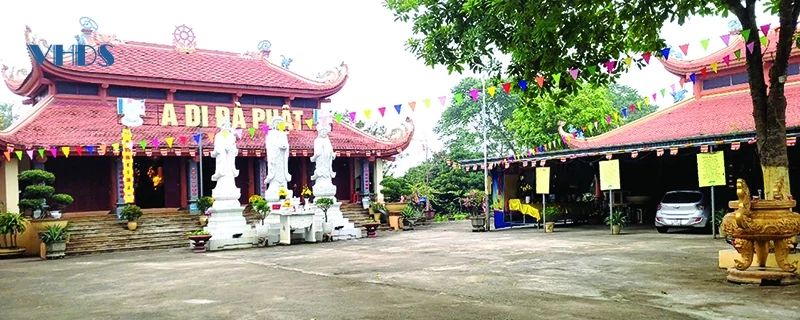
Bang Trinh Mountain and Thai Binh Pagoda are located within the famous Ban A Son relic and scenic complex of Thanh land. (Source: Collected)
In the 16th century, Bang Trinh Mountain continued to play an important role in the decisive battles between the Mac army and the Trinh army. The rugged rocky terrain became a natural gateway, where battles that decided the fate of the nation took place. Every rock, every path around the mountain holds the breath of history, making visitors who set foot here deeply moved by what their ancestors sacrificed to protect.
2.2. Assessments and records from historical books and figures
Historian Ngo Thi Si, one of the erudite cultural researchers of Thanh land, recorded Bang Trinh Mountain in the Ban A Son Ten Scenic Spots list with the name "Khanh Bang Liet Chung". This phrase describes the image of Dai Khanh Mountain and Bang Trinh Mountain standing side by side like two majestic generals, jointly protecting the land on both banks of the Chu River.
In steles and historical records, Bang Trinh Mountain is always mentioned with reverence as a scenic spot with profound spiritual significance. This địa danh plays an important role in the cultural life of the people of Thanh land, serving as a source of pride in their origins and a spiritual anchor through generations. The Ban A Son scenic complex, of which Bang Trinh Mountain is the core component, has been highly praised by historians for both its historical value and natural landscape.
3. Architecture – Typical relics at the foot of Bang Trinh Mountain
3.1. Thai Binh Pagoda: A spiritual work amidst the rocks
At the foot of Bang Trinh Mountain, Thai Binh Pagoda appears as a serene oasis amidst the majestic rocky mountain landscape. This pagoda bears a strong spiritual imprint with architecture harmonizing with the natural terrain, creating a peaceful atmosphere hard to find elsewhere. The scent of incense spreads throughout the grounds, and each step on the pagoda courtyard brings a sense of tranquility, shedding all worldly worries.
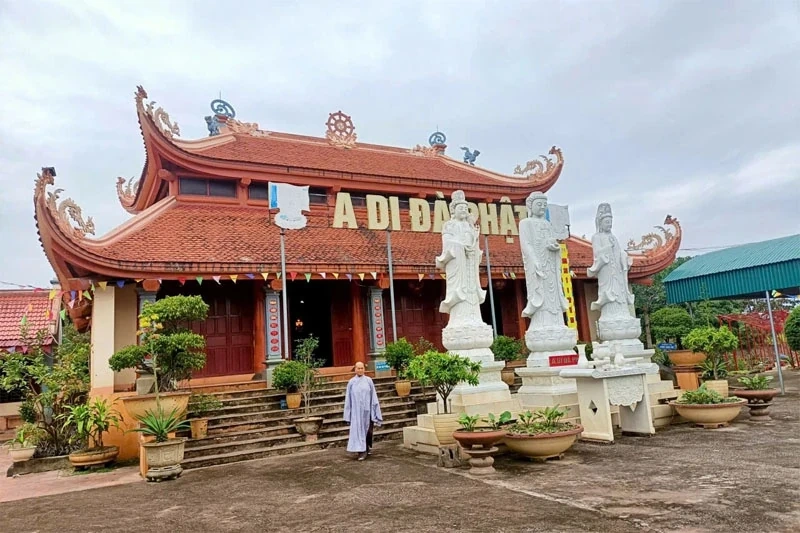
Thai Binh Pagoda is located within the famous Ban A Son complex of scenic relics in Thanh region. (Source: Collected)
Nun Thich Nu Dam Nhan has been the abbot of Thai Binh Pagoda for over 25 years, dedicating her life to practice and preservation of the pagoda. It is this dedication that has made Thai Binh Pagoda a place of refuge for many Buddhists and visitors seeking inner peace. The pagoda's space is skillfully arranged among the large rocks of Bang Trinh Mountain, creating a feeling of being hidden within the mountain, close to nature and far from worldly noise.
3.2. Restoration process and important recognition milestones
The relic complex of Bang Trinh Mountain and Thai Binh Pagoda has undergone a journey of historical and cultural value recognition through many important milestones. On October 22, 2008, the Thanh Hoa Provincial People's Committee officially recognized this as a provincial historical and cultural relic, affirming the special position of Bang Trinh Mountain within the local cultural heritage system. Subsequently, on July 1, 2019, this place was further recognized as a provincial tourist destination, opening opportunities for domestic and international tourists to explore this valuable land.
The most proud milestone came on April 29, 2025, when the Vietnam Union of UNESCO Associations certified Thai Binh Pagoda as 'Vietnam's Sacred Ancient Pagoda'. This title not only recognizes the pagoda's long-standing spiritual value but also international recognition of the religious cultural heritage of Bang Trinh Mountain. These recognition milestones are a motivation for the local community and authorities to continue preserving and promoting the relic's value.
4. Outstanding experiences when visiting Bang Trinh Mountain
4.1. Sightseeing – trekking – check-in at Bang Trinh Mountain
Bang Trinh Mountain offers countless impressive photo opportunities with its unique rocky landscape, azure sky, and peaceful villages at the foot of the mountain. The ideal time to visit is in the early morning or late afternoon when the sunlight is gentle, creating beautiful lighting effects on the colorful rocks. Spring (February - April) and Autumn (September - November) bring cool weather and vibrant natural scenery, suitable for exploration.
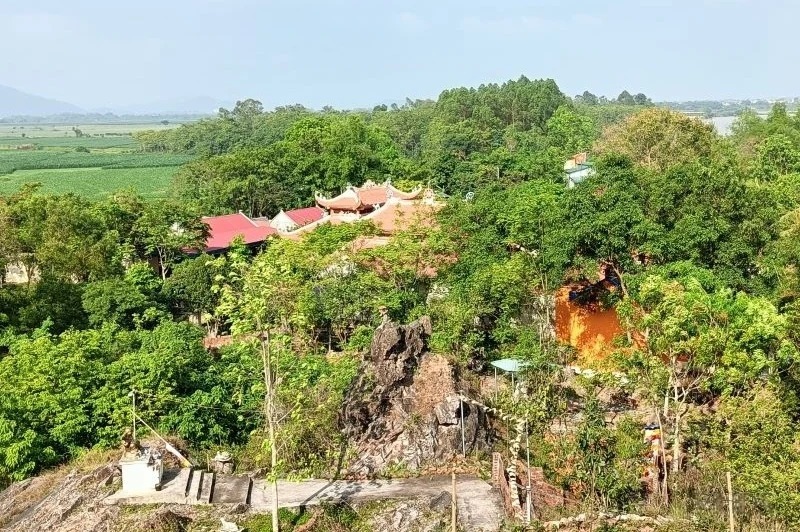
Standing on the mountain, gazing at the vast sky and earth. (Source: Collected)
The trekking routes around Nui Bang Trinh are not too difficult, suitable even for those with little mountain climbing experience. Visitors can start from Thai Binh Pagoda, wander along the trails among large rocks, and admire the panoramic view of the lush green plains below. Many visitors share that the most enjoyable experience is chatting with the local people, listening to their old stories about the mountain, the pagoda, and the history of this land. Those simple moments are the most beautiful memories that Nui Bang Trinh bestows upon each visitor.
4.2. Visiting Thai Binh Pagoda
Thai Binh Pagoda at the foot of Nui Bang Trinh is a must-visit stop for those seeking peace of mind. The pagoda's atmosphere exudes tranquility with the faint scent of incense and the gentle echo of temple bells amidst the mountains and forests. Visitors can participate in peace-praying rituals, offer incense to Buddha, or simply meditate alone in the pagoda grounds to feel the stillness.
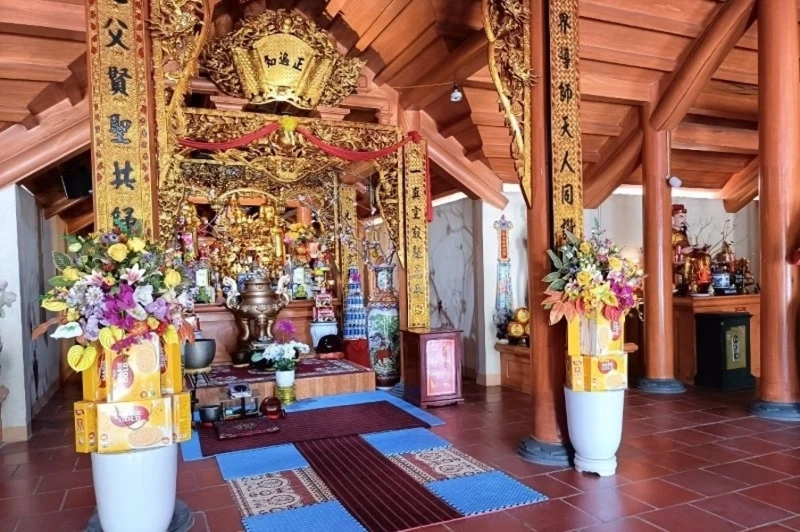
A corner of the altar – a place to send heartfelt reverence. (Source: Collected)
The architecture of Thai Binh pagoda is quite simple but possesses a simple beauty, close to nature. The wooden structures, yin-yang tiled roofs blend with the natural rocks of Bang Trinh mountain, creating a harmonious scene between humans and nature. Many Buddhists share that coming here, they feel all their worries are washed away, their minds become relaxed and full of positive energy. This is truly an ideal place to temporarily escape the hurried life and find oneself.
4.3. Discovering stone art – the landscape of Ban A Son
One of the most unique features of Bang Trinh mountain is the system of multi-colored stones with strange shapes, like natural sculptures. Large rocks are stacked on top of each other, forming spontaneous shapes, each viewing angle reveals a different shape. The stone colors change with the light, from mysterious dark gray to warm brown-yellow, creating a vibrant natural picture.
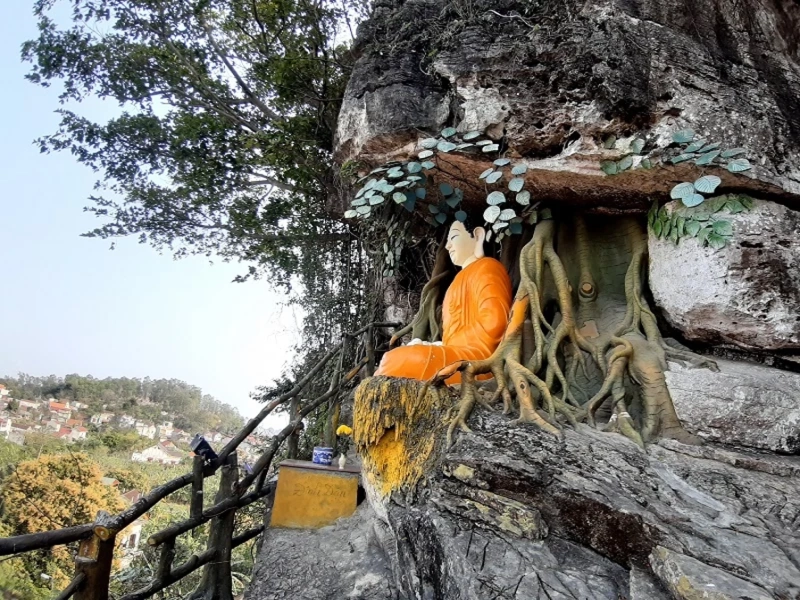
The Buddha statue is located on the peak of Ban A Son mountain. (Source: Collected)
Combined with Vom mountain, Bang Trinh mountain contributes to creating the famous Ban A Son scenic complex, where nature and water blend poetically. Many people call the rocks here "naturally formed statues" because they resemble animals, humans, or spiritual symbols. Visitors can spend the whole afternoon exploring this area, discovering every nook and cranny, looking for beautiful and unique photo spots. The landscape of Ban A Son with Bang Trinh mountain is a testament to nature's endless creativity, making anyone who comes here marvel in amazement.
5. Guide to traveling to Bang Trinh Mountain
5.1. How to get from Hanoi to Bang Trinh Mountain
Hanoi is the most convenient starting point to begin the journey to explore Bang Trinh mountain . The distance from Hanoi to Thanh Hoa is about 150 km, visitors can choose to travel by various means depending on their needs and budget. If you want to save costs, a bus is a popular choice with ticket prices ranging from 100,000 to 150,000 VND/person, travel time is about 2.5 to 3 hours depending on the route.
Visitors who prefer independence can drive a motorbike or personal car following National Highway 1A or the Phap Van - Cau Gie - Ninh Binh - Thanh Hoa expressway. The expressway helps shorten the travel time to about 2 hours, suitable for those who want to optimize their sightseeing time. When arriving at Bim Son town or the center of Thanh Hoa province, move towards the old Thieu Hoa district, then ask for directions to Thieu Quang commune to find Bang Trinh mountain . Tourist signs have now been installed quite clearly, helping visitors easily locate it.
5.2. Traveling from Ho Chi Minh City and other provinces
For visitors from Ho Chi Minh City or southern provinces, flying is the most reasonable option to save time. Flights from Ho Chi Minh City to Tho Xuan Airport (Thanh Hoa) have a flight time of about 1 hour and 45 minutes, ticket prices range from 800,000 to 2,500,000 VND depending on the airline and booking time. From Tho Xuan Airport, visitors can hire a taxi or ride-hailing service to travel about 50 km towards Thieu Hoa district to reach Bang Trinh mountain , taking about 1 hour.
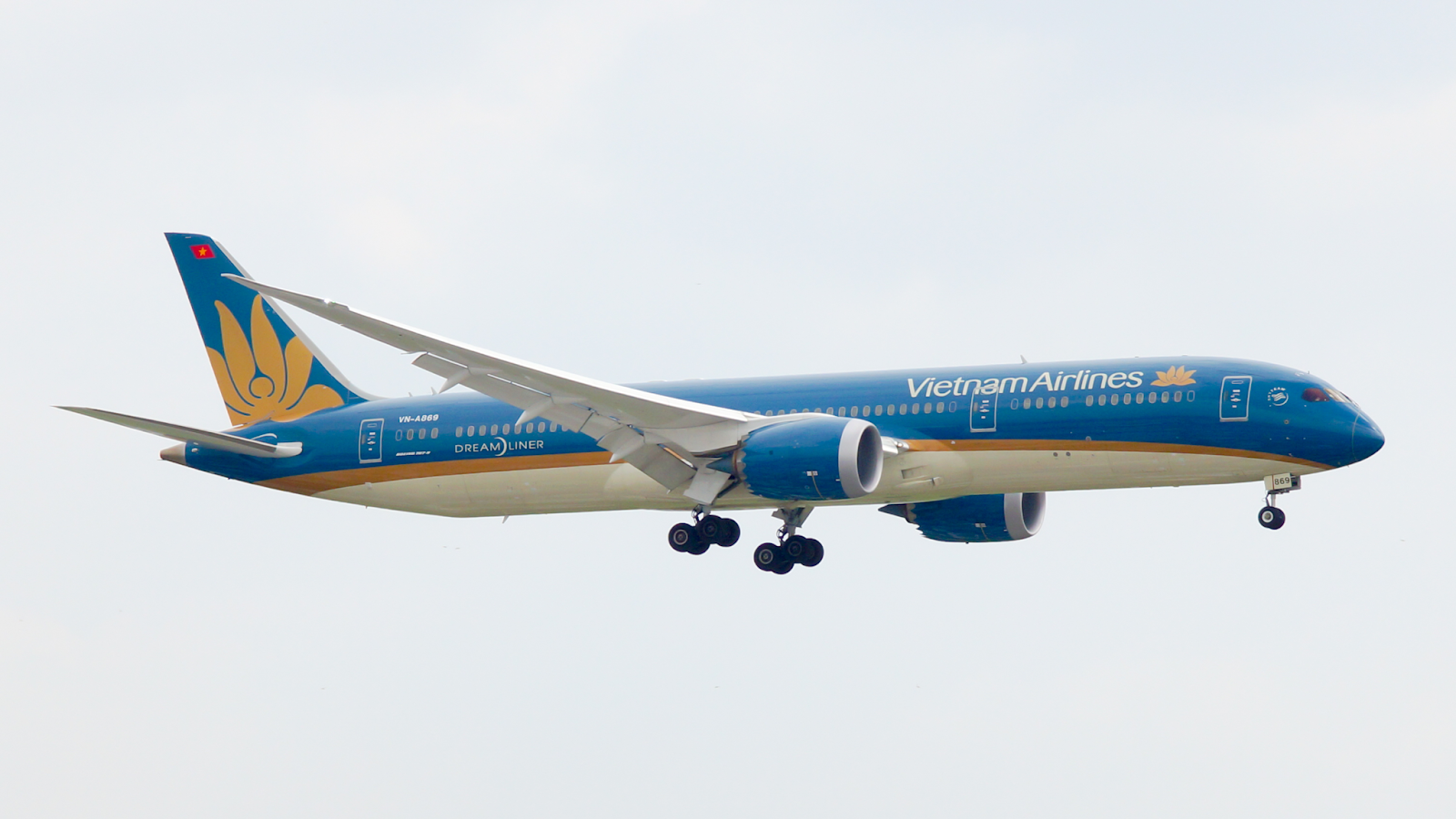
Traveling by plane is a convenient option for long trips. (Source: Collected)
Additionally, the North-South train is also an interesting option for those who enjoy a slow travel experience. From Saigon station to Thanh Hoa station takes about 18 to 22 hours depending on the train, with ticket prices ranging from 500,000 to 1,500,000 VND. After getting off at Thanh Hoa station, visitors continue their journey by bus or taxi to Bung Trinh Mountain. Those departing from the Central region such as Nghe An, Ha Tinh can travel by inter-provincial bus or drive themselves along National Highway 1A, with a much shorter travel time compared to the South.
5.3. Suggested transportation in Thanh Hoa
Once at the center of Thanh Hoa province or Bim Son, visitors have many transportation options to reach Bung Trinh Mountain. Traditional taxis and ride-hailing services like Grab and Bee are quite popular, with costs from Thanh Hoa provincial center to Thieu Quang commune ranging from 250,000 to 350,000 VND one way, taking about 40 minutes. Renting a motorbike is a flexible option that allows visitors to freely explore the surrounding attractions for about 100,000 to 150,000 VND/day.
If traveling in a group, renting a 4-seater or 7-seater car will be more convenient and economical, with prices ranging from 800,000 to 1,500,000 VND/day depending on the car type and included services. Some transport providers in Thanh Hoa also offer package tour shuttle services, including guides and meals, allowing visitors to enjoy their experience with peace of mind about the itinerary. As Bung Trinh Mountain is located in a rural area, it is advisable to prepare cash as electronic payment services are not as common as in the city.
6. Tips for traveling to Bung Trinh Mountain 2025
6.1. Experience preparing clothing and personal items
When visiting Bung Trinh Mountain, visitors should choose comfortable clothing suitable for hiking, but also modest when entering Thai Binh Pagoda. T-shirts or light shirts combined with long pants or sports shorts are ideal choices. Sports shoes or hiking boots will help you move easily on rough rocky paths. Because Thanh Hoa's weather is quite hot and sunny in the summer, you should also prepare a wide-brimmed hat, sunglasses, and sunscreen to protect your skin.

Prepare all necessary items for a smooth trip. (Source: Collected)
Additionally, bringing a water bottle, a sweat towel, and basic first-aid supplies will make the journey more comfortable. A small crossbody bag or a moderately sized backpack is useful for personal items, a camera, and some cash. Especially if you plan to stay overnight in the villages near Mount Bang Trinh, prepare long-sleeved clothing as evenings can be quite cool. A power bank and a trash bag are also essential items, demonstrating environmental awareness.
6.2. Notes on culture and spiritual etiquette when visiting pagodas
Thai Binh Pagoda at the foot of Mount Bang Trinh is a sacred spiritual site, and visitors must respect the etiquette rules when visiting. First, wear modest clothing, avoiding tank tops, short shorts, or overly tight outfits. When entering the pagoda gate, maintain a gentle demeanor, do not talk loudly, turn off your phone or switch to silent mode to preserve the quiet atmosphere.
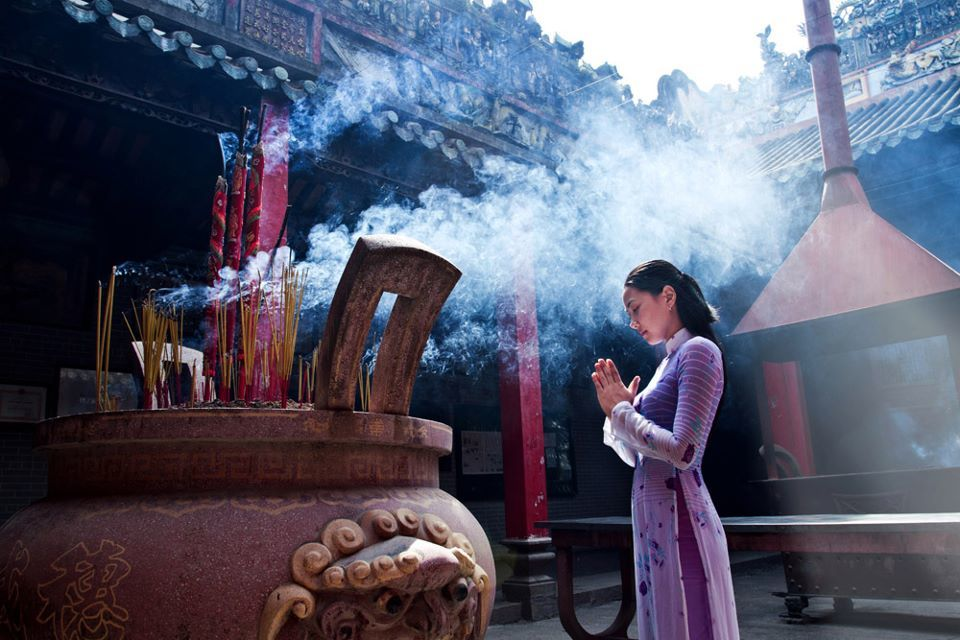
Speak softly, walk gently, maintain purity at the Buddha's door. (Source: Collected)
When lighting incense or praying, you should follow the instructions of the monks or Buddhists at the pagoda. Taking photos within the pagoda grounds is allowed, but avoid taking random pictures or posing inappropriately in front of the Buddha altar. If you want to take photos in sensitive areas, ask for permission first. Do not touch or climb on stone statues or worship objects, nor should you litter. Respect for culture and beliefs not only reflects personal ethics but also contributes to preserving the sacred beauty of Mount Bang Trinh.
6.3. Advice and useful tips
The terrain around Mount Bang Trinh has many slippery rocky sections, especially after rain, so visitors need to move very carefully and avoid climbing dangerous areas. It is advisable to travel in groups or hire a local guide if you are unfamiliar with the path. As this area still retains its traditional rural character, electronic payment services are not yet widespread, so prepare enough cash for shopping, dining, and any incidental expenses.
The ideal time to visit Mount Bang Trinh is from September to April next year, when the weather is cool, with little rain, and the natural scenery is at its best. Avoid visiting during the summer (June - August) due to hot and humid weather, which can be uncomfortable for hiking. Additionally, it is advisable to research the schedule of festivals and Buddhist holidays at Thai Binh Pagoda in advance to have the opportunity to participate in unique spiritual cultural activities. Finally, open your heart and talk to the local people to gain a deeper understanding of the history and culture of Mount Bang Trinh – this is how the journey becomes more meaningful than ever.
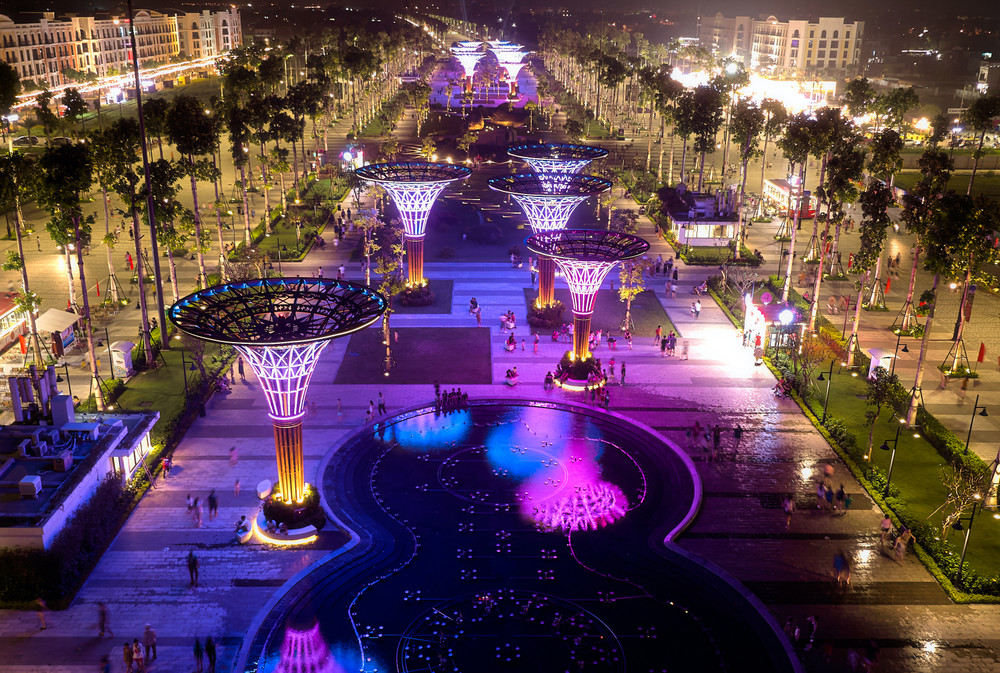
Visit Sam Son beach square to make your trip more complete. (Source: Collected)
Before entering the conclusion of the journey, Sam Son beach square appears as a final, emotional meeting point. The spacious area facing the vast sea, the wind-swept walking paths, the sound of waves blending with the vibrant rhythm of life create a picture that is both relaxing and bustling. This is where visitors pause, slow down to feel the breath of the sea and preserve memorable moments before the trip ends.
Bang Trinh Mountain is a destination that perfectly combines magnificent nature, heroic history, and pure spirituality in the heart of Thanh land. Arrange your itinerary to directly experience its unique beauty, listen to the stories of Vietnam, and find inner peace here!